
Livraison le jour même ou le lendemain

Qualité garantie

Débloquez vos offres de bienvenue: Livraison GRATUITE | Jusqu'à -80 % | 30 jours d'essai gratuits à JoyPlus
Téléchargez l'application
Whether for the back-to-school season, taking notes in meetings, or simply unleashing your creativity, choosing a notebook or notepad seems simple enough. And yet, who hasn't been disappointed by paper that tears, ink that bleeds through the page, or a binding that falls apart after just a few weeks? Faced with packed shelves and promising packaging, it's easy to get duped. As the Head of Product Curation at Joybuy, my mission is to help you cut through the noise and identify the criteria that truly make a difference.
Before diving into the specs, let's review the most common disappointments so you can avoid them for good.
To make the right choice, focus on these three pillars that define a notebook's quality and its suitability for your needs.
Paper weight, expressed in grams per square metre (g/m?), measures the paper's density. It's a key indicator of its opacity and durability.
The ruling is simply the type of lines or grid printed on the pages. The choice depends entirely on how you'll use it.
The way the pages are held together directly impacts your notebook's handling and lifespan.
To help you see how these criteria translate into real-world products, here are a few flagship items suited for different profiles.
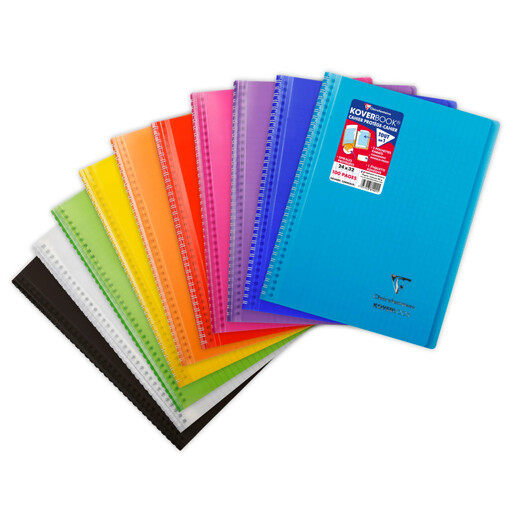
Why this choice: It checks all the boxes for a high school or university student: a large format for spacious notes, high-quality paper, and an all-in-one design that simplifies life.
Its wraparound polypropylene cover is very durable and protects the spiral, avoiding the "flimsy, tearing cover" syndrome. The Clairefontaine Vélin Velouté 90g paper is your insurance against bleed-through.
Its all-in-one concept, with two large flaps that double as bookmarks or pockets for loose-leaf papers. The 360° fold-over capability is a real plus for working on an already cluttered desk.
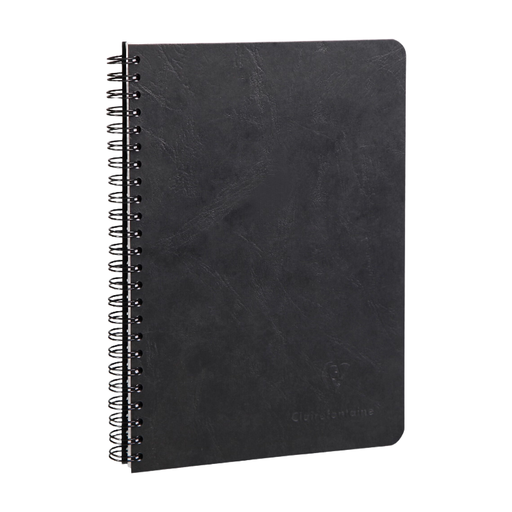
Why this choice: Its A5 notepad format is the perfect companion for life on the go. Its understated look and textured hardcover give it a professional feel and guarantee excellent durability.
Its wire-o binding allows it to lay perfectly flat at 180° without ever straining the spine (unlike low-end glued bindings that split). The 90g paper is a mark of quality that immediately inspires confidence.
The winning trio: French manufacturing, 90g Vélin Velouté paper, and a rigid cover. It's the ultimate reliable and elegant work tool, built for intensive use.
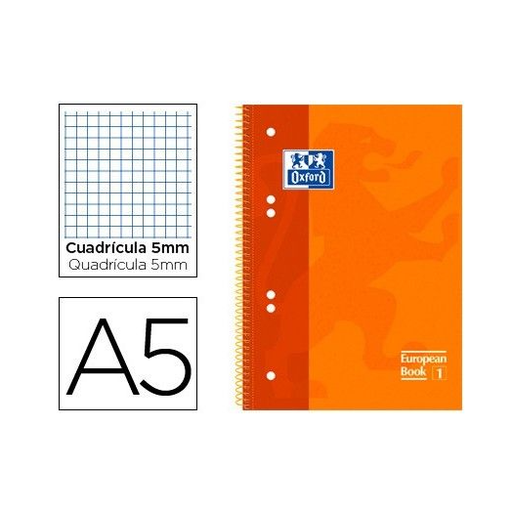
Why this choice: It brings together the "bujo" essentials: a 5x5 graph ruling for structure, a spiral binding for laying flat, and above all, high-quality paper that can handle a wide variety of pens and markers without issue.
The Optik Paper 90g was specifically designed to defeat the "ink-soaking paper" trap. It drastically reduces ghosting and bleed-through, even with highlighters or felt-tip pens. A non-negotiable feature for journaling.
The quality of the Optik Paper, combined with micro-perforated pages for clean tearing and an extra-rigid cover, makes this a formidably effective tool for creation and organisation.
Explore our full selection of products that meet our quality criteria and current standards.
An 80 g/m? paper is perfectly fine for daily use with a ballpoint pen. The 90 g/m? paper takes it to the next level: the writing experience is much more comfortable, the paper is smoother and more opaque, and it stands up much better to ink from fountain pens, rollerballs, or fine-liners. You can feel the difference to the touch and see it in use, as show-through is significantly reduced.
It all depends on the manufacturing quality! A good double-wire spiral will be very durable, while also offering the convenience of 360° fold-over. A stapled (saddle-stitched) notebook is lighter but can wear out faster if it's thick. For long-term archiving, a sewn binding remains the most durable solution. It's a trade-off between everyday convenience and preservation.
Seyès ruling is the standard in French schools, perfect for guiding the handwriting of younger students. It's ideal for primary and middle schoolers. The 5x5 graph ruling is much more versatile: it's equally suited for note-taking, scientific subjects (diagrams, tables), and organisational methods like bullet journaling. For university or professional use, the graph ruling offers greater freedom.