
Livraison le jour même ou le lendemain

Qualité garantie

Débloquez vos offres de bienvenue: Livraison GRATUITE | Jusqu'à -80 % | 30 jours d'essai gratuits à JoyPlus
Téléchargez l'application
A notebook or notepad can be used for taking notes in class, preparing for meetings, keeping a diary, planning a trip or putting creative ideas down on paper. But a pretty cover or an attractive photo isn’t enough to make the right choice.
Disappointment usually comes down to three mistakes:
The right size depends both on how much information you need to write down and how much room you have to carry it.
Remember to distinguish between the number of pages and the number of sheets. A notebook advertised as having 96 sheets will usually contain 192 pages, while one listed as having 96 pages offers half the capacity.
90 gsm paper is a reliable choice for notebooks used every day. A heavier weight, such as 100 gsm, feels thicker and more pleasant to write on.
Paper weight isn’t everything, though. Texture, shade and compatibility with your writing instrument matter just as much. If you use a fountain pen, felt-tip pen or marker, check the manufacturer’s guidance on show-through and the risk of ink bleeding through the page. The Clairefontaine products featured here use Vélin Velouté 90 gsm paper, while several Jubiluu models use 100 gsm ivory offset paper.
The ruling should suit what you’ll be using the notebook for:
A hardback cover protects the pages in your bag and gives you a steadier surface to write on when you don’t have a desk. A soft cover is generally less bulky. Features such as an elastic closure, a bookmark, a pen loop or pockets can also save you from buying accessories separately.
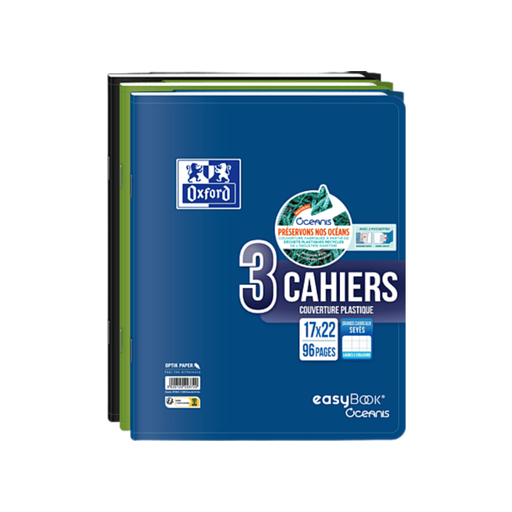
Why it’s a good fit for this use: this pack is ideal for pupils who want to keep different subjects separate without having to buy notebooks one at a time. The 17 x 22 cm size slips easily into a bag, and each notebook has 96 pages with Seyès ruling.
The pack of three helps you avoid running out of notebooks too soon, while the Seyès ruling means you won’t end up with lines that aren’t suited to school handwriting.
Three 17 x 22 cm notebooks, with 96 pages and Seyès ruling in each.
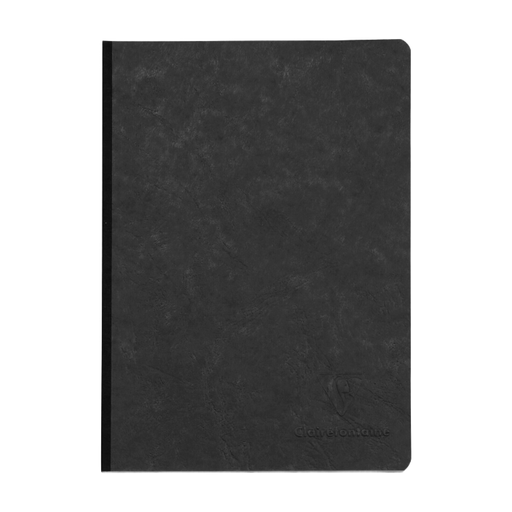
Why it’s a good fit for this use: this notebook is for anyone looking for a smart finish, a lay-flat opening and 192 pages for writing, drawing or keeping a travel journal.
Its binding lets the notebook lie flat, so you won’t have to wrestle with the cover closing while you write or draw.
A5 size, 192 pages, Clairefontaine Vélin Velouté 90 gsm paper and a tinted, leather-grain-effect cover.
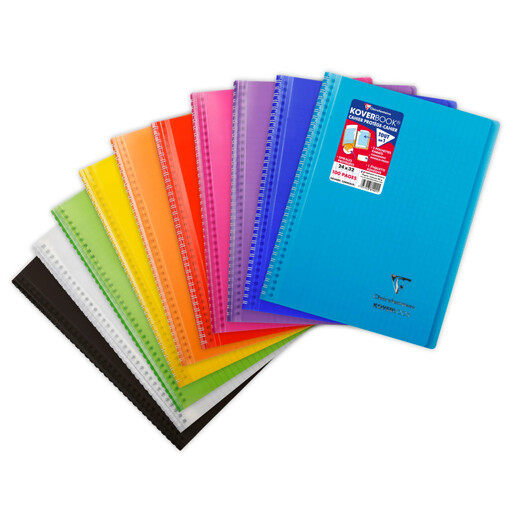
Why it’s a good fit for this use: this large-format notebook is ideal for students, teachers and professionals who write a lot or need to keep documents with their notes.
The spiral binding lets the notebook open through 360°, while the two pocket flaps keep loose sheets, documents and bookmarks from getting lost.
100 pages, Clairefontaine 90 gsm paper, a transparent polypropylene cover and two integrated pockets.
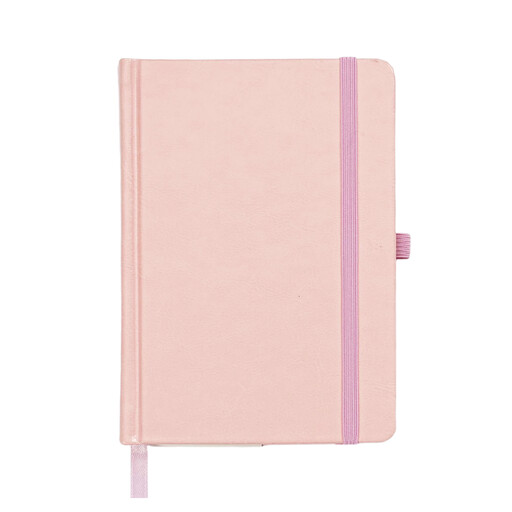
Why it’s a good fit for this use: its compact size is ideal for daily commutes, travel and jotting down ideas as they come, with several handy features built in.
The elastic keeps the notebook closed, the pen loop keeps your pen close to hand, and the bookmark helps you pick up where you left off without searching for your page.
A6 size, 160 pages, 100 gsm ivory offset paper, bookmark, elastic closure and pen loop.
We’ve put together a comprehensive selection, updated in real time, of products that meet these exacting criteria and European safety standards.
A5 is ideal for everyday note-taking and easy to carry. For detailed lessons, tables or sheets you want to keep, 24 x 32 cm gives you more room to write. A 17 x 22 cm notebook may be enough for everyday school use, especially if you have a small bag.
A Seyès-ruled notebook has a distinctive grid of ruled lines and vertical lines, designed to guide handwriting at school. A lined notebook has simple lines, making it better suited to meeting notes, lists, stories and personal notes.
It depends on how often you write in it, how you carry it and the quality of its binding. A hardback cover, elastic closure and suitably thick paper can make it more comfortable to use every day. However, no notebook is designed to withstand water or prolonged overloading. To protect the pages, keep it somewhere dry and don’t force it to open further than its binding allows.