
Livraison le jour même ou le lendemain

Qualité garantie

Débloquez vos offres de bienvenue: Livraison GRATUITE | Jusqu'à -80 % | 30 jours d'essai gratuits à JoyPlus
Téléchargez l'application
Whether it's for the back-to-school season, stocking an office, or simply for the pleasure of putting ideas to paper, choosing a notebook or notepad seems like a simple task. And yet, who hasn't been frustrated by paper that bleeds ink, a binding that falls apart after two weeks, or a size that proves impractical? Faced with the maze of online stationery, it's easy to make a bad purchase. This guide is here to help you navigate the options and find the product that's perfectly suited to your needs.
Before comparing models, let's review the classic disappointments to avoid throwing your money down the drain.
To avoid these pitfalls, you just need to check a few technical details. They are what make all the difference between a great purchase and a disappointment.
The paper weight, expressed in grams per square meter (gsm), defines the paper's thickness and opacity. This is THE criterion that determines your writing experience.
The ruling (the lines on the page) should be chosen based on your use case.
Finally, everyday practicality comes down to the combination of size and binding.
Here are a few recommended options, chosen to meet specific needs while avoiding the pitfalls mentioned above.
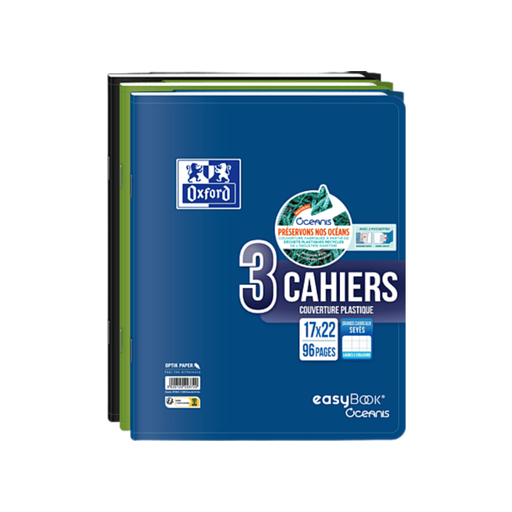
Why we chose it: This bundle checks all the boxes for the back-to-school season. The 17x22 cm size and Seyès ruling are standard requirements from teachers. The three-pack lets you cover multiple subjects at an affordable price.
The stapled binding is built for the daily grind of a school bag, and the quality Oxford paper limits ink ghosting, preventing wasted pages.
A practical size and a ruling perfectly adapted to the French educational system, all in an economical pack.
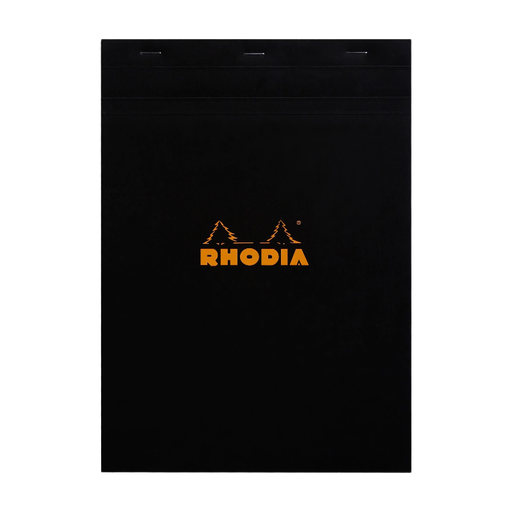
Why we chose it: The Rhodia pad is a timeless classic for professionals. Its A4 size is perfect for meetings, and its ultra-rigid cardboard back allows for comfortable note-taking, even without a desk. The grid ruling is ideal for structuring information.
The 80 gsm Clairefontaine superfine vellum paper is renowned for its smoothness and low transparency. The rigid back ensures it won't bend, even with on-the-go use.
The 80 sheets are micro-perforated to be detached cleanly and filed easily in a binder.
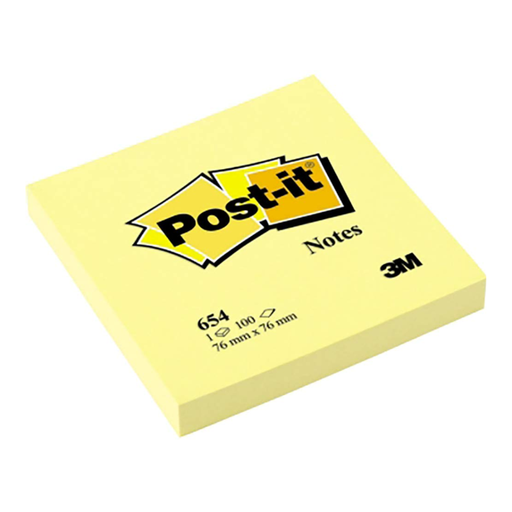
Why we chose it: For reminders, on-the-fly to-do lists, and quick messages, Post-it sticky notes remain unbeatable. Their bright colour catches the eye, and their square format is ultra-versatile.
It prevents you from wasting a notebook page on temporary information. The Post-it brand adhesive is designed to stick and re-stick without leaving a trace, unlike many imitations.
Maximum flexibility: stick your notes on a monitor, a fridge, a folder, or in a planner. The paper is PEFC certified, sourced from sustainably managed forests.
We've put together a complete selection of products that all meet our quality criteria.
Seyès ruling consists of 8 mm squares with horizontal lines spaced 2 mm apart inside them. Its purpose is to guide handwriting development by calibrating letter height. A grid ruling (usually 5x5 mm) is a simple grid, better suited for mathematics, diagrams, and structured note-taking.
Not necessarily. A high paper weight (e.g., 90 gsm) is a good indicator, as it reduces the risk of ink bleeding through. However, quality also depends on the paper's surface treatment. A 80 gsm vellum or satin paper from a reputable brand like Clairefontaine will often provide a much more pleasant experience than a generic 90 gsm paper with a rougher surface.
It all depends on your use case. The stapled notebook is lighter, cheaper, and stores easily. It's perfect for classic school use. The spiral-bound notebook, on the other hand, can open a full 360°, which is very practical for writing in tight spaces (on public transport, on the corner of a desk). However, its spirals can snag or bend over time.