
Livraison le jour même ou le lendemain

Qualité garantie

Débloquez vos offres de bienvenue: Livraison GRATUITE | Jusqu'à -80 % | 30 jours d'essai gratuits à JoyPlus
Téléchargez l'application
A notebook can accompany you through lectures, meetings, a personal diary, travel planning or sketching ideas. But when it comes to choosing one, you’re quickly faced with a barrage of claims: “tough” cover, “premium” paper or “portable” size.
Before you place an order, there are three pitfalls to avoid:
Here are the criteria to examine so you can choose a notebook that’s truly right for your everyday use.
The size directly affects how easy it is to carry and how comfortable it is to write in.
An A6 notebook measures roughly 10.5 × 14.8 cm. It slips into a small bag, a messenger bag or a roomy pocket. This size is perfect for lists, reminders, ideas that pop up during the day and notes taken on public transport.
You do, however, have to make do with a limited writing surface. For keeping a detailed diary, drawing diagrams or jotting down several tasks each day, an A5 notebook will generally be more comfortable.
Sizes around 9 × 14 cm are all about portability. They suit travellers, professionals who take notes between meetings and students who want to always have something to hand.
Check for an elastic closure, a bookmark or an inner pocket. These small details stop the notebook from opening in your bag and let you store tickets, receipts and loose sheets.
With dimensions of roughly 14.8 × 21 cm, the A5 size offers enough room to structure a meeting, keep a diary or alternate between text and sketches. It’s less discreet than a pocket notebook, but much more pleasant to use on a desk or a lecture table.
The paper weight alone isn’t enough to judge writing comfort, but it does give a useful first indication.
Ivory paper can be more pleasant to read than a very bright white, even if this choice remains subjective. For the layout, make sure you distinguish between the different types of notebook:
The acid-free mention and the paper’s origin are normally listed on the product page. Some Moleskine models, for example, state they use 70 gsm acid-free ivory paper from FSC-certified forests and other controlled sources. This tells you about the stated sourcing, but on its own it’s not a general guarantee of the notebook’s durability.
A hard cover protects the pages better in a bag and provides a more stable surface when you’re writing standing up. A soft cover is often lighter and easier to bend, but it offers less protection against knocks and pressure.
The binding matters just as much. A 180° flat lay makes it easier to write on both pages. Micro-perforated pages let you tear out a note cleanly, while an inner pocket holds documents you want to keep temporarily.
Accessories can also change the everyday experience:
Be careful with small parts, especially if the notebook is intended for a child under 3 years old. Manufacturers also recommend protecting it from water, excessive heat and sharp objects.
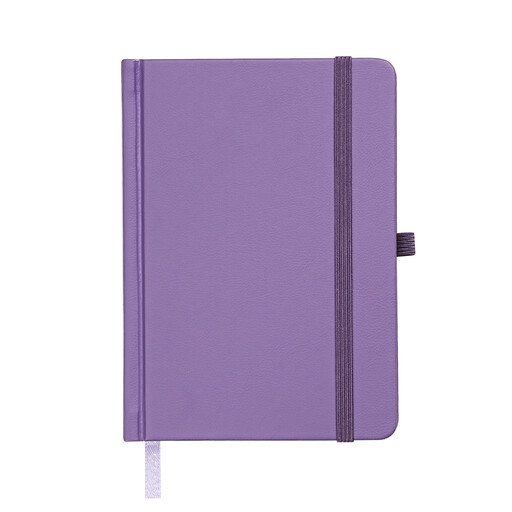
Why this choice suits this profile: Its A6 size is ideal for everyday notes, lists and journaling in a compact bag.
The product page states 160 ruled pages, 100 gsm ivory offset paper and a PU cover: this is far from a basic ultra-thin notebook.
Bookmark, elastic closure and pen holder are all built into a size of roughly 10.5 × 14.8 cm.
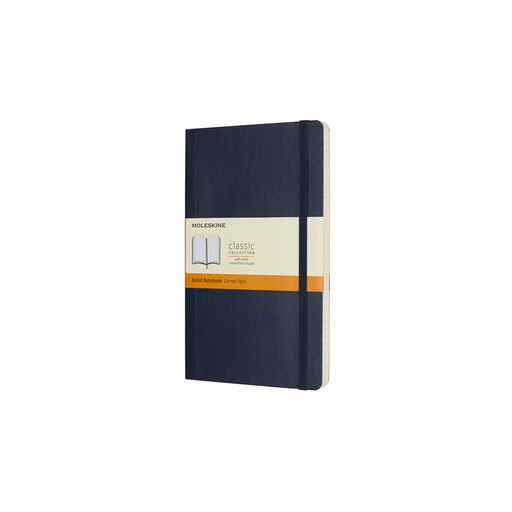
Why this choice suits this profile: Its Large size of 13 × 21 cm offers more space for professionals, writers and journaling enthusiasts.
The product page specifies acid-free ivory paper, a 180° flat lay and an expandable inner pocket.
Ruled pages, elastic band, ribbon bookmark and several sizes available depending on the capacity you need.
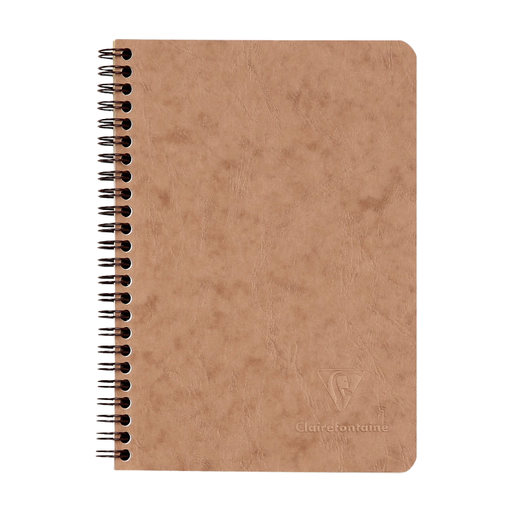
Why this choice suits this profile: Students, professionals and travellers can organise their notes thanks to the tear-out pages and three pockets.
The A5 size, 120 micro-perforated ruled pages and pockets meet the needs of frequent, organised use.
90 gsm Clairefontaine Vélin Velouté paper, colour-through cover and stated manufacture in France.
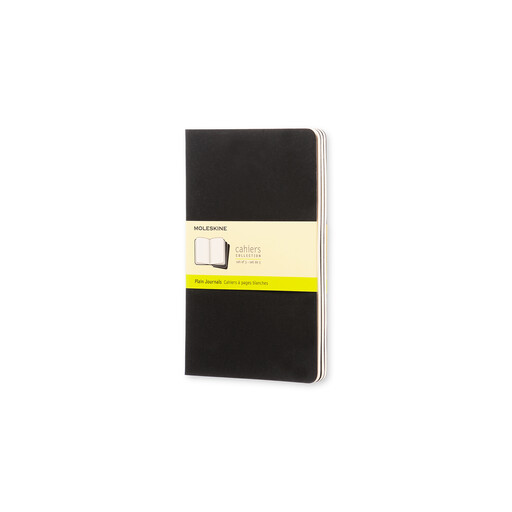
Why this choice suits this profile: Three large notebooks let you separate drawing, free writing, creative projects and mind maps.
The blank pages give you total freedom, while the hard cover and visible stitching give each volume real structure.
70 gsm acid-free ivory paper, three copies, 16 last tear-out sheets and a back flap.
We’ve put together a comprehensive list, updated in real time, of products that meet these demanding selection criteria and European safety regulations.
A ruled A5 notebook is generally suitable for reports and lectures, as it offers more space than a pocket model. To carry your notes easily, go for a hard cover, an elastic band and a flat lay.
The A6 size measures roughly 10.5 × 14.8 cm. A pocket notebook can be slightly smaller, with dimensions around 9 × 14 cm. The former therefore offers a little more room, while the latter focuses more on discretion and mobility.
Store it in a dry place, avoid exposing it to sunlight for too long and don’t let it come into contact with water. Clean the cover with a soft, dry cloth, or a slightly damp one if the product page allows it. Also check the quality of the binding and choose a paper weight that suits both your pens and how often you use it.