
Livraison le jour même ou le lendemain

Qualité garantie

Débloquez vos offres de bienvenue: Livraison GRATUITE | Jusqu'à -80 % | 30 jours d'essai gratuits à JoyPlus
Téléchargez l'application
A notebook can accompany you through your studies, help you organise your day, capture ideas, serve as a sketchpad or preserve memories of a trip. But the choice goes far beyond the cover or colour. A notebook that's too small quickly becomes restrictive, while poorly suited paper can let ink bleed through or buckle when exposed to moisture.
Before you head to the checkout, take a moment to check three key criteria: size, paper and binding. This simple approach helps you avoid impulse buys and ensures you choose a notebook that truly fits your daily life.
Product listings sometimes state 80 sheets, which equals 160 pages, or 96 sheets, which equals 192 pages. These two figures don't mean the same thing. When comparing several notebooks, always check the number of sheets, especially if you write on both sides of the page.
A very thick notebook can also be heavier and less pleasant to carry around. For everyday use in a bag, you'll need to weigh capacity against bulk.
80 gsm paper is generally fine for writing with a pen or pencil, but it's not suitable for watercolour washes. For painting, it's better to choose 300 gsm watercolour paper, or at least paper explicitly designed for wet techniques.
On the flip side, thick paper makes the notebook bulkier and can push up the price. For regular writing, a lined notebook with 100 gsm paper will often be more practical than a pad designed to absorb lots of water.
A hard cover in fabric or faux leather protects the pages well, but it doesn't guarantee comfort in use on its own. Also check how easily it opens, whether it has a bookmark, an elastic closure, a pen loop and whether it lies flat.
For school, a spiral-bound notebook makes it easier to write on a narrow desk. For a gift or a personal journal, a hardcover notebook offers a more polished presentation.
A pocket-sized notebook is ideal for quickly noting down an idea, but its margins and writing surface are limited. For school use, also check the ruling: Seyès-ruled exercise books remain particularly well-suited to handwriting exercises in France.
Paper weight refers to the weight of the paper per square metre. It alone isn't enough to predict writing comfort, but it's a useful initial indicator.
The mention of acid-free and pH-neutral paper can be useful for preserving drawings or writings for longer. However, it's not an absolute guarantee of durability for every piece of work.
Stapled binding is lightweight and works well for school exercise books. Spiral binding generally allows the notebook to lie flat and makes it easier to sketch across multiple pages. Sewn binding or a hard cover protects the pages better during travel, but can sometimes be less flexible in use.
Accessories can make all the difference: a notebook with an elastic closure and bookmark stays shut in your bag and lets you quickly find the last page you used. An inner pocket is also handy for keeping tickets, loose sheets or index cards.
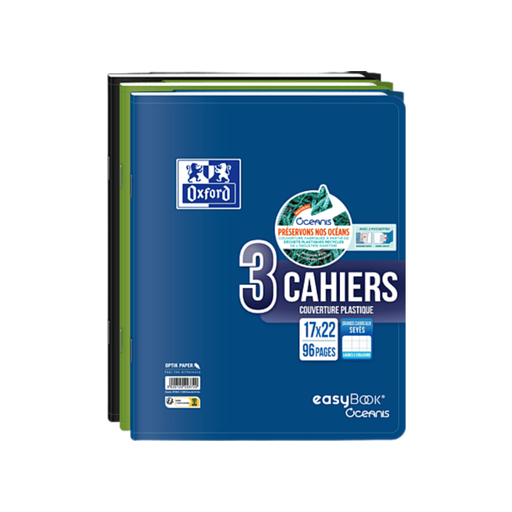
Why this choice suits this profile: This pack of three notebooks in 17 × 22 cm format is ideal for students who want to organise their subjects without making multiple purchases.
The Seyès ruling is clearly stated and the number of notebooks is specified, making it easy to compare with buying individual units.
Three notebooks with 96 pages each, in 17 × 22 cm format, with Seyès ruling suitable for school.
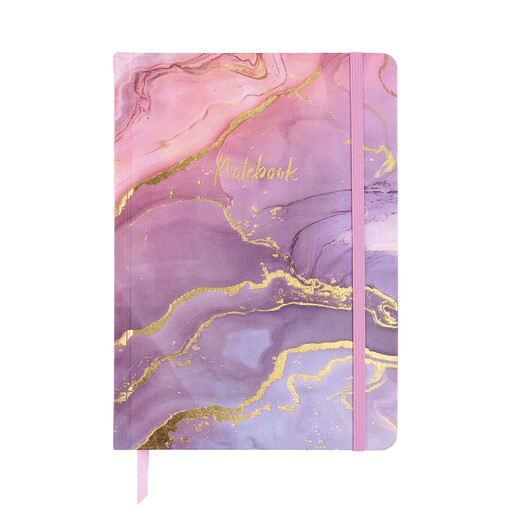
Why this choice suits this profile: Its A5 format and hard fabric cover make it equally suitable for a personal journal, a work notebook or a thoughtful gift.
The listing specifies the size, number of sheets and 100 gsm paper weight, rather than relying solely on the notebook's appearance.
192 pages, 100 gsm wood-free ivory paper, bookmark and elastic closure.
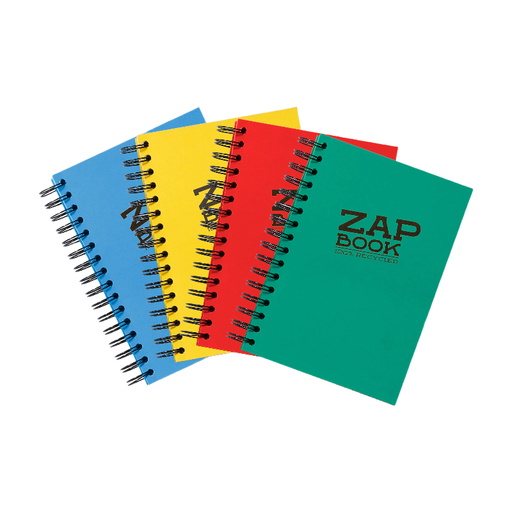
Why this choice suits this profile: Students, professionals and artists who switch between notes and sketches will appreciate its large capacity and ability to lie flat.
The spiral binding and plain paper are clearly stated: you know it's neither a Seyès exercise book nor a lined notebook.
A5 format, 160 sheets, 80 gsm recycled paper, acid-free and pH-neutral.
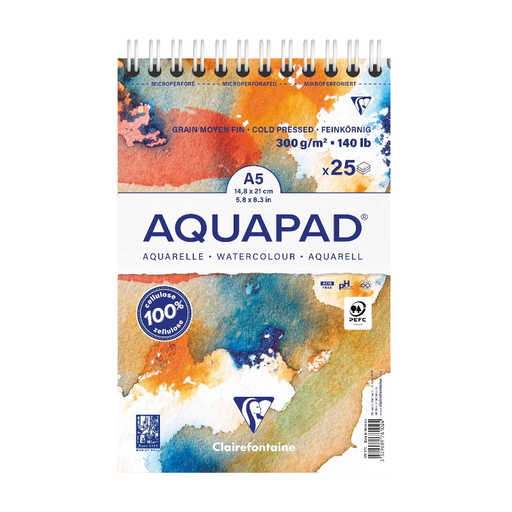
Why this choice suits this profile: This pad is designed for those who want to practise watercolour, gouache or other wet techniques in a portable format.
It is clearly presented as paper for wet media, with dual water resistance and a medium-fine grain.
25 A5+ sheets, natural white cellulose paper, acid-free, medium-fine grain, spiral binding.
We've put together a comprehensive, real-time updated list of products that meet these demanding selection criteria and comply with European safety regulations.
Store your notebook in a dry place, away from high humidity and direct light. A fabric or PU cover can be cleaned with a soft, slightly damp cloth if needed. For a watercolour pad, storing it flat and securing it to a board can help prevent warping during generous washes.
Also avoid forcing a hard cover or tearing pages near a spiral binding. Small items such as the elastic, ribbon or pen loop should be kept out of reach of children under three years old.
The A6 notebook is easier to carry and works well for lists and quick notes. The A5 notebook offers more space for writing, planning, drawing and organising several ideas on one page. For mainly school use, a large-format exercise book may prove more comfortable.
80 to 100 gsm paper is generally suitable for note-taking, pencil and standard pens. If you use felt-tip pens or very liquid ink, check the manufacturer's recommendations and, where possible, opt for a higher paper weight.
Yes, its binding usually allows you to fold the pages back and work flat. However, it can take up more space in a folder. For homework that requires a traditional presentation, a stapled or soft-cover exercise book may sometimes be more suitable.