
Livraison le jour même ou le lendemain

Qualité garantie

Débloquez vos offres de bienvenue: Livraison GRATUITE | Jusqu'à -80 % | 30 jours d'essai gratuits à JoyPlus
Téléchargez l'application
Choosing a notebook isn’t just about personal taste. The format, paper and binding all have a direct impact on how comfortable it is to use day to day. Among the stationery items marketed as versatile, the budget-friendly multi-packs and the feature-packed planners, some details can easily slip under the radar.
Here are the key criteria to consider before you place your order, whether you’re a student, an employee, a remote worker, a journaling enthusiast or a drawing hobbyist.
A product listing might say “120 pages” when the notebook actually contains 60 sheets that can be written on both sides. This distinction matters if you mainly write on one side only, especially with ink that tends to show through a little.
To compare models on a consistent basis, always check:
An A7 spiral notebook is perfect for jotting down a quick reminder, but its limited space soon becomes a problem when you need to develop an idea or take notes in a meeting. At the other end of the scale, an A4 sketchbook is very comfortable on a desk but far less practical to carry around in a bag or rucksack.
The right format really depends on how you’ll use it:
A colourful or hard cover can make a notebook more appealing, but it tells you nothing about the quality of the binding, how legible the ruling is or how durable the paper is. For a purchase you want to last, look first at the internal design and whether it’s compatible with your pens, felt-tips or pencils.
A lined notebook is good for continuous writing, meeting notes and lists. A grid notebook is better suited to tables, calculations, diagrams and structured notes. In France, the Seyès notebook remains a staple in schools thanks to its ruling specially designed for learning to write.
For drawing or sketching, it’s best to go for blank pages. 80 gsm paper works well with pencil, pen and some felt-tips, but you’ll need to be careful with very liquid inks. At 100 gsm, a thicker paper generally feels nicer and firmer, though it doesn’t completely eliminate the risk of show-through.
Spiral binding often lets you open the notebook flat and turn pages effortlessly. It’s particularly handy in class, in meetings or when you’re writing with one hand. Just check that the spiral doesn’t get in the way of your hand as you get close to the margin.
Stitched or stapled notebooks are generally slimmer and easy to store. A hard cover stands up better to repeated handling, while a soft cover saves a few grams in your bag.
A multi-pack of notebooks can be a good idea if you like to keep different uses separate: lectures, personal lists, work and creative ideas. However, compare the actual amount of paper and the format of each notebook, rather than just looking at the pack price.
For staying organised over several months, an undated 18-month planner lets you start whenever you like. It also avoids leaving several weeks blank when a dated planner isn’t bought at the start of the school or calendar year.

Why this choice suits this profile: Its A7 format slips easily into a pocket or small bag. The pack of four notebooks lets you separate lists, reminders and ideas without having to buy more.
The listing clearly states the A7 format, the grid paper and what’s included in the pack. So you know straight away that this is a notebook for short notes, not for taking down entire lectures.
Four notebooks of 50 sheets each, a top-opening spiral binding and a soft cover.
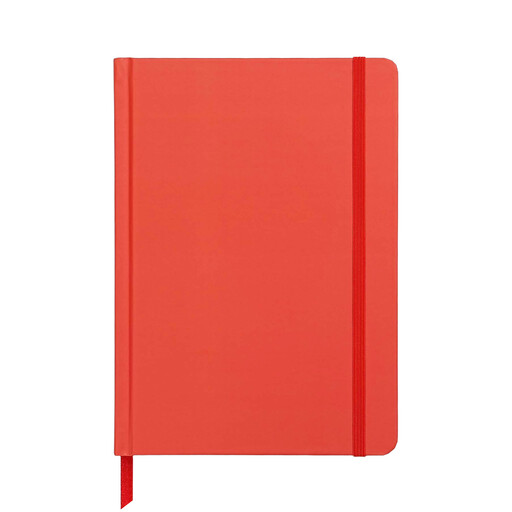
Why this choice suits this profile: This A5 model is designed for those who want to combine monthly planning, weekly organisation and note-taking in a single notebook.
The undated format means you won’t waste unused weeks. The hard cover and elastic closure also protect the pages when you’re on the move.
224 pages, 100 gsm lined offset paper, bookmark, and undated monthly and weekly pages.
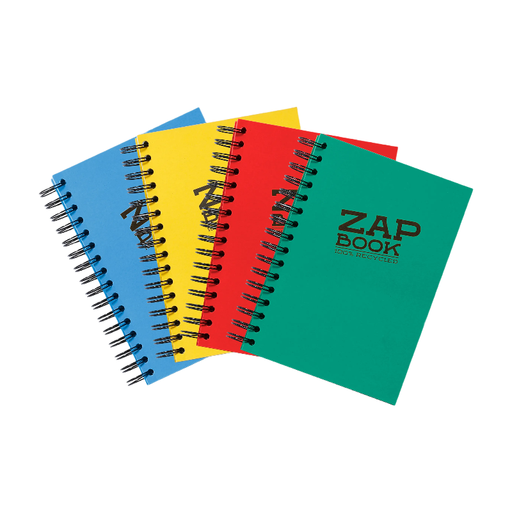
Why this choice suits this profile: Its large format meets the needs of illustrators, art students, budding architects and anyone who fills notebooks quickly.
The A4 format is clearly stated and the blank pages are suitable for drawing. The spiral binding lets you lay the notebook completely flat.
160 sheets, 80 gsm 100% recycled paper, acid-free and pH neutral, with a matching cover.
We’ve put together a full selection, updated in real time, of products that meet these exacting criteria and European safety standards.
For primary and secondary school, the Seyès notebook in 17 × 22 cm format remains a reliable choice, much like the OXFORD Easybook Oceanis multi-pack. At university and in the office, an A5 spiral notebook offers more space while still being easy to carry. The Deli A5 models sold in packs of four are handy for separating subjects, files or projects.
For keeping a diary, go for a cover that properly protects the pages and a lined ruling. For drawing, choose an A4 sketchbook if you need a large surface, or an A6 model for sketching wherever you are.
Paper of 70 to 80 gsm is generally fine for everyday pencils and pens. For dense writing or if you use certain felt-tips, a weight of 100 gsm offers more comfort and a thicker feel. However, the result also depends on the ink you use and how hard you press.
The A7 format is designed for very short notes and can be taken almost anywhere. The A5 format offers a much more generous surface for lectures, work, journaling and detailed lists. So the right choice really depends on how much information you need to write down, not just the number of pages.
Yes, if you want to be able to start at any time and plan your goals over a flexible period. Check that it includes monthly and weekly views and note pages, so you can be sure the structure matches your organisational method.