
Livraison le jour même ou le lendemain

Qualité garantie

Débloquez vos offres de bienvenue: Livraison GRATUITE | Jusqu'à -80 % | 30 jours d'essai gratuits à JoyPlus
Téléchargez l'application
A notebook can help you organise your workday, keep up with your studies, write a diary or preserve travel sketches. Yet some purchases quickly disappoint: pages that are too thin, an impractical size or a binding that gets in the way of writing. To avoid unpleasant surprises, it's better to compare concrete features rather than relying solely on the cover or marketing promises.
A notebook with a high page count isn't necessarily the most practical. First, check whether it's pages or sheets: one sheet usually contains two pages. The paper's density also matters. With a low grammage, ink is likely to show through, especially with a fountain pen or felt-tip.
A stitched or glued binding can give a neat finish, whereas a spiral notebook often opens more easily and lies flat. Whether you're taking notes at a desk, in a lecture hall or on public transport, ease of use sometimes matters more than design.
An A6 notebook slips easily into a pocket or small bag, but the writing space is limited. Conversely, an A5 notebook is better suited for meeting notes, detailed lists and journaling, while still being easy to carry. A4 size offers a comfortable surface for diagrams and drawing, but it naturally takes up more room.
Also think about the weight and the space available in your bag. A hard cover protects the pages better, but it can make the notebook heavier compared to a soft cover model.
Grammage refers to the weight of the paper per square metre. It alone doesn't predict writing comfort, but it provides a useful benchmark:
A ruled notebook works well for text and lessons, while squared paper makes it easier to create tables, plans and diagrams. For a sketchbook, focus on the texture, grammage and compatibility with the media you use. Even thick paper isn't necessarily designed for acrylic or watercolour.
A hard cover withstands repeated handling better and protects the pages inside a bag. A soft cover prioritises lightness. Accessories can also make a difference: an elastic closure, a ribbon bookmark, a pen loop or an inner pocket.
For professional use or a travel journal, a 180° flat opening makes writing more comfortable and consistent. For an exercise book, flaps or pockets let you keep loose sheets without needing a separate folder.

Why this choice suits this profile: Its A6 size is ideal for a first notebook, for lists or for notes taken on the go and in everyday life.
Its 80 sheets of 100 g/m² offset paper provide a clear benchmark, while the hard cover effectively protects the contents.
Ribbon bookmark, elastic closure, pen loop and cream ruled pages.
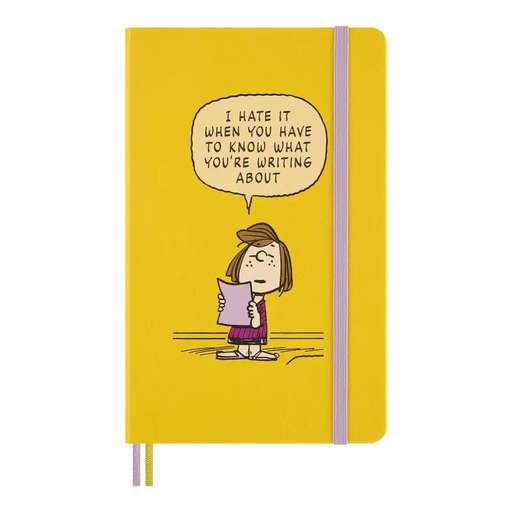
Why this choice suits this profile: This Moleskine notebook combines a black cover featuring a Peanuts design with practical details for writing, journaling or collecting.
The 100 g/m² ivory ruled paper, two ribbons and flat opening minimise compromises between aesthetics and ease of use.
Expandable pocket, elastic closure, stickers and acid-free paper from FSC certified sources according to the product sheet.
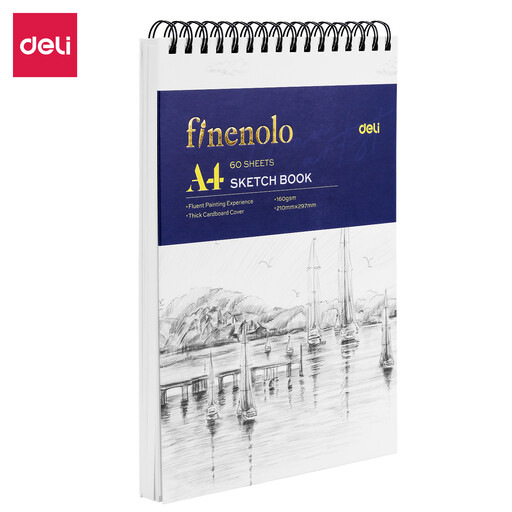
Why this choice suits this profile: Its large format is aimed at students, artists and anyone who alternates between sketches, notes and diagrams.
Its 60 white A4 sheets and metal binding make it easy to use both sides and open flat.
White paper suitable for pencil, charcoal, coloured pencil and pen; the sheet advises against very wet media.

Why this choice suits this profile: This undated A5 planner lets you start at any time and structure your work, studies or personal projects.
The undated monthly and weekly pages avoid wasting pages when the planner isn't used every week.
224 pages, 100 g/m² offset paper, hard cover, ribbon bookmark and elastic closure.
We've put together a comprehensive, real-time selection of products that meet these exacting criteria as well as European safety regulations.
A5 size offers a particularly practical compromise between writing surface and portability. An A6 is suitable for brief notes and lists, while an A4 is more comfortable for drawings, tables and diagrams.
The lifespan depends on the quality of construction and how it's used. A hard cover protects the notebook better, a stitched binding often encourages flat opening, and a spiral binding makes it easier to turn pages. Also check that the spiral isn't likely to become misshapen in your bag.
100 g/m² paper is generally suitable for everyday writing and some felt-tips, but the result varies depending on the type of ink. With a very wet fountain pen, test a page before committing to heavy use. For watercolour, choose a sketchbook specifically designed for wet techniques.