
Livraison le jour même ou le lendemain

Qualité garantie

Débloquez vos offres de bienvenue: Livraison GRATUITE | Jusqu'à -80 % | 30 jours d'essai gratuits à JoyPlus
Téléchargez l'application
A notebook can be used for lessons, meetings, making lists or keeping a journal. But an appealing design alone is not enough to make the right choice. A model you like can quickly become impractical if its size, paper or binding do not suit your habits.
Before buying an A5 notebook, an A6 notebook or a lined notebook, check three essential points: the space you actually have available for writing, the durability of the paper and the accessories included.
A product listing may state “160 pages” even though the notebook contains 80 sheets printed on both sides. To compare two models, start by checking the number of sheets, then look at their ruling: lines, squares or blank pages.
A notebook used every day for journalling will require more paper than a model intended for jotting down a few reminders. Conversely, a small notepad will often be more practical for occasional lists.
At approximately 14.8 × 21 cm, A5 offers a comfortable writing area for lessons, work or bullet journalling. However, it takes up more space in a bag.
More compact, A6 — approximately 10.5 × 14.8 cm — slips easily into a pocket or small bag. It is ideal for quick ideas, appointments and lists, but leaves less room for diagrams and detailed notes. Even smaller, A7 is mainly intended for short reminders.
A decorative cover does not guarantee that a notebook will withstand everyday use. If you plan to carry it around regularly, check its cover type, closure and binding. A hard cover offers better protection for the sheets when you are writing without a table nearby, while spiral binding generally allows the notebook to lie completely flat.
Accessories can also make a difference: a notebook with an elastic strap stays closed in a bag, a notebook with a bookmark helps you quickly find the right page, and a notebook with a pen loop means you do not have to search for your pencil at the bottom of your bag.
Expressed in g/m², paper weight indicates the weight of the paper and gives you an initial idea of its durability. 100 g/m² offset paper, such as that used in several Jubiluu notebooks, is suitable for everyday writing with a ballpoint pen, gel pen or light fountain pen. However, the result depends on the ink used: before using a heavily loaded marker, check the product listing and, where possible, user reviews.
For drawing or creating free-form diagrams, choose a notebook with blank pages. For calculations and tables, a squared notebook provides more guidance. A lined notebook remains the most versatile choice for lessons, meetings and personal journalling.
Some Clairefontaine notepads feature 80 g/m² paper, which may be microperforated or recycled depending on the reference. This configuration can be suitable for everyday writing, filing or archiving, but it will not necessarily work with every type of ink.
Spiral binding makes it easier to turn the pages and generally allows you to write flat. It is practical for a desk notepad, drawing notebook or taking notes with one hand. On the other hand, the spiral can catch on a bag and make the whole notebook slightly bulkier.
A hard cover provides a more stable surface on your lap or when travelling. It can be a good choice for a notebook intended for school and the office, a personal journal or a notebook to give as a gift. However, remember to check its weight and whether it has a closure if you need to carry it every day.
An elastic strap, ribbon bookmark or pen loop is useful when it matches your habits. However, these are small parts: the safety instructions supplied with several models state that they are not suitable for children under 3 years of age.
To protect a PU, fabric or printed cover, use a soft, dry cloth — or a slightly damp one if permitted by the product listing. Avoid water, abrasive products and storing the notebook in a damp environment.

Why this choice suits this profile : this pack lets you divide lists, lessons and tasks between four compact notebooks, without having to buy several different models separately.
The A7 size and spiral binding are clearly specified, so you know this is designed for short notes rather than long-form writing.
Four A7 notebooks, squared paper, a flexible cover and top opening for quick writing.
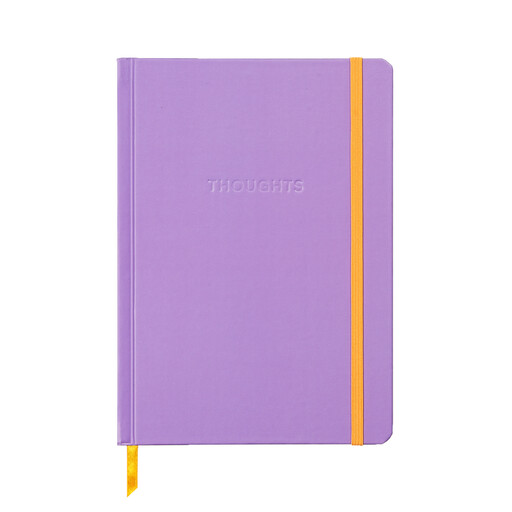
Why this choice suits this profile : its A5 size is ideal for longer texts, journalling and professional notes, while its decorative finish adds genuine aesthetic appeal.
The listing specifies the size, 96 sheets, 100 g/m² cream offset paper, hard cover, ribbon and elastic strap.
192 pages, lined ruling, A5 hard cover and integrated storage accessories.
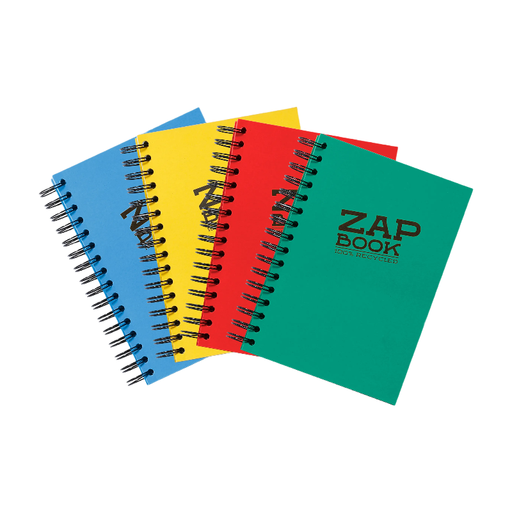
Why this choice suits this profile : its large blank format is designed for those who switch between writing, sketching, diagrams and free-form layouts.
The listing states that it contains 160 blank sheets, spiral binding and a lay-flat opening, making it clearly intended for drawing and creative work rather than taking notes on lined paper.
A4 format, 80 g/m² recycled paper, acid-free sheets and four-hole perforation according to the description.
We have brought together a complete, real-time updated selection of products that meet these demanding criteria as well as European safety standards.
An A6 notebook offers a good balance between portability and writing space. It is suitable for reminders, ideas and short journalling sessions. For lessons, meeting notes or drawing, an A5 or A4 format will be considerably more comfortable.
Spiral binding makes it easier to open the notebook flat and move from one page to the next. A hard cover with an elastic strap provides better protection for the contents in a bag. To decide, consider how often you carry the notebook, how much space you have available and the way you write.
100 g/m² paper is generally suitable for everyday writing, but the result varies depending on the ink and the pressure applied. For felt-tip pens and markers, choose paper specially designed for drawing and check the manufacturer’s recommendations.