
Livraison le jour même ou le lendemain

Qualité garantie

Débloquez vos offres de bienvenue: Livraison GRATUITE | Jusqu'à -80 % | 30 jours d'essai gratuits à JoyPlus
Téléchargez l'application
A notebook can be used for taking lecture notes, organising a workday, jotting down ideas, or keeping a personal diary. Yet a hasty purchase can quickly lead to disappointment: pages that buckle, an impractical binding, or a size that's too bulky to carry around.
Before you get drawn in by the design, it's worth looking at the features that really matter. Here are the main pitfalls to avoid and the criteria to check when choosing a notebook, sketchbook, or writing pad that fits your habits.
A hardcover notebook protects the pages effectively and provides a stable writing surface, but it's also heavier. A soft cover is easier to carry around, though it offers less protection inside a bag.
What's more, the appearance tells you nothing specific about the paper quality. A pretty pattern, a fabric finish, or an elastic closure can be practical or decorative, but they don't replace checking the paper weight and the type of binding.
Product descriptions sometimes talk about "pages" and sometimes about "sheets". A notebook with 60 sheets usually means 120 pages, written on both sides. This distinction matters if you're looking for a notebook for studying, a diary, or something that will last you several months.
Also check whether the pages are lined, gridded, or completely blank. A sketchbook doesn't meet the same needs as a lined notebook intended for note-taking.
Paper of 70 or 80 gsm is generally fine for everyday writing, but some felt-tips and markers can bleed through more easily. If you write a lot, make regular corrections, or use coloured pencils, a higher paper weight will often be more suitable.
For watercolour and wet techniques, it's best to choose paper designed for that purpose. A standard notebook doesn't automatically become a versatile sketchbook.
For everyday writing, pay attention to the paper weight, the shade of the paper, and the ruling. A 5 × 5 mm grid notebook is suitable for tables, calculations, and graphs. A lined notebook makes continuous writing easier, while blank pages offer more freedom for drawing, mind maps, and sketches.
Some papers also carry verifiable environmental credentials, such as PEFC or FSC certifications, or the use of recycled paper. This information is more meaningful than a vague mention of "eco-friendly stationery". For Clairefontaine paper, the weight, range, and certifications are usually specified on the product page.
A spiral binding makes it easy to flip pages over and use the notebook flat. It's particularly well suited to students, quick note-taking, and anyone who writes without a proper desk.
A sewn binding or a 180° opening offers greater comfort when you need to use both pages of a double spread. Stapled notebooks tend to stay lightweight, while hardcover models protect your notes better during transport.
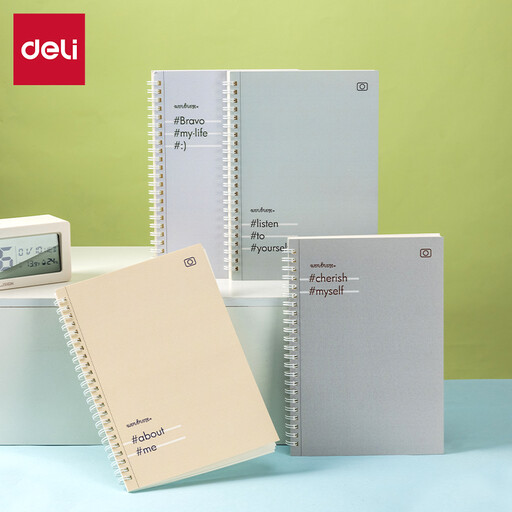
Why this choice suits this profile: The A5 size is easy to carry, and the pack of four notebooks lets you separate subjects, projects, or personal lists.
The number of sheets, the size, and the spiral binding are all stated, making it easy to compare with other A5 notebooks.
70 gsm paper, 60 sheets per notebook, and four units in the pack.
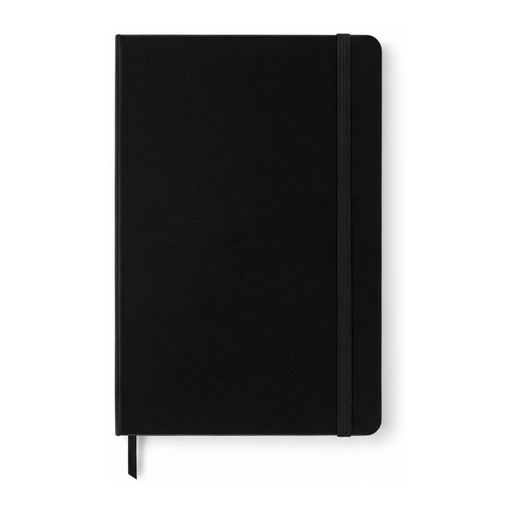
Why this choice suits this profile: Its hard cover, elastic closure, and bookmark make it suitable for professional use, creative work, or journaling alike.
The product page specifies the accessories and the lay-flat opening, rather than relying solely on the cover's appearance.
Acid-free 70 gsm ivory paper, hard cover, inner pocket, and 180° lay-flat binding.
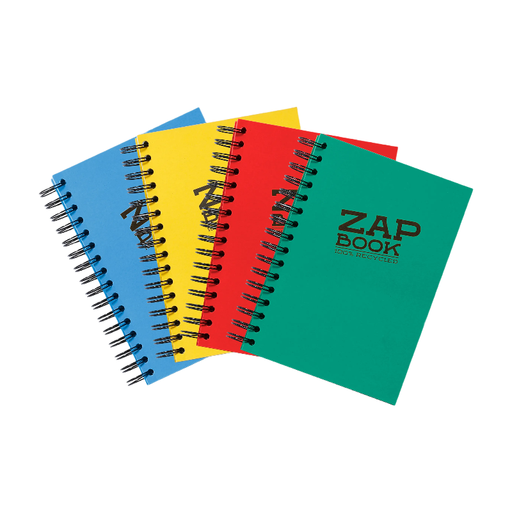
Why this choice suits this profile: Its large format and blank pages are ideal for detailed note-taking, drafts, plans, and drawing.
The spiral binding and lay-flat opening prevent any inconvenience during prolonged use, whether at the office or on the go.
160 sheets, 100% recycled paper, 80 gsm, acid-free and pH neutral.
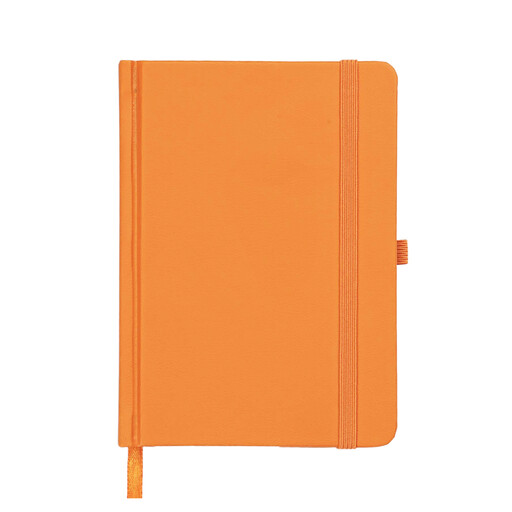
Why this choice suits this profile: This A6 notebook slips easily into a bag or large pocket for jotting down lists, ideas, appointments, or a few lines of journal.
The stated size and built-in accessories let you check its portability and organisation before buying.
80 sheets of 100 gsm lined paper, bookmark, elastic closure, and pen loop.
We've put together a comprehensive list, updated in real time, of products that meet these demanding selection criteria and comply with European safety regulations.
The A5 size is suitable for lectures, revision cards, and everyday note-taking. An A4 format gives you more room for diagrams, while a 17 × 22 cm notebook with French ruling matches French school requirements.
Spiral binding allows a lay-flat opening and easy page turning. A sewn or glued binding can offer a more compact package. The right choice depends mainly on how often you use it, whether you need to write on both sides, and how you carry the notebook.
No. A higher paper weight generally offers better durability, but it also increases the notebook's thickness and weight. For a ballpoint pen or pencil, 70 to 90 gsm can be sufficient. For drawing, repeated corrections, or certain artistic techniques, paper of 120 gsm or more will be preferable.