
Livraison le jour même ou le lendemain

Qualité garantie

Débloquez vos offres de bienvenue: Livraison GRATUITE | Jusqu'à -80 % | 30 jours d'essai gratuits à JoyPlus
Téléchargez l'application
A notebook can be used for taking notes in class, preparing for a meeting, keeping a diary or jotting down travel ideas. Yet when it comes to buying one, people often focus on the cover or the price tag. The result? Pages that are too thin, an impractical size, or a binding that becomes annoying after a few weeks.
The Joybuy Product Recommendation Officer’s selection is based on concrete criteria: dimensions, paper weight, type of binding and genuinely useful accessories.
A product advertised as having 160 pages usually contains 80 sheets printed on both sides. This distinction matters if you’re looking for a notebook to write in every day or a school exercise book that will last several months. When both figures are given, always check them.
Paper weight is a more reliable benchmark. 70 gsm paper is fine for notes taken with a ballpoint pen or pencil, while 100 gsm paper offers more comfort for extended writing and generally reduces ink show-through. That doesn’t guarantee compatibility with all felt-tip pens and fountain pens, though.
A hardcover notebook protects the pages better in a bag, but can be less flexible to handle. A spiral-bound notebook opens flat easily, whereas a stitched or glued binding keeps a more compact shape. For everyday use on the go, an elastic closure, a bookmark and a pen loop help prevent dog-eared pages and endless rummaging at the bottom of your bag.
If you write a lot or add diagrams, an A5 or larger size will be more comfortable. For occasional notes, a small notebook is easier to carry around.
A lined exercise book encourages neat, consistent handwriting. French-ruled (Seyès) paper matches French school habits, while wide-ruled lines suit younger pupils or those who prefer more space. A 5 × 5 grid is handy for tables, plans and technical sketches.
For a writing notebook used every day, look at the paper’s weight, shade and texture. An ivory or off-white shade can reduce glare, while smooth paper helps the pen glide across the page. Compare these features on a like-for-like basis, without turning a technical specification into a promise of universal compatibility.
A hard cover is good for carrying around and for taking notes without a table. A soft cover makes the notebook lighter and can be pleasant for a travel journal. Accessories aren’t just decorative:
The right choice therefore depends on your habits, far more than on a simple style statement.
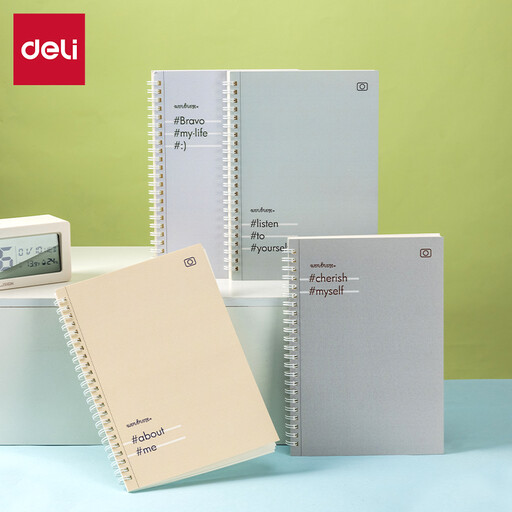
Why this choice suits this profile: This pack of four A5 notebooks lets you separate subjects, projects or personal notes without having to buy them individually.
The number of notebooks is clearly stated: four, each with 60 sheets and 120 pages. The spiral binding makes it easy to flip through.
A5 size, ruled pages and a pack of four for school, the office or keeping a journal.
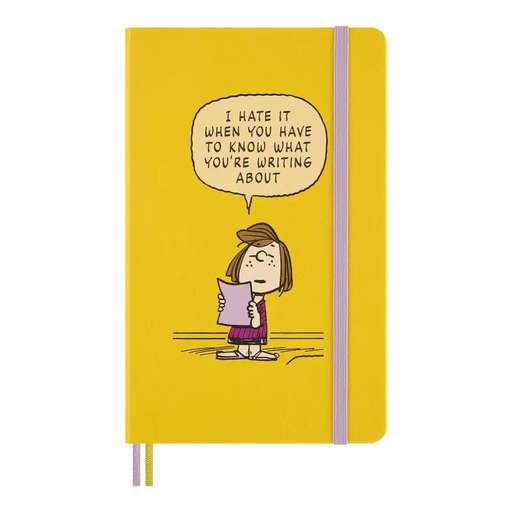
Why this choice suits this profile: With its Peanuts design, hard cover and thoughtfully designed storage features, this notebook is aimed at those who want to combine the pleasure of writing with a beautiful object to give as a gift.
The product page specifies 100 gsm ivory ruled paper, two bookmarks, an elastic closure and a 180° lay-flat opening.
Matte black hard cover, expandable inner pocket, stickers and acid-free FSC-certified paper according to the product page.

Why this choice suits this profile: This A5 spiral-bound notebook is ideal for frequent note-taking, professional projects and studies that require you to regularly revisit your notes.
The product page states a hard cover, twin-wire binding and 96 sheets of 100 gsm ivory ruled paper, with an elastic closure.
Flexible opening, 148 × 210 mm size and paper described as limiting ink bleed-through.
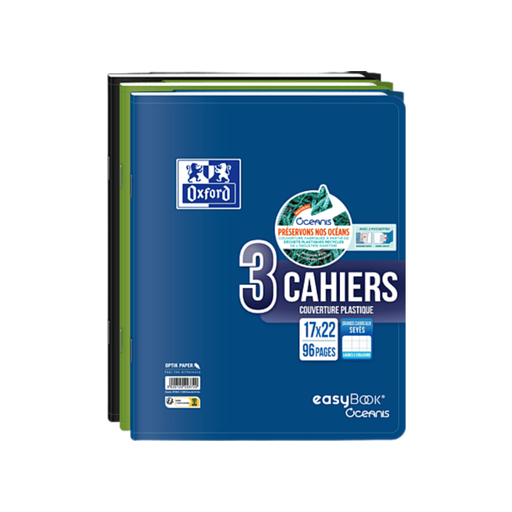
Why this choice suits this profile: The 17 × 22 cm size and French-ruled (Seyès) paper meet the common requirements of school exercise books in France.
The pack contains three clearly identified exercise books, each with 96 pages and French-ruled (Seyès) paper suitable for exercises and homework.
Three exercise books, stapled binding and a size compatible with ring binders and school bags.
We’ve put together a comprehensive, real-time updated list of products that fully meet these strict selection criteria and European safety regulations.
The A5 notebook suits most uses: classes, meetings, keeping a journal and personal organisation. The A6 size is easier to carry, but offers less space for tables or longer pieces of writing.
Not always. It’s worth considering if you write regularly, use a liquid ink pen or want to reduce show-through. For quick lists in pencil or ballpoint, a lighter paper may be sufficient.
The lifespan depends on the number of pages used, how often you write and the conditions it’s carried in. A hard cover, suitable binding and storing it away from moisture can help limit wear and tear. For heavy use, focus on comparing the number of sheets, the strength of the binding and how easily it opens flat.