
Livraison le jour même ou le lendemain

Qualité garantie

Débloquez vos offres de bienvenue: Livraison GRATUITE | Jusqu'à -80 % | 30 jours d'essai gratuits à JoyPlus
Téléchargez l'application
A notebook can accompany a lesson, a meeting, an idea you do not want to forget or even a personal journal. But the differences between models go far beyond the cover design. Choosing the wrong format, paper that is too thin or an impractical binding can turn an impulse purchase into stationery you soon stop using.
Before ordering, take the time to check three points that are often lost beneath the marketing language:
An A5 notebook measures approximately 14.8 × 21 cm. It is spacious enough for lesson notes, minutes, journaling and detailed lists, while still being easy to slip into a rucksack or work bag.
An A6 notebook, measuring approximately 10.5 × 14.8 cm, is designed primarily for portability. It is ideal for quick ideas, reminders, shopping lists and notes taken on public transport. However, the space available on each page is inevitably more limited.
For school, the French format often matters more than the look of the exercise book. A 17 × 22 cm school exercise book with Seyès ruling matches pupils’ usual writing habits and fits easily into a school bag. For homework and subjects requiring more room, the 24 × 32 cm format provides a more comfortable writing area.
Paper weight refers to the weight of the paper per square metre. 100 g/m² paper is generally thicker and more pleasant to use than 70 or 80 g/m² paper. It often feels better with a ballpoint pen, rollerball or fine felt-tip pen, but its compatibility with a particular ink will always depend on how it is actually used.
If you write with a fountain pen or use felt-tip pens, check the information available about the paper. However, do not mistake a simple marketing promise for an absolute guarantee. The best approach is to choose a model suited to your usual writing instrument.
A hardback cover protects the sheets more effectively in a bag and provides useful support when you are writing without a table. A soft cover is generally lighter and easier to fold, but offers less protection against knocks and repeated handling.
Spiral binding often allows the notebook to open flat and makes it easier to take notes with one hand. Stitched or glued binding has a more traditional look, while a stapled exercise book remains perfectly suitable for homework and everyday school use.
A notebook with a bookmark helps you quickly find the last page you used. A notebook with an elastic closure prevents it from opening accidentally and can hold a few loose sheets, although it is no substitute for a proper pocket. For occasional reminders, an adhesive notepad or sticky notes is a useful addition to a traditional notebook rather than a replacement for it.

Why this choice suits this profile : The compact format and four-pack make it easy to separate tasks, ideas and reminders without having to make multiple purchases.
The number of notebooks is clearly stated, while the A7 format keeps short notes compact.
Pack of 4, squared paper, top-opening spiral binding and soft cover.
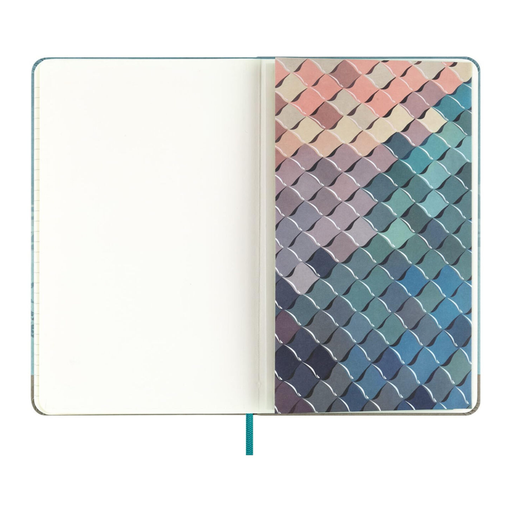
Why this choice suits this profile : Its Casa Batlló-inspired cover combines a highly decorative design with features intended for everyday writing.
The listing details the essential features : 100 g/m² ruled paper, elastic closure, ribbon bookmark and lay-flat opening.
Fabric-covered hardback, acid-free ivory paper, expandable inner pocket and two page-marking accessories.
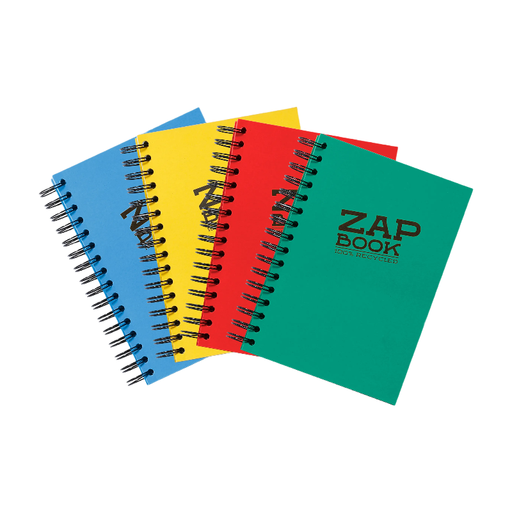
Why this choice suits this profile : Its compact format and blank pages meet the needs of creatives, illustrators and anyone who alternates between sketches and annotations.
The listing specifies the number of sheets, the 80 g/m² paper weight and the lay-flat spiral binding : you know exactly what to expect.
160 blank sheets, paper stated to be 100% recycled, acid-free paper and A6 format.
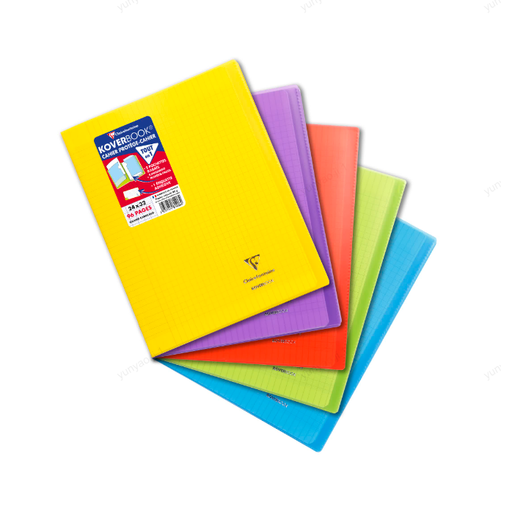
Why this choice suits this profile : The pack allows you to dedicate one exercise book to each subject or project, with a format large enough for lessons and homework.
The format, wide ruling, page count and included pockets are all stated, unlike on overly vague product listings.
5 exercise books, 24 × 32 cm format, 90 g/m² paper, polypropylene cover and flaps with pockets.
We have put together a complete, real-time updated list of products meeting these demanding selection criteria and European safety regulations.
For a notebook to give as a gift, choose a hardback cover, a design suited to the recipient’s tastes and genuinely useful accessories. The Jubiluu A5 models feature 100 g/m² ruled paper, a ribbon bookmark and an elastic closure. They can be suitable for writing, journaling and professional use, subject to checking the design and available stock.
On a desk, sticky notes remain a practical addition. The Deli pack contains 12 pads of 100 sheets in a 3 × 3-inch format, while Post-it Super Sticky notes are available in packs of 6 pads of 90 sheets in a 76 × 76 mm format. Above all, compare the quantity, dimensions and stated level of adhesion according to the surface you intend to use.
For reminders and short lists, an A6 notebook with 80 sheets may be enough. For lessons, meetings or a regularly kept journal, an A5 notebook with 96 sheets offers more flexibility. Before comparing prices, always check whether the listing refers to sheets or pages.
It is suitable for many everyday uses, but the result depends on the ink and the pressure applied. With a fountain pen or a wet felt-tip pen, test a page before filling the notebook if possible.
Keep it in a dry place, avoid exposing it to high humidity and do not overload the elastic closure. A hardback cover, binding suited to the opening style you want and careful handling without putting strain on the pages will help preserve its structure.