
Livraison le jour même ou le lendemain

Qualité garantie

Débloquez vos offres de bienvenue: Livraison GRATUITE | Jusqu'à -80 % | 30 jours d'essai gratuits à JoyPlus
Téléchargez l'application
A notebook can accompany you through your studies, structure a meeting, capture ideas or serve as a personal journal. But choosing one based solely on the cover or the price can sometimes lead to disappointment: paper that's too thin, an impractical size, or a binding that gets in the way of writing.
Before you fall for an A5 notebook, an A6 notepad or a school exercise book, take a moment to check a few concrete features. Here are the most common mistakes to avoid, along with a selection of models suited to different uses.
Manufacturers sometimes list "60 sheets" and "120 pages" for the same product. A sheet has two sides, whereas a page generally refers to a single usable side. To compare two notebooks properly, always check both figures.
A 60-sheet spiral notebook can be enough for occasional notes. For a long-term project, a journal or professional use, it's better to go for a notebook with 160 or 192 pages.
The paper weight, expressed in g/m², gives you an initial indication of the paper's thickness. However, on its own, it can't predict how the paper will behave with all writing instruments. 70 g/m² paper is lightweight and practical for everyday use, while a weight of 90 to 100 g/m² will generally suit heavier inks better.
The transparency of the paper also depends on the type of pen or marker you use, as well as the pressure you apply. For a lined or squared notebook intended for writing, compare the paper weight and the manufacturer's specifications rather than relying on a simple label like "premium".
A spiral binding often lets you open the notebook completely flat and turn pages effortlessly. However, it can take up a bit more space in your bag. A hard cover protects your notes better, but adds weight. As for the elastic closure, it stops pages from getting creased or the notebook from opening while you're on the move.
For students and schoolchildren, the 17 × 22 cm format with French-ruled (Seyès) lines remains very practical for homework. In the office or for keeping a journal, the A5 notebook offers a good compromise between writing space and portability. The A6 notepad is best suited for lists, reminders and ideas jotted down on the go.
An A4 sketchbook with plain pages won't meet the same needs as a lined notebook for keeping a diary. Start by determining your main use to avoid a purchase that doesn't fit.
Paper quality depends on several factors: weight, texture, opacity and finish. Papers of 80 to 100 g/m² often offer a good balance for writing and some sketching. Terms like "acid-free", "pH neutral" or "recycled" refer to specific characteristics; on their own, they don't guarantee the same performance with all pens.
Ranges like Clairefontaine notebooks or Moleskine notebooks come in different sizes and ruling types. However, take the time to check the specifications of the exact model: within the same brand, the paper weight, cover and binding can vary from one collection to another.
A hard cover protects the pages better in a bag or briefcase. A bookmark, an elastic closure or a pen loop can be very useful if you use your notebook regularly. For school use, a transparent cover with flaps can also make it easier to store loose sheets.
Finally, remember to check how many notebooks are included. A pack of notebooks can be handy for separating subjects or projects, as long as you check the size, page count and paper type of each notebook.
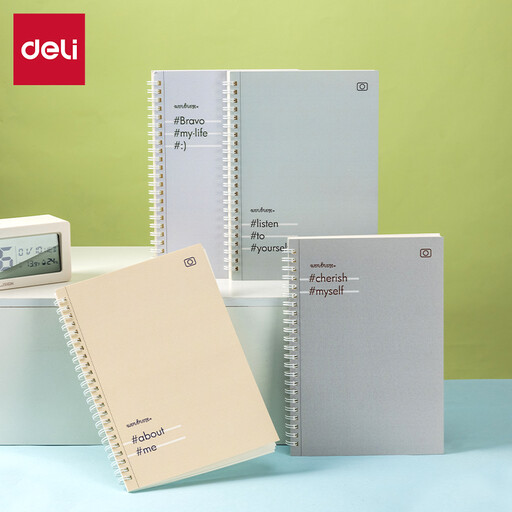
Why this choice suits this profile: The A5 format works well for classes, lists and office notes alike. The pack of four notebooks makes it easy to separate subjects or projects.
The listing clearly states 60 sheets (120 pages), along with 70 g/m² paper and a spiral binding.
148 × 210 mm format, four notebooks per pack and a practical spiral opening.
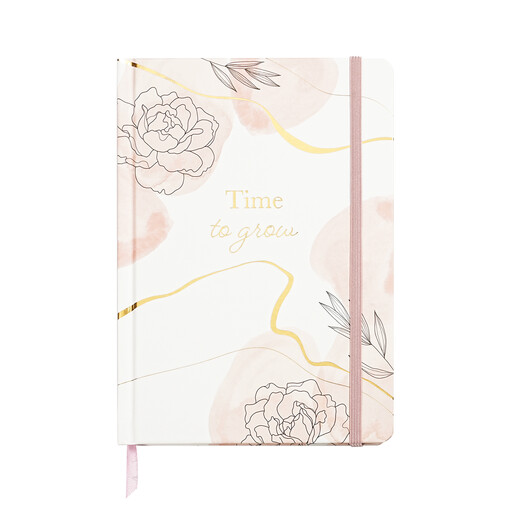
Why this choice suits this profile: Its textured hard cover and accessories make it a great companion for professional notes, journaling or as a gift.
The description specifies it contains 96 sheets of 100 g/m² cream paper, plus a bookmark and an elastic closure.
100 g/m² paper, hard cover and integrated accessories.
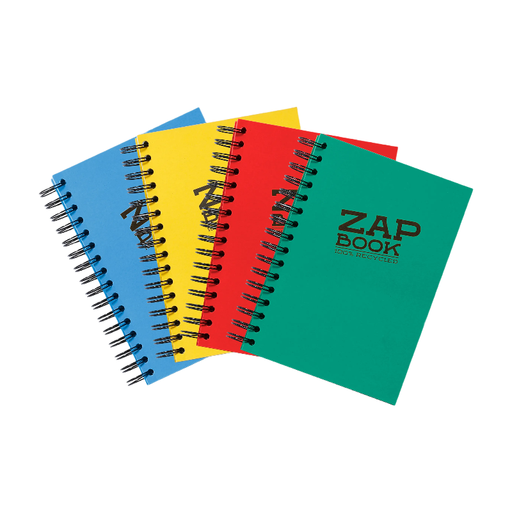
Why this choice suits this profile: Its large format and plain pages meet the needs of creatives, sketchers and those who fill notebooks quickly.
The listing mentions 160 sheets of 80 g/m² recycled paper, acid-free and pH neutral.
A4 format, lays flat and white paper suitable for both notes and drawing.
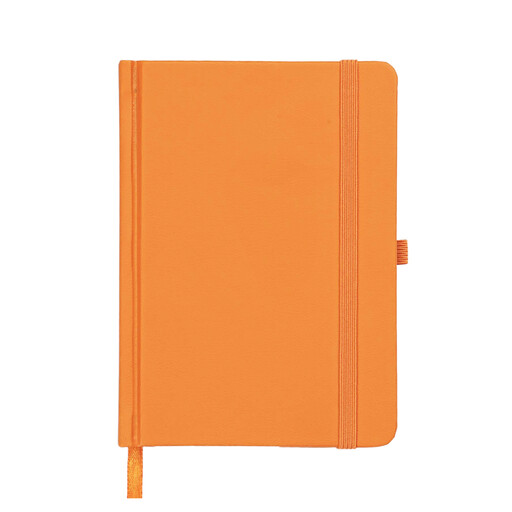
Why this choice suits this profile: Its compact size slips easily into a bag or pocket for jotting down a route, an idea or a list throughout the day.
The A6 format and elastic closure keep it compact and secure during travel.
160 pages, 100 g/m² lined paper, bookmark, pen loop and elastic closure.
We've selected a complete range, updated in real time, of products that meet these exacting criteria as well as European safety regulations.
The A5 format works very well for classes, revision cards and daily work. For French exercises, a 17 × 22 cm school exercise book with Seyès ruling will often be more suitable. A4 offers more space for diagrams and bulky documents.
Its lifespan depends on how often you use it, the number of pages and how you transport it. A hard cover, a well-protected binding and storing it away from damp conditions all help it last longer. If you use it every day, also check the condition of the spiral and the elastic regularly.
No. 70 or 80 g/m² paper works perfectly well with ballpoint pens and pencils. 100 g/m² offers more comfort with certain inks and generally reduces show-through, but it also makes the notebook thicker and heavier. The best choice therefore depends on your instruments and how you write.