
Livraison le jour même ou le lendemain

Qualité garantie

Débloquez vos offres de bienvenue: Livraison GRATUITE | Jusqu'à -80 % | 30 jours d'essai gratuits à JoyPlus
Téléchargez l'application
A notebook can be used for taking notes in class, preparing for a meeting, jotting down ideas or keeping a personal diary. But a pretty cover alone doesn't make a good purchase. The size, paper and binding all directly affect writing comfort and how long your notebook will last.
Before you order, three common pitfalls keep cropping up:
The A6 size, measuring roughly 10.5 × 14.8 cm, is ideal for quick notes, lists and ideas scribbled on the go. An A6 pocket notebook slips easily into a bag or a large pocket, but the writing space is naturally limited.
The A5 size, around 14.8 × 21 cm, offers a very practical compromise for work, study and journaling. It gives you enough room for a lined journal, meeting notes or well-organised lists, without becoming too bulky.
For homework and exercises, the French school format deserves special attention. A Seyès exercise book (17 × 22 cm) helps structure handwriting thanks to its specific ruling. The 24 × 32 cm formats, meanwhile, provide a comfortable surface for lessons, documents and assignments.
Paper weight is measured in gsm (grams per square metre). A 70 gsm paper can work perfectly well with a ballpoint pen or pencil. A weight of 90 to 100 gsm generally feels denser and reduces show-through from one page to the next. For wet drawing or watercolour, however, it's best to choose paper designed specifically for that purpose: a simple sketchbook doesn't necessarily have the same properties as a specialist one.
Also think about checking the ruling:
A hard cover protects the pages better inside a bag and sometimes lets you write without a support. Lighter, a soft cover is more suited to everyday, low-stress use.
Small extras can also make life easier: an elastic closure stops the notebook from opening in your bag, a bookmark ribbon lets you find the right page quickly, and a pen loop saves you hunting for your pen at the bottom of your pocket. These details obviously don't replace a sturdy binding or suitable paper.

Why this choice suits this profile: This pack of four A7 notebooks is ideal for lists, reminders and quick notes. The different colours let you separate subjects, tasks or projects without buying multiple packs.
The four-pack means you won't run out of paper quickly. The A7 format is, however, best suited to short notes.
Four notebooks, squared paper, spiral binding with top opening and one-handed use.
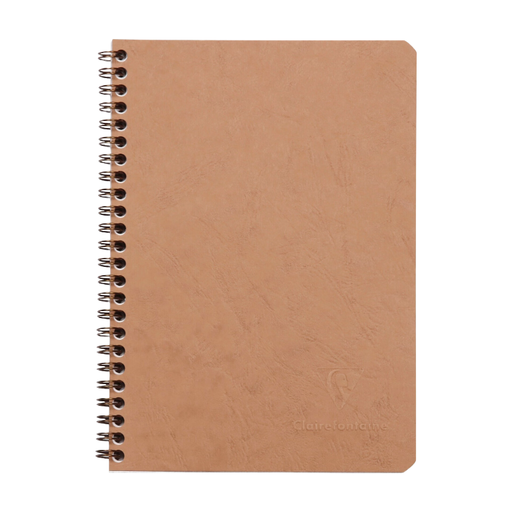
Why this choice suits this profile: Its A5 size and 180° lay-flat binding make it ideal for anyone who switches between writing, journaling and sketching in the same notebook.
The description clearly states the size, lay-flat binding and 90 gsm Vélin Velouté paper. This makes it easier to compare with less detailed models.
100 pages, 90 gsm paper, tinted cover and manufactured in France with PEFC certification.
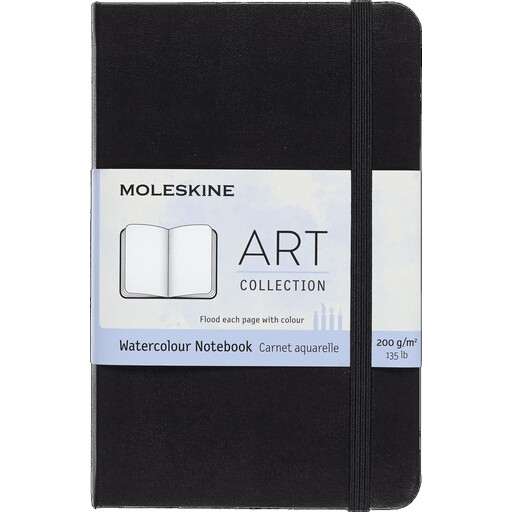
Why this choice suits this profile: This pocket sketchbook is aimed at travellers and creatives who want a compact support for drawing or colour studies on the move.
Its acid-free, off-white paper is stated as 200 gsm. That's a much more useful benchmark for wet drawing than simply calling it an 'artist's sketchbook'.
Pocket size, hard cover, lay-flat binding, elastic closure and expandable inner pocket.
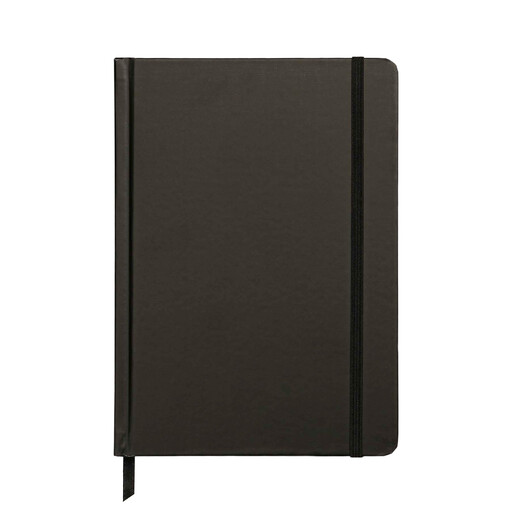
Why this choice suits this profile: This undated planner can be started at any time. Its monthly and weekly views let you manage work, study or personal projects.
The 'undated' label means you don't pay for unused pages when your habits change. The stated capacity is 224 pages, which is 112 sheets.
A5 size, hard cover, 100 gsm offset paper, elastic closure and bookmark ribbon.
We've put together a comprehensive, real-time updated list of products that fully meet these strict selection criteria and European safety regulations.
How long a notebook lasts depends on the number of sheets, how often you write and the conditions it's carried in. An A6 notebook used for jotting down reminders can last several weeks, or even months. By contrast, a 96-page school exercise book fills up quickly when it's used every day.
To keep your notebooks in good condition, store them in a dry place, protect them from moisture and avoid overloading the inner pockets. A hard cover, a well-secured binding and an elastic closure can help reduce wear and tear from being carried around, but they won't make the notebook indestructible.
Choose the A6 pocket notebook for quick notes and when you're on the move. The A5 notebook is better suited to meeting notes, journaling, study and projects that need several pages.
Go for paper around 90 to 100 gsm and check the manufacturer's information on show-through and ink bleed. A test is still recommended if you use a very wet fountain pen or a felt-tip pen.
It can be a good choice if you're starting partway through the year, if your organisation changes regularly, or if you want to avoid leaving dated pages blank. However, compare the layout, capacity and space for notes before you order.