
Livraison le jour même ou le lendemain

Qualité garantie

Débloquez vos offres de bienvenue: Livraison GRATUITE | Jusqu'à -80 % | 30 jours d'essai gratuits à JoyPlus
Téléchargez l'application
A notebook can help you follow a course, organise your day, jot down an idea or keep a diary. On the surface, buying one seems simple. Yet a few pitfalls can quickly spoil the experience: a size that's too bulky ends up at the bottom of your bag, paper that's too thin lets ink show through, and an impractical cover wears out quickly.
To choose a model that suits you, it's best to start with how you'll actually use it and look at the ruling, paper and accessories, rather than relying solely on the look or brand name.
A pocket notebook slips easily into a bag or jacket, but its pages offer less room for writing up a report or developing a project. Conversely, an A4 or 24 × 32 cm format is better suited to lectures and homework, but it's more cumbersome for everyday use.
The A6 notebook, measuring roughly 10.5 × 14.8 cm, is ideal for lists, reminders and ideas scribbled on the go. The A5 notebook, around 14.8 × 21 cm, is a versatile compromise for writing, planning or keeping a journal.
A hard cover protects the pages better when a notebook is regularly carried around. It also provides a more stable surface for writing without a desk. A soft cover is generally lighter and more flexible, but it offers less protection against bent pages.
The material is also worth considering. Fabric gives a pleasant feel and a neat finish, while PU can be simply wiped clean with a slightly damp cloth. In both cases, avoid excessive moisture and harsh cleaning products.
The word "premium" doesn't always tell you much about the paper's weight, shade or ruling. To compare models on a solid basis, check:
A lined notebook makes continuous writing easier, while a gridded notebook is better suited to tables, diagrams, calculations and sketches. A perforated pad is ideal when you need to tear out pages cleanly.
For a student, a large-format exercise book allows you to take structured notes and keep your course materials together. For a professional, an A5 notebook can hold a meeting report, a to-do list and a few annotations without becoming too heavy.
Artists and those looking for a notebook for ideas and sketches will often prefer blank pages. Writers and journaling enthusiasts will tend to choose a lined notebook with a cover that opens flat.
The models featured here use paper of 70, 80, 90 or 100 g/m². A weight of 100 g/m² feels more substantial under the pen and can help reduce show-through, though it won't completely stop ink bleeding with certain pens.
Also check the number of sheets. The Jubiluu A6, for example, contains 80 sheets, or 160 pages, while some models state the total number of pages directly. This distinction helps you avoid overestimating the notebook's actual capacity.
An elastic band keeps the notebook closed in your bag. A ribbon bookmark saves you from dog-earing pages, while a pen loop helps you avoid forgetting your pen. An inner pocket can hold receipts, cards or a few loose sheets.
These small details really come into their own when they match your habits. For occasional note-taking, a perforated pad with a rigid back may be perfectly sufficient. For daily use, a hard cover, lay-flat binding and an elastic closure make the notebook much more pleasant to handle.
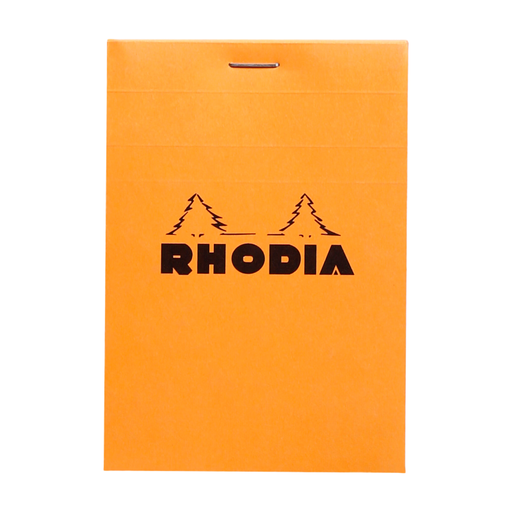
Why this choice suits this profile: Its 8.5 × 12 cm size is ideal for lists, reminders and quick notes, without requiring a significant investment in accessories.
Its rigid cardboard back provides a stable writing surface, while its 80 micro-perforated sheets tear out cleanly.
5 × 5 mm grid ruling, 80 g/m² paper and a portable size.
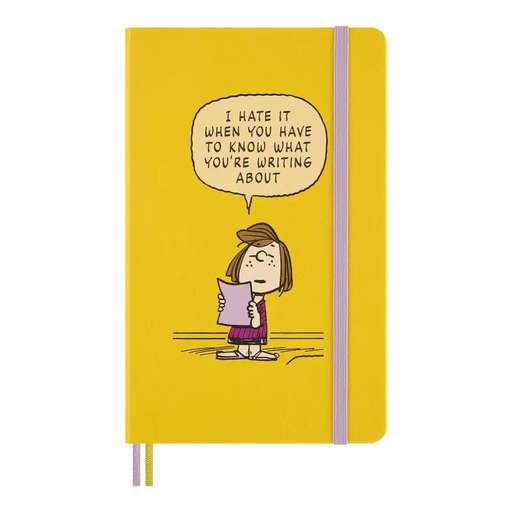
Why this choice suits this profile: Its black hard cover featuring Snoopy and its refined finish will appeal to collectors and anyone looking for a notebook to give as a gift.
The product page specifies the paper weight, paper type and accessories, rather than relying solely on the design.
100 g/m² lined ivory paper, two bookmarks, elastic closure, inner pocket and 180° lay-flat opening.
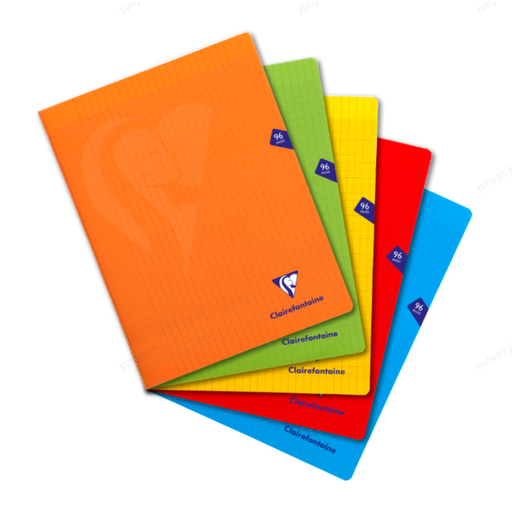
Why this choice suits this profile: This pack is ideal for students and professionals who want to keep subjects, projects or meetings separate across several notebooks.
The large format and polypropylene cover protect the notebooks during regular school or professional use.
Five 96-page notebooks, Clairefontaine 90 g/m² paper, three-colour Séyès ruling and made in France as stated on the product page.

Why this choice suits this profile: This compact notebook slips into a bag for commutes, days at the office or journaling sessions, with several integrated accessories.
Its size is clearly stated and its hard cover protects the pages. The elastic closure also stops the notebook from opening in your bag.
160 pages, 100 g/m² lined paper, ribbon bookmark, pen loop and a choice of several colours.
We've put together a comprehensive, real-time selection of products that meet these exacting criteria, while complying with European safety regulations.
The A5 format offers a good balance between writing space and portability. For a few reminders or quick ideas, an A6 or pocket notebook is more practical. For lectures, drawings and projects, a larger format saves you from having to use multiple pages.
A lined notebook is suitable for writing, journaling and reports. A gridded notebook makes it easier to create tables, diagrams, plans and small sketches. For versatile use, also check that the grid is subtle enough not to interfere with your writing.
It all depends on how often you use it, how you transport it and where you store it. A hard cover, an elastic closure and keeping it away from moisture all help preserve the pages. Avoid overfilling the inner pocket and clean the cover with a suitable cloth, following the manufacturer's recommendations.