
Livraison le jour même ou le lendemain

Qualité garantie

Débloquez vos offres de bienvenue: Livraison GRATUITE | Jusqu'à -80 % | 30 jours d'essai gratuits à JoyPlus
Téléchargez l'application
A notebook can accompany you in all kinds of situations: lessons, meetings, lists, journalling, sketches or organising your daily life. However, product listings sometimes focus more on the cover or colour than on the features that really determine how comfortable the notebook is to use.
Before placing your order, there are three common pitfalls to watch out for:
Here are the key criteria to consider when choosing a notebook that is genuinely suited to your everyday life in France.
The size directly affects how easy the notebook is to carry and how much writing space it provides.
A pocket notebook is therefore not necessarily the best choice for a long meeting or a sketchbook. Conversely, a large notebook can quickly become cumbersome on public transport.
Expressed in g/m², paper weight refers to the weight of the paper per square metre. It is not enough to judge its overall quality, but it is a useful first indicator:
Remember to check the shade of the paper too: white, ivory or off-white. Cream paper creates a softer, more restful appearance, while white paper can make coloured annotations easier to read.
A spiral binding generally allows the notebook to open completely flat, making it easy to turn the pages. It is particularly practical at the office, in lessons or when you need to take notes with one hand. On the other hand, the spiral may take up a little more room in a pouch.
Staple binding remains lightweight and works well for school notebooks used for a particular subject. A hard cover offers better protection for the pages while travelling, while a soft cover helps reduce weight and provides greater flexibility.
For everyday use, some accessories are far from unnecessary:
When your notebook goes everywhere with you, these practical details are often more valuable than a purely decorative finish.
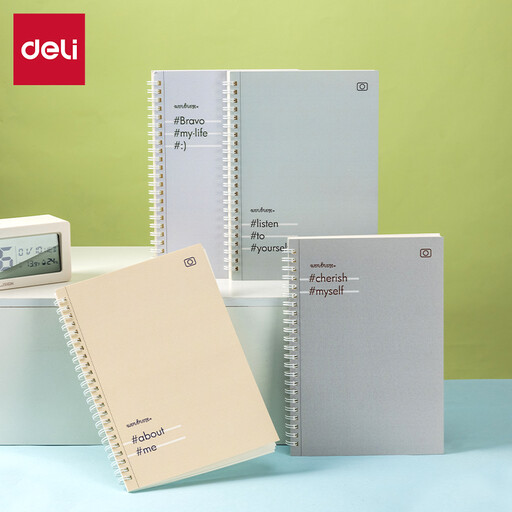
Why this choice suits this profile : This pack of four A5 notebooks is suitable for students, families and anyone who wants to organise their notes by subject or project. The size fits into most bags and ring binders.
The quantity is clearly presented as a pack of four notebooks. This means you avoid ordering a single notebook when you actually need several.
A5 size, spiral binding, 60 sheets and 120 pages per notebook, with 70 g/m² paper.
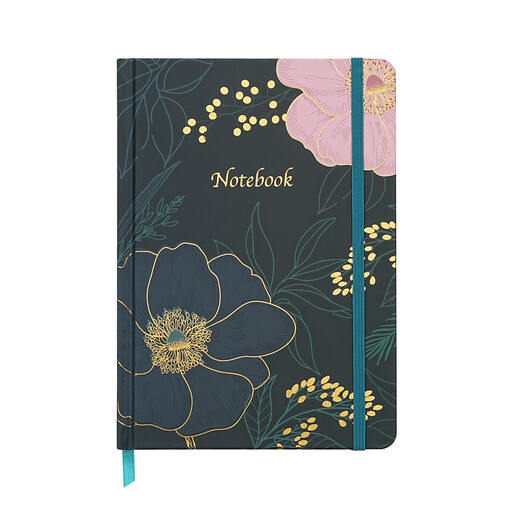
Why this choice suits this profile : With its decorated hard cover, this notebook is designed for anyone who wants to combine writing, journalling and a polished presentation in one item, whether at home or in the office.
The listing details the size, number of sheets, paper weight and accessories, rather than relying solely on the appearance of the cover.
A5 size, 96 sheets of 100 g/m² off-white offset paper, ribbon bookmark and elastic closure.
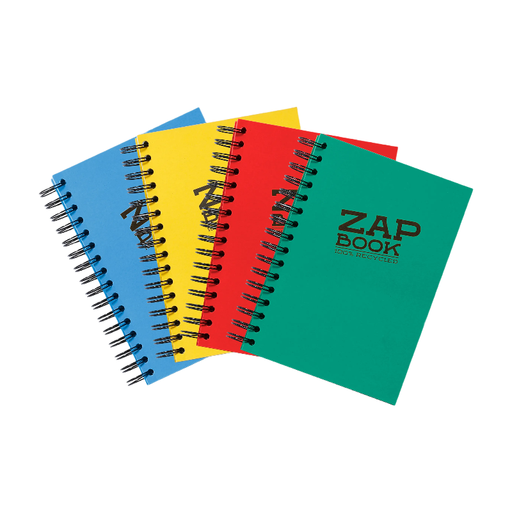
Why this choice suits this profile : This sketchbook is aimed at creatives, art students and anyone who needs a large A4 surface for sketches, diagrams or free-form notes.
The paper is clearly described as plain, and the A4 size is clearly stated. This prevents you from ending up with a ruled notebook that is too narrow for drawing.
160 sheets of 80 g/m² recycled paper, spiral binding and a stated lay-flat opening for both drawing and writing.
We have brought together a complete, real-time selection of products that meet these demanding criteria while complying with European safety regulations.
The A5 size suits most uses: lessons, meetings, journalling and organising your daily life. Choose an A6 notebook if portability is your priority. For drawing or taking highly detailed notes, A4 provides considerably more comfortable space.
A spiral binding generally allows the notebook to open flat, with the pages folded back behind the cover. It is particularly suitable for frequent note-taking. Staple binding is lighter, while a hard cover offers better protection for the contents while travelling.
It depends on how often it is used, storage conditions and the strength of the cover. Keep your notebook away from moisture, avoid forcing the pages and do not pull excessively on the elastic. For a notebook with a faux-leather cover, a soft, slightly damp cloth is all that is needed for cleaning. Avoid chemical products and excessive water.