
Livraison le jour même ou le lendemain

Qualité garantie

Débloquez vos offres de bienvenue: Livraison GRATUITE | Jusqu'à -80 % | 30 jours d'essai gratuits à JoyPlus
Téléchargez l'application
A notebook can accompany you through your studies, help you prepare for a meeting, capture an idea or keep a personal diary. But with Moleskine notebooks, lined exercise books, pocket sizes, hard covers and multi-packs, the choice can quickly become overwhelming.
The features highlighted on product pages aren’t always the most helpful. To avoid buying something that doesn’t suit your needs, focus on three practical criteria: size, paper and binding.
A product advertised as having 160 pages may actually contain 80 sheets that can be written on both sides. This distinction changes the notebook’s real capacity and can make it difficult to compare two models. For school or work use, always check whether the seller is referring to pages or sheets.
A soft cover is lightweight and easy to slip into an already full bag. However, it offers less protection for the pages when a notebook is handled daily. A hard cover provides more structure, but it generally makes the notebook heavier and takes up a little more space.
Measured in g/m², the paper weight gives a more reliable indication of thickness. For everyday note-taking, 70 or 80 g/m² is usually sufficient. With a pen that lays down more ink, 100 g/m² paper can feel denser and help reduce ink bleed. That said, it doesn’t guarantee no show-through or bleed-through at all – the nib and the type of ink also play a role.
An A5 notebook offers a comfortable writing surface for classes, meetings, journaling and detailed lists. It’s still compact enough to fit in a backpack or messenger bag.
An A6 notebook, measuring roughly 10.5 × 14.8 cm, is best suited for quick ideas, lists and notes on the go. It slips easily into a small bag pocket, but the writing space is naturally more limited.
For school, a 17 × 22 cm exercise book with Seyès ruling is better suited to exercises and guided handwriting. Larger sizes, such as 24 × 32 cm or A3, are more appropriate for homework, bulky documents and drawing.
Choose lined ruling for structured writing, blank pages for sketching and creative freedom, or squared pages for tables, diagrams and calculations.
Ivory paper gives a softer tone and can reduce visual contrast compared to a very bright white. The models featured here use ivory or cream paper from 70 to 100 g/m². For a sketchbook or drawing pad, look for paper that is explicitly designed for the technique you have in mind. Clairefontaine’s Goldline, for example, offers 140 g/m² white paper suitable for dry techniques and watercolour.
A stitched binding often makes it easier to lay the notebook flat and keeps the pages securely together over time. A stapled binding remains a simple, practical and lightweight choice for a school exercise book. Also check for an elastic closure, a ribbon bookmark, an inner pocket or a pen loop.
For a personal diary or a notebook you carry every day, these accessories can genuinely make life easier. However, they don’t replace a suitable cover or storing your notebook away from moisture.
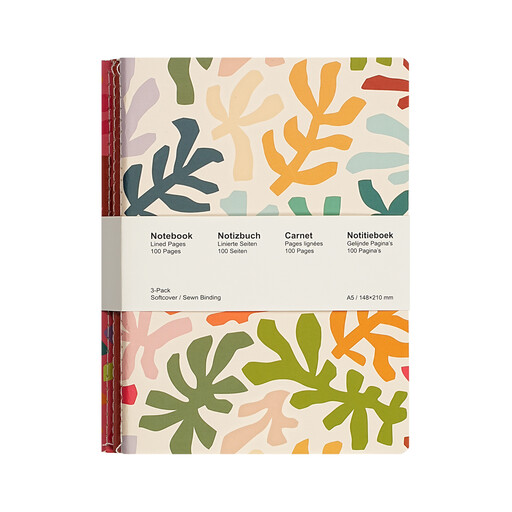
Why this choice suits this profile: This pack of three A5 notebooks is ideal for students, families and anyone who wants to keep their studies, work and personal notes clearly separate.
The product page details the contents of each notebook: 50 sheets of 80 g/m² lined cream paper and a stitched binding, rather than an ambiguous capacity description.
A5 size, lightweight soft cover, lined pages and lay-flat design thanks to the stitched binding.
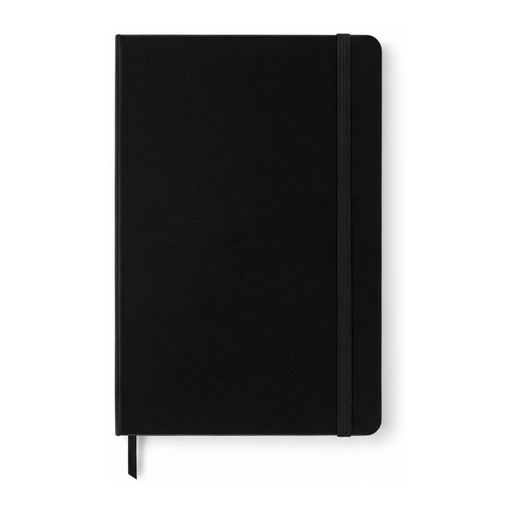
Why this choice suits this profile: With its hard cover and blank pages, this notebook is aimed at professionals, creatives and journaling enthusiasts looking for a durable, well-structured companion.
The specifications clearly state the weight of the acid-free ivory paper – 70 g/m² – as well as the elastic closure, ribbon bookmark and 180° lay-flat opening.
Hard cover, expandable inner pocket, ribbon bookmark and blank pages for writing or drawing.
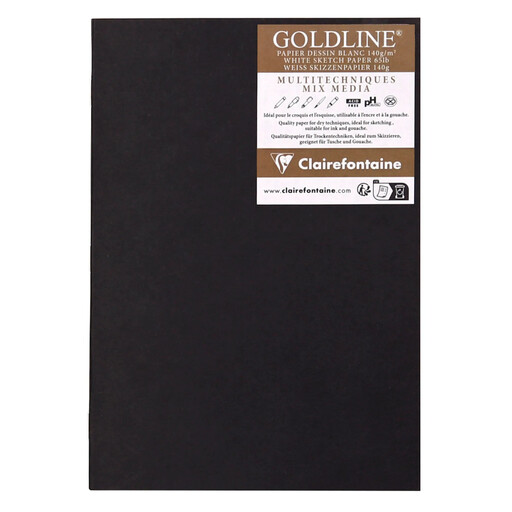
Why this choice suits this profile: This sketchbook is designed for artists and art students who need a large surface for working with pencil, pastel or watercolour.
The 140 g/m² weight and the stated compatibility with several techniques are clearly listed, rather than being buried in a vague marketing promise.
A3 size, 140 g/m² multi-technique white paper, stitched binding and advertised lay-flat opening.
We’ve selected a full range of products that meet these demanding criteria and European safety standards, updated in real time.
The A5 size offers a good balance between writing surface and portability. For short meetings or quick notes, an A6 notebook may be enough. Students used to French ruling may prefer a 17 × 22 cm school exercise book, or a larger size depending on their school’s requirements.
A hard cover generally protects the pages better from creases when the notebook is carried around frequently. Its lifespan also depends on the binding, how often it’s opened and how it’s stored. Keep it dry, avoid forcing the cover and don’t overstretch the elastic closure.
Start by checking the paper weight, the type of paper and the manufacturer’s recommended use. 100 g/m² paper may be better suited to ink-heavy writing, while a sketchbook should be chosen based on the technique you’re using. For watercolour, go for a notebook specifically designed for that purpose rather than a simple lined exercise book.