
Livraison le jour même ou le lendemain

Qualité garantie

Débloquez vos offres de bienvenue: Livraison GRATUITE | Jusqu'à -80 % | 30 jours d'essai gratuits à JoyPlus
Téléchargez l'application
A notebook might seem simple to choose… until its cover warps in your bag, the ink bleeds through the pages, or the size turns out to be ill-suited for its intended use. Between an A5 notebook for work, an A6 model to carry everywhere, a school exercise book and a personal diary, the differences in everyday use are far from trivial.
Before placing an order, three common pitfalls keep cropping up:
The A5 size, measuring approximately 14.8 × 21 cm, offers an excellent compromise for classes, meetings, journaling or personal writing. It gives you enough room to write without becoming too bulky in a bag.
The A6 size, around 10.5 × 14.8 cm, slips easily into a small bag or a large pocket. It's perfect for lists, reminders and jotting down ideas on the go. On the downside, its smaller surface area is less suited to long reports or detailed drawings.
Larger sizes, such as 21 × 31.8 cm or 24 × 32 cm, are more intended for folders, schoolwork and extensive note-taking. However, for commuting or on-the-go use, they can lack manoeuvrability.
The grammage refers to the weight of the paper per square metre. Paper of 70 to 80 g/m² is generally lightweight and works well with ballpoint pens and pencils. With 90 to 100 g/m², the paper feels denser and show-through between the two sides is often better controlled. That said, it doesn't guarantee no bleed-through at all with every ink.
Next, you need to choose the layout that suits your use:
Mentions of acid-free, pH neutral, FSC or PEFC refer to specific characteristics of the paper or its sourcing. They don't replace the need to check the texture, thickness and compatibility with the type of ink you use.
A hard cover protects the pages better in a bag and can serve as a writing surface when you don't have a desk. A soft cover is lighter and folds back more easily, making it pleasant to carry.
A spiral notebook opens flat and sometimes allows you to fold the pages completely back. It's practical for taking notes with one hand, but the spiral can snag in some bags. A stitched or glued binding gives a more compact feel; just check that the notebook opens enough to write comfortably.
Accessories can also make a difference: elastic closure, bookmark, pen loop, inner pocket or detachable sheets. They're useful when they genuinely match your habits, but they can also add weight to the notebook or push up the price.
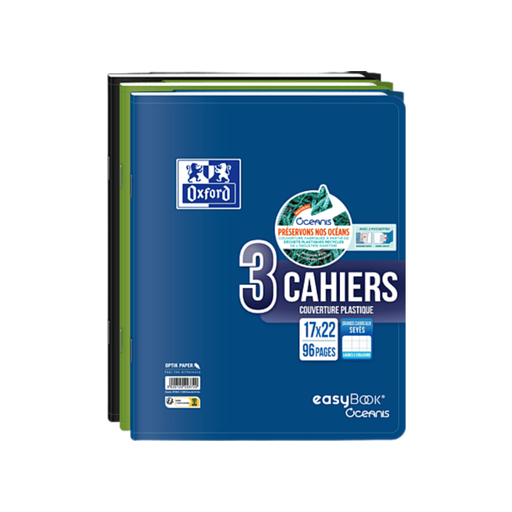
Why this choice suits this profile: This pack of three exercise books in 17 × 22 cm format lets students organise their subjects without buying multiple items.
The Seyès ruling is clearly stated and the number of exercise books is specified. So there's no risk of mistaking a decorative notebook for a structured school exercise book.
Three exercise books of 96 pages each, in 17 × 22 cm format, with stapled binding and French Seyès ruling.
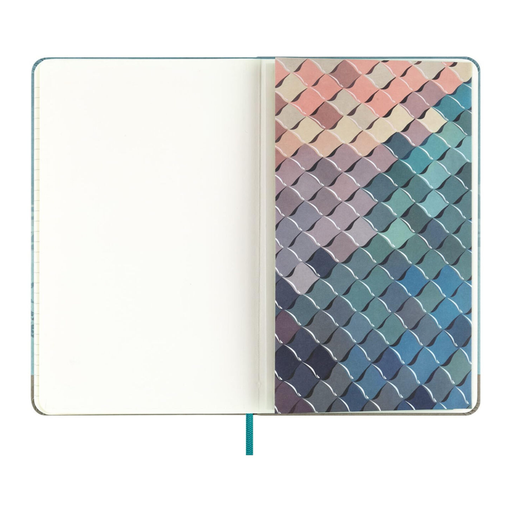
Why this choice suits this profile: Its large format and hard cover are aimed at those looking for a durable item for writing, planning or gifting.
The product page specifies the nature of the 100 g/m² ivory ruled paper, the elastic closure and the 180° flat opening. So it doesn't just rely on an aesthetic promise.
Hard cover inspired by Casa Batlló, 100 g/m² ruled paper, bookmark, inner pocket and elastic closure.
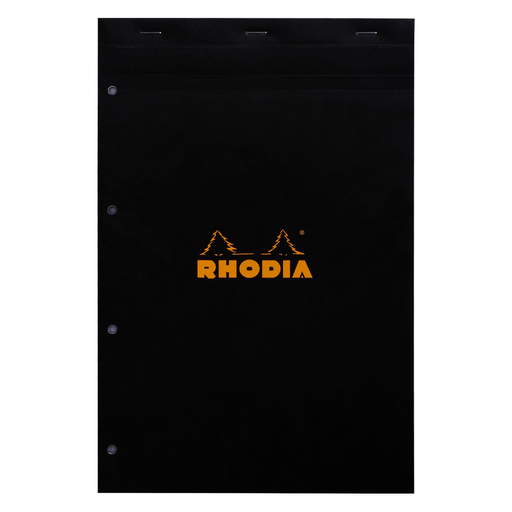
Why this choice suits this profile: Professionals, students and anyone who files their sheets will appreciate the 21 × 31.8 cm format and the perforations compatible with a ring binder.
The product page mentions 80 micro-perforated sheets, 5 × 5 mm grid ruling and four filing holes. The archiving functions are therefore clearly verifiable.
Rigid back, 80 g/m² paper, detachable sheets and four-hole perforation for filing.
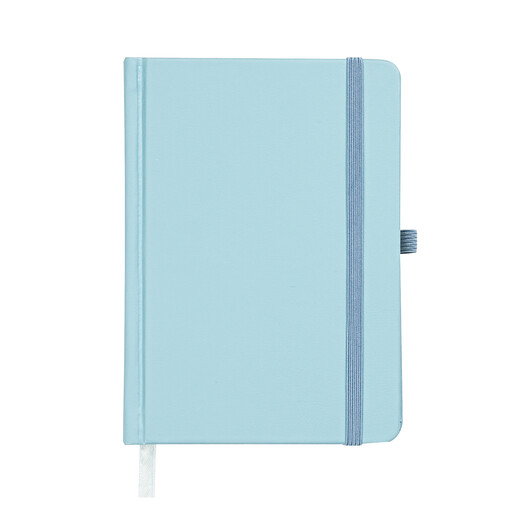
Why this choice suits this profile: Its A6 size is ideal for travellers, people jotting down reminders and anyone who wants a compact notebook within easy reach.
The size, number of sheets and accessories are all detailed, so you can assess its actual capacity before buying.
80 sheets of 100 g/m² lined paper, PU hard cover, pen loop, bookmark and elastic closure.
We've put together a comprehensive, real-time updated selection of products that meet these exacting criteria as well as European safety regulations.
To extend the life of your notebook, avoid leaving it in a damp environment or exposed to high heat. A hard cover can usually be cleaned with a soft, dry cloth; fabric or decorative paper finishes need a bit more care.
Also check the notebook's capacity before starting a large project. A Moleskine notebook or a hard-cover model will suit a journal you want to keep for a long time. A Clairefontaine notebook or a spiral-bound model will be more practical for easy writing, tearing out sheets or filing your notes. For drawing, check the paper's compatibility with your pencils and markers rather than relying solely on the product name.
An A5 notebook is suitable for classes, work, journaling and longer texts. An A6 notebook is easier to carry and better suited to lists, reminders and quickly jotted-down ideas. The right choice really depends on the space you have and how much you plan to write.
It all depends on the quality of the binding and paper, as well as storage conditions and frequency of use. Acid-free or pH-neutral paper is designed to remain more stable over time. However, it still needs to be kept away from moisture, direct sunlight and repeated handling.
Yes, especially for tables, diagrams, calculations and planning. For written lectures or a personal diary, a lined notebook will generally be more comfortable. A blank page notebook remains best for sketches and free layouts.