
Livraison le jour même ou le lendemain

Qualité garantie

Débloquez vos offres de bienvenue: Livraison GRATUITE | Jusqu'à -80 % | 30 jours d'essai gratuits à JoyPlus
Téléchargez l'application
A notebook can accompany you to class, meetings, travel or during a journaling session. Yet product listings often focus on appearance and buzzwords like "premium", without detailing the features that really matter day to day. A pretty cover won't make up for paper that bleeds through, an awkward binding or a size that's too bulky to carry.
Before you place an order, here are the main pitfalls to avoid and the criteria to examine when finding a notebook that suits your habits.
A product may boast a high page count without clearly stating the paper weight, size or finish. Always check the difference between sheets and pages: 96 sheets usually means 192 usable pages, front and back included.
For school or work, also consider the actual writing surface available. An A5 notebook offers more room than a pocket-sized A6 or A7, but it also takes up more space in your bag.
A hardcover notebook protects your pages better during travel. On the other hand, a spiral notebook can lie flat and is more comfortable for writing one-handed. A sewn binding or full 180° lay-flat design makes long note-taking sessions easier, but it can also push the price up.
For documents you need to file, a notepad with micro-perforated sheets and standard hole punches is often more practical than a decorative notebook.
Claims like "high quality" or "smooth writing" are no substitute for concrete specifications. Look at the paper weight, the shade of the paper and the ruling type. Paper of 70 to 80 gsm is generally fine for a ballpoint pen or pencil. For heavier handwriting, paper of 90 to 100 gsm offers more substance, provided your pen is compatible.
A lined notebook is primarily for writing. For tables, diagrams and calculations, a 5 × 5 mm grid is often more suitable. For drawing, go for blank pages and check the paper weight before using felt-tips or wet media.
Paper weight is expressed in gsm. On its own, it doesn't guarantee that ink won't bleed through, but it's an objective benchmark. Also check whether the pages are lined, squared or blank.
Terms like acid-free, pH neutral, FSC or PEFC describe certain properties of the paper or its sourcing, when stated by the manufacturer. They don't, however, represent a general promise of durability for the whole product.
A hard cover protects the corners and pages inside a bag. A soft cover reduces weight and makes it easier to carry. Small accessories can also make a big difference:
Ribbons and elastics are small parts: keep any notebooks containing them out of the reach of children under 3 years old.
The following options meet several needs: everyday writing, gifting, travel or filing. The information is based on the features stated for each product.

Why this choice suits this profile: This pack of A7 notebooks lets you separate lists, class notes, reminders and ideas without buying multiple products. Their small size slips easily into a pocket or pencil case.
The pack clearly states the quantity, A7 size and 50 sheets per notebook. The top spiral keeps the footprint small, without pretending to replace a full-size exercise book.
Four notebooks, squared paper and a top-opening design that lies flat for jotting down information quickly.
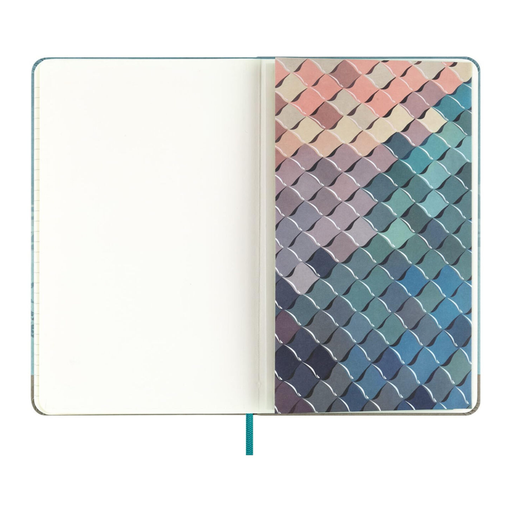
Why this choice suits this profile: Its hard cover, decorated with a design inspired by Casa Batlló, is aimed at those looking for an elegant notebook for writing, gifting or adding to a personal collection.
The listing specifies the presence of 100 gsm ivory lined paper, an elastic closure, a ribbon bookmark, an inner pocket and a 180° lay-flat opening.
Acid-free 100 gsm paper, integrated storage accessories and a cover inspired by an architectural motif.
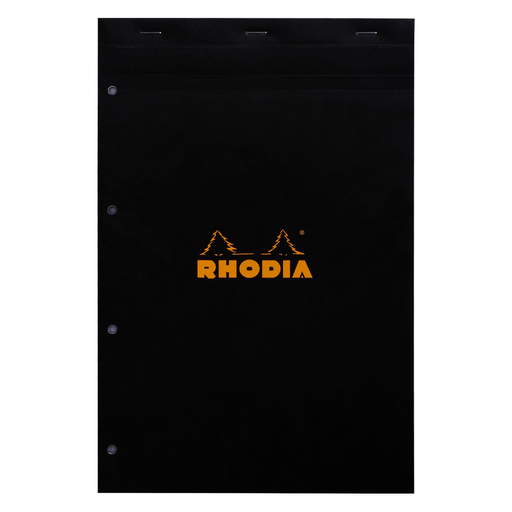
Why this choice suits this profile: With dimensions of 21 × 31.8 cm, this pad is ideal for structured note-taking, plans and diagrams that need plenty of space, whether at the office or on the move.
The listing details the 80 sheets, 5 × 5 mm grid, micro-perforations and four filing holes. The cardboard back provides a stable writing surface, even without a table.
Detachable sheets, easy filing and 80 gsm vellum paper with PEFC certification.
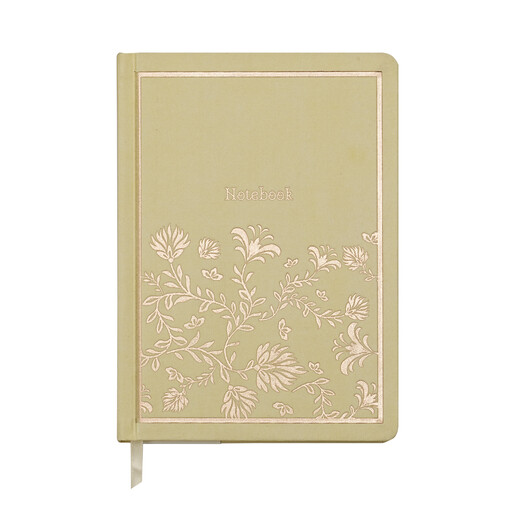
Why this choice suits this profile: This A5 notebook combines a floral fabric cover, classic ruling and practical accessories. It's equally suited to journaling, studying or as a gift.
The information states 96 sheets, i.e. 192 pages, along with 100 gsm ivory lined paper. The elastic closure helps keep the notebook shut inside a bag.
An A5 format, 100 gsm paper, a ribbon bookmark and a decorative fabric cover.
We've put together a full selection, updated in real time, of products that meet these exacting criteria as well as European safety regulations.
A5 format suits most uses: it offers enough space to write while remaining easy to carry. For short reminders or a travel notebook, A6 is more compact. A7 is best for lists and ideas you need to jot down quickly.
Paper of 70 to 80 gsm is generally fine for a ballpoint pen or pencil. For heavier handwriting, a weight of 90 to 100 gsm offers more substance. With a fountain pen or felt-tip, check the manufacturer's recommendations and test a page before committing to extended use.
Store it in a dry place, away from moisture and direct sunlight. Avoid pulling too hard on the elastic, don't overfill the inner pocket and clean the cover with a soft, dry cloth. For a notebook used in class or at work, a cover can help reduce wear and tear during transport.