
Livraison le jour même ou le lendemain

Qualité garantie

Débloquez vos offres de bienvenue: Livraison GRATUITE | Jusqu'à -80 % | 30 jours d'essai gratuits à JoyPlus
Téléchargez l'application
A notebook can be used for anything: taking notes in class, preparing for a meeting, keeping a diary, organising a trip or jotting down an idea on the go. Yet behind this seemingly simple purchase lie a few pitfalls. A size that's too small quickly becomes uncomfortable, a flimsy cover gets damaged in your bag, and the wrong ruling limits how you can use it.
Before you focus on the design or the price, take the time to check three essential elements: the size, the type of paper and the binding. Here are the criteria to consider when looking for a notebook that truly suits your everyday needs.
Product listings sometimes show the number of pages, sometimes the number of sheets. A notebook advertised as having 96 sheets usually contains 192 pages (written on both sides), whereas a model listed as having 96 pages offers half the capacity. It's a difference worth keeping in mind for students, professionals and anyone who writes every day.
Also check whether the pack contains a single notebook or several. A pack of four notebooks can be very handy for separating subjects or projects, but it doesn't replace a sturdy notebook designed to last a long time.
A stitched or glued binding often gives a more polished appearance. A spiral notebook, on the other hand, is easy to flip through and usually lies flat. The downside is that the spiral takes up more room in a bag and can snag on certain fabrics.
For school, the stapled exercise book remains a reliable, simple and budget-friendly option. For heavy note-taking, a spiral binding or a 180° lay-flat design can be far more comfortable. So don't stop at the cover – think about how the notebook will behave on a desk, on a train or balanced on your lap.
Thick paper isn't essential in every case. For a ballpoint pen or a pencil, 70 gsm paper can work perfectly well. With a fountain pen, a felt-tip pen or regular writing on both sides of the page, a weight of 90 to 100 gsm offers more comfort and reduces show-through.
The feel matters too. Smooth paper makes for fluid writing, while a ruled or grid surface helps you structure the page more easily.
A travel notebook should stay easy to carry. At the office, however, you can prioritise capacity and stability on the desk.
A lined notebook is suitable for writing and general note-taking. A grid notebook, especially with small squares, is better for tables, diagrams, calculations and layout work. Blank pages give you more freedom for drawing, mind maps or sticking in mementos.
In primary school and many French educational settings, the Seyès exercise book remains essential. Its horizontal and vertical lines help structure handwriting. However, it's not necessarily the best choice for professional or personal use, where a classic lined page is often more pleasant.
A hard cover protects the pages better in a bag and sometimes lets you write without a surface underneath. A soft cover is lighter and easier to store. For daily use, a few details can make a real difference:
An elastic closure and a bookmark won't make up for a flimsy binding, but they do make the notebook much more enjoyable to use every day.

Why this choice suits this profile: Their small size is perfect for lists, reminders and quick notes. The four notebooks also let you easily separate different topics.
The number of notebooks and the size are clearly stated, making it easy to compare with a single notebook of larger capacity.
Pack of 4, grid paper, top spiral binding and A7 size that's easy to carry.
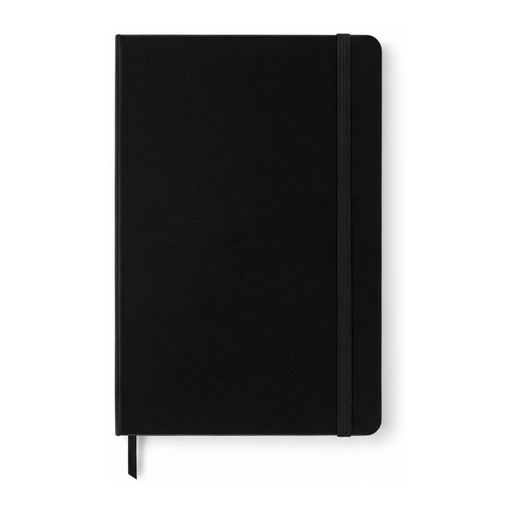
Why this choice suits this profile: Its hard cover and thoughtful details make it a durable companion, equally at home in a professional setting or for creative projects.
The listing specifies the hard cover, lay-flat design, 70 gsm acid-free ivory paper and inner pocket.
Blank pages, elastic closure, ribbon bookmark, expandable pocket and paper from FSC certified sources according to the product listing.
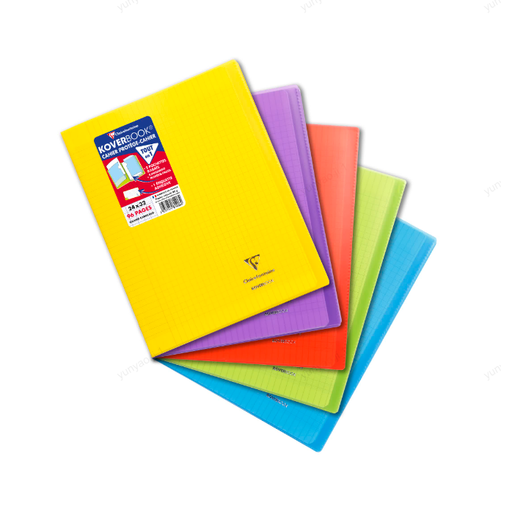
Why this choice suits this profile: With their 24 × 32 cm size and 96 pages per notebook, these offer the space you need for lessons, exercises and bulky folders.
The polypropylene cover protects the notebooks, while the flap pockets let you keep loose sheets without needing a separate folder.
Pack of 5, Vélin Velouté 90 gsm paper, wide ruling, two flaps and made in France as stated.

Why this choice suits this profile: Compact and easy to carry, this notebook is ideal for travel, journaling and notes taken on the go.
Its dimensions are clearly stated and the integrated extras mean you don't need to buy a bookmark or pen holder separately.
A6 size, 160 pages, 100 gsm ivory lined paper, faux leather cover, elastic closure, ribbon bookmark and pen loop.
We've put together a comprehensive, real-time selection of products that meet these exacting criteria as well as European safety standards.
The A5 size offers the best balance between writing surface and portability. For a pocket or small bag, an A6 notebook is more discreet. If you take a lot of notes or slip documents between the pages, it's better to go for a larger size.
It depends on the subject. Seyès ruling is suitable for school exercises and structured handwriting, particularly in the French education system. For lessons, meetings and general writing, a lined notebook is more versatile. Grid ruling, on the other hand, makes tables, calculations and diagrams easier.
Store it in a dry place, protect it from moisture and avoid forcing the binding. A hard cover, an elastic closure and a pocket will help preserve the pages when you're on the move. To clean the cover, use a soft, dry cloth, or a slightly damp one if the product listing allows it.