
Livraison le jour même ou le lendemain

Qualité garantie

Débloquez vos offres de bienvenue: Livraison GRATUITE | Jusqu'à -80 % | 30 jours d'essai gratuits à JoyPlus
Téléchargez l'application
A notebook can accompany you to lessons, meetings, on the train or during a journaling session. But an attractive cover alone does not make a good notebook. A stylish design can quickly become impractical if the ink shows through the paper, the binding gets in the way of writing or the format does not fit in your bag.
Before choosing an A5 notebook, an A6 notebook or a lined notebook, here are the criteria to consider, along with a selection of models suited to different uses.
A hardback, floral or textured cover can easily catch the eye, but it says nothing about the writing quality. Remember to check the paper weight, binding type and number of sheets too. A hardback cover offers better protection for the pages, while a soft cover will generally help keep the weight of your bag down.
Some products advertise 192 pages, which corresponds to 96 sheets that can be written on both sides. This distinction matters when comparing the actual capacity of several notebooks. For everyday use, a diary or a notebook for work and study, the number of sheets gives you a more realistic idea of how long it will last.
Measuring around 10.5 × 14.8 cm, an A6 notebook is easy to carry, but offers less room for detailed notes. An A5 notebook, measuring approximately 14.8 × 21 cm, is better suited to structured notes, lists and journaling. For everyday use, an elastic closure, bookmark or pen loop can also make a real difference.
Paper weight is expressed in g/m². On its own, it cannot predict exactly how the paper will perform, but it is a useful guide:
For a premium paper notebook, also check the shade — white or ivory — as well as whether it is ruled, squared or plain. If you write with a fountain pen, look for information about show-through and ink bleed-through. However, a marketing claim is not a guarantee that the paper will work with every type of ink.
A stitched or glued binding is suitable for a classic notebook. When it opens to 180°, the notebook makes it easier to take notes across two pages. A spiral binding often allows one section of the notebook to be folded completely back, which is handy for drawing or writing when space is limited.
For a sketchbook, choose plain pages and a binding that is stable enough to keep the notebook flat. For a bullet journal notebook, your choice will depend more on the type of pages provided: plain, dotted or squared.
An A6 notebook slips easily into a small pouch or bag pocket. An A5 notebook offers more comfort for lessons, meetings and projects. A hardback cover protects the pages better against creasing, while a fabric, card or imitation-leather cover offers a different feel in the hand.
If your notebook often travels between your bag and your desk, a notebook with an elastic closure helps prevent the pages from becoming creased. A notebook with a bookmark lets you quickly find the right section without having to add a loose sheet of paper.
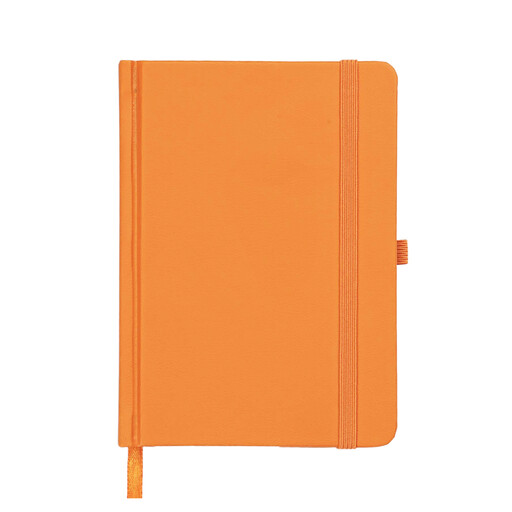
Why it suits this profile : Its A6 format is ideal for students and anyone who wants to quickly jot down a list, idea or appointment without carrying around a bulky notebook.
The product listing mentions a PU hardback cover, 80 sheets of 100 g/m² lined paper, an elastic closure and a ribbon bookmark.
A format measuring approximately 10.5 × 14.8 cm, a pen loop and 10 listed colour options, including sky blue and powder pink.
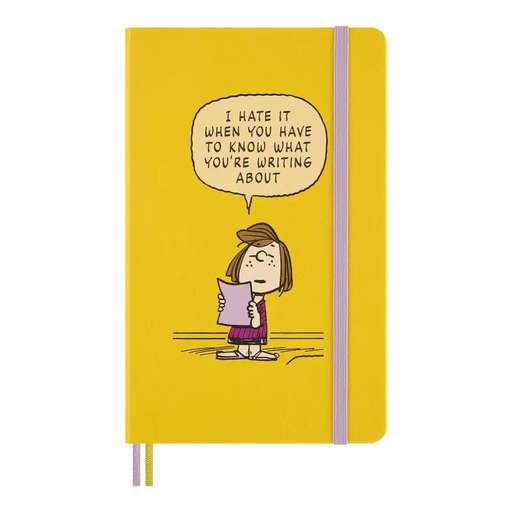
Why it suits this profile : This Peanuts Snoopy edition is aimed at collectors and stationery lovers looking for a beautiful object that is also practical for everyday use.
The practical details are clearly stated : 100 g/m² ivory lined paper, two bookmarks, an elastic closure and an expandable pocket.
A matt black hardback cover, a 180° lay-flat opening, stickers and a Snoopy design, according to the product listing.
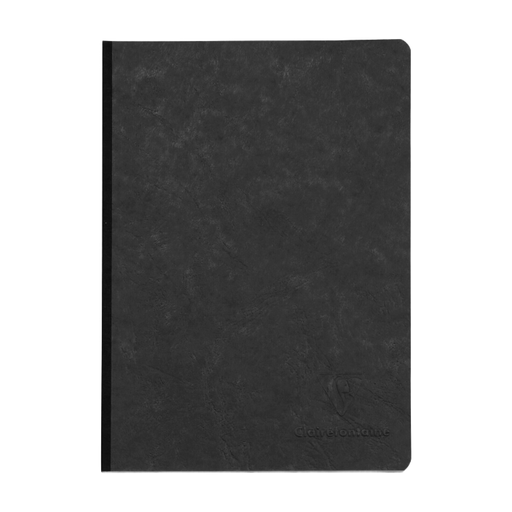
Why it suits this profile : Its A5 format and squared pages are equally well suited to studying, professional projects, diagrams and carefully organised notes.
The product listing specifies the format, 5 × 5 grid, lay-flat binding and 192-page capacity — all useful details when comparing models.
Clairefontaine Velin Velouté 90 g/m² paper, a tinted soft cover and a matching canvas spine.
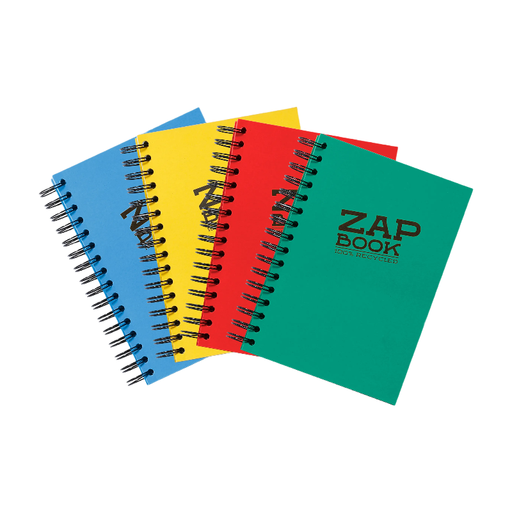
Why it suits this profile : Compact and easy to carry, this sketchbook is ideal for quick drawings, visual annotations and ideas to capture while you are out and about.
The inside is listed as plain, with no ruling, while the spiral binding allows you to use it completely flat for writing or drawing.
An A6 format, 160 sheets of 80 g/m² paper, plus paper described as recycled, acid-free and pH-neutral.
We have put together a complete, real-time updated selection of products that meet these selection criteria and European safety regulations.
Store your notebook in a dry place, away from heat sources and moisture. For a PU, card or fabric cover, use a soft, dry or barely damp cloth, following the manufacturer’s recommendations. Avoid forcing open a hardback notebook and do not overfill its inner pocket.
Small parts such as the elastic, ribbon or pen loop should be kept out of reach of children under 3 years of age when they present a risk of ingestion or entanglement.
An A6 notebook prioritises portability and brief notes. An A5 notebook offers more room for meeting notes, lessons, detailed lists and journaling. The right choice mainly depends on how much space is available in your bag and how much you plan to write.
Paper weighing 90 to 100 g/m² is a good guide for versatile use. For pencil or ballpoint pens, 80 g/m² may be sufficient. With a fountain pen, check the information about show-through and, if possible, test it with the type of ink you use.
A hardback cover generally offers better protection against creasing and minor knocks. However, the notebook’s lifespan also depends on the binding, storage conditions, frequency of use and how it is carried. An elastic closure and a lay-flat opening can also make it more comfortable to use every day.