
Livraison le jour même ou le lendemain

Qualité garantie

Débloquez vos offres de bienvenue: Livraison GRATUITE | Jusqu'à -80 % | 30 jours d'essai gratuits à JoyPlus
Téléchargez l'application
Starting a new project, heading back to school, or just need to organize your thoughts?? Buying a notebook might seem trivial. Yet, who hasn't been frustrated by paper that tears, ink that bleeds, or a binding that falls apart after just a few weeks?? Choosing the right notebook means getting a reliable daily companion. To prevent this quest from turning into a headache, here are the common pitfalls to avoid.
To avoid falling into these traps, let's focus on the few criteria that truly make a difference.
While paper weight, measured in grams per square meter (gsm), indicates a sheet's thickness and opacity, the quality of its finish is just as crucial.
The page's lines, or ruling, should first and foremost suit your needs.
The way the pages are bound plays a key role in your notebook's longevity and user comfort.
To help you make the right choice, here are our recommendations for three user profiles, selected based on our criteria for quality, durability, and practicality.
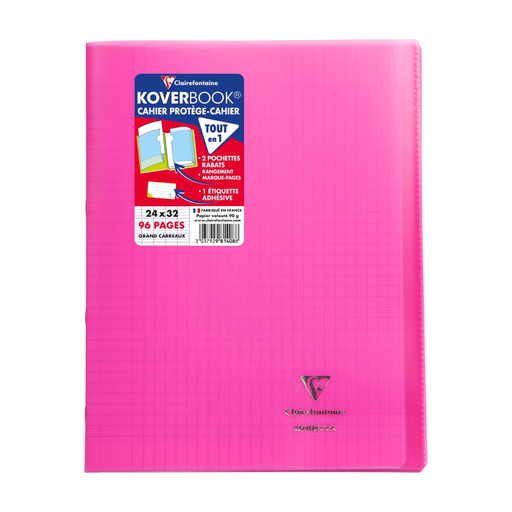
Why we chose it : This notebook is designed for the intense daily life of a student. It combines a notebook and a cover protector in one, with flaps that double as bookmarks or pockets.
The polypropylene cover is flexible and durable, avoiding the cracks common in rigid plastics. The 90 gsm Clairefontaine paper, meanwhile, protects against any ink-related mishaps.
A smart, durable all-in-one that combines high-quality paper with integrated storage.
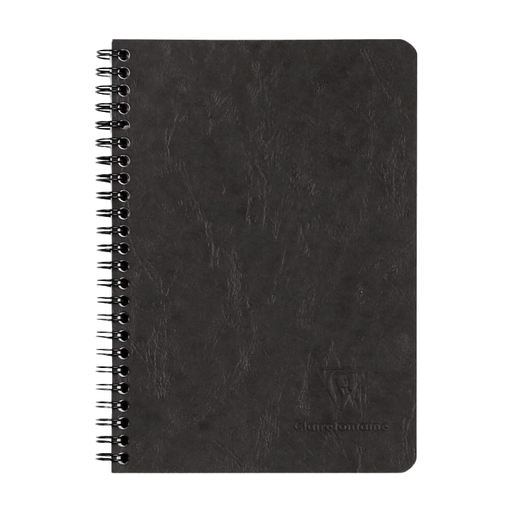
Why we chose it : With its A5 notebook size, understated faux-leather cover, and thoughtful details, it's perfect for on-the-go professional use.
The 120 pages are micro-perforated for a clean tear-out, avoiding the nightmare of messy, ripped pages. The three divider pockets let you sort documents without the risk of losing them.
Perforated pages and storage pockets for optimal organization on the move.
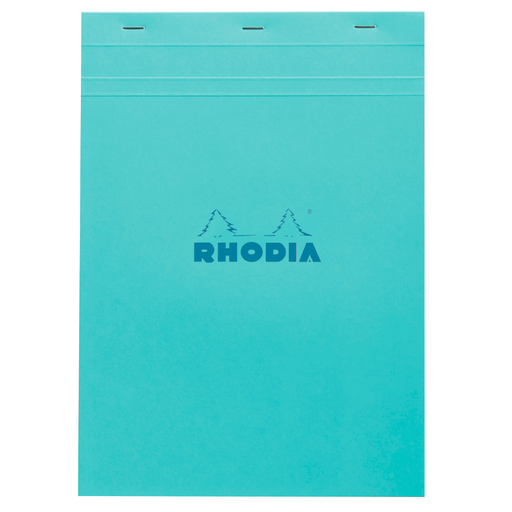
Why we chose it : The Rhodia pad is a benchmark for its simplicity and functionality. This A4 model with 5x5 graph ruling is the ideal tool for plans, diagrams, and notes that require structure.
No more struggling with flimsy notebooks that are impossible to use without a hard surface. Its ultra-rigid cardboard back provides a stable writing surface in any situation, even while standing on public transport.
A rigid back for stable note-taking anywhere and grid ruling for precision work.
We've compiled a comprehensive list of products that meet our strict selection criteria.
An 80 gsm paper is the bare minimum for writing with a fountain pen without unpleasant surprises. For optimal comfort and the certainty that ink won't feather or bleed through the page, nothing beats a high-quality 90 gsm paper, like the famous vellum finish of Clairefontaine notebooks.
Seyès ruling is the standard grid used in French schools. It consists of 8 mm x 8 mm main squares, with thinner horizontal lines spaced 2 mm apart to guide the height of letters. A vertical red margin line is also present.
It all depends on the manufacturing quality! A well-made spiral-bound notebook (especially one with a twin-wire binding) will be very sturdy and practical thanks to its ability to lay flat. A stapled (saddle-stitched) notebook is lighter but will show its limits if it's mistreated or if you frequently tear out pages. For unbeatable durability, a smyth-sewn binding remains the gold standard.