
Livraison le jour même ou le lendemain

Qualité garantie

Débloquez vos offres de bienvenue: Livraison GRATUITE | Jusqu'à -80 % | 30 jours d'essai gratuits à JoyPlus
Téléchargez l'application
Back to school, restocking office supplies… Choosing a notebook seems simple, almost trivial. And yet, who hasn't regretted an unsuitable purchase? Between paper that tears at the first touch of an eraser, ink that bleeds through the pages, and a cover that doesn't survive the first term, it's easy to make a mistake.
To avoid falling into the same traps, here are the 3 most common pitfalls and, more importantly, how to overcome them:
Fortunately, these headaches are avoidable. You just need to check a few very simple technical details.
Before you check out, a final glance at these three points is all it takes. This is what will make all the difference between a good and a bad notebook.
Expressed in grams per square metre (g/m?), paper weight is, quite simply, its thickness and density. It's THE number one criterion for preventing ink from smudging or bleeding through the page.
The ruling (the lines on the page) is not a minor detail: it must be adapted to the subject or use case.
Format and binding: a duo that determines everyday convenience.
To put theory into practice, here are a few reliable choices that tick all the boxes for different needs.
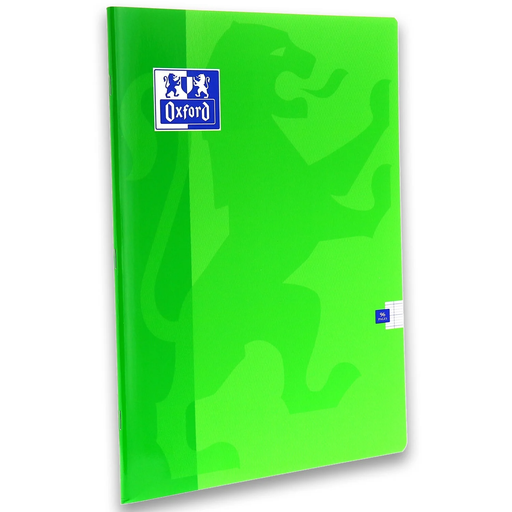
Why it stands out: It's the classic choice on school supply lists for middle and high school, and for good reason. With its 24x32 cm format and Seyès ruling, it meets the two essential requirements. Above all, it's built to withstand intensive daily use.
Its laminated card cover is virtually indestructible: it withstands knocks and protects the pages all year round. Inside, the famous Optik Paper blocks ink and ensures clean pages on both sides.
Ultra-smooth 90 g/m? paper. A cover that goes the distance. Two-tone ruling that's easy on the eyes.
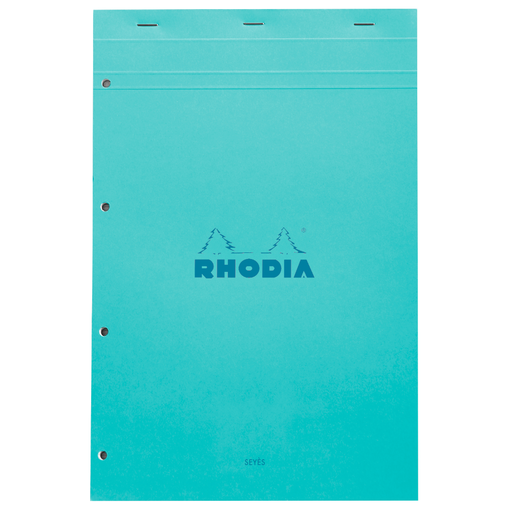
Why it stands out: The perfect ally for ultra-organised students and professionals. Its strength lies in its winning trio: spiral binding, detachable sheets, and pre-punched holes for immediate filing. No more loose pages!
Its ultra-rigid cardboard back turns it into a portable desk: perfect for writing anywhere. The micro-perforations ensure a clean tear every time, without any unsightly rips.
Micro-perforated sheets with 4 holes for direct filing in a binder. Rigid back for stable note-taking, even while standing.
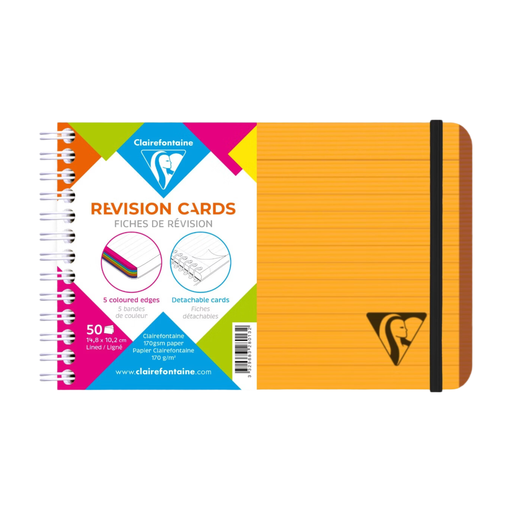
Why it stands out: Its sole mission: to help you create the best revision cards. Its secret weapon: an ultra-thick cardstock that guarantees sturdy cards, capable of surviving weeks of intensive handling before exams.
With its exceptional 170 g/m? weight, bleed-through isn't even a concern. Highlighters, markers... nothing gets through. The flexible and virtually tear-proof polypropylene cover protects everything.
170 g/m? cardstock perfect for index cards. Compact, easy-to-carry format. Coloured dividers to organise by subject.
Discover our full selection of notebooks and journals that meet all our quality criteria.
The 17x22 cm is the "school" format: small, light, easy to carry, typical for primary school. The 24x32 cm is the king of middle and high school formats. Its size, larger than A4, is designed so you can paste in handouts distributed in class without having to fold them.
Absolutely. It determines your writing comfort and the longevity of your notes. Paper that is too thin (less than 80 g/m?) will almost always let ink from your fountain pen or markers bleed through. Conversely, a 90 g/m? paper (the standard for Rhodia or Oxford) guarantees perfect opacity for double-sided use and an incomparably smooth feel.
It all depends on your use case. The staple-bound notebook is thin, light, and economical, but it doesn't open completely flat. The spiral-bound notebook is the champion of practicality: its 360° opening is perfect for writing anywhere. Its micro-perforated pages tear out cleanly for filing. Its only minor flaw: the spiral can sometimes snag in a messy bag.