
Livraison le jour même ou le lendemain

Qualité garantie

Débloquez vos offres de bienvenue: Livraison GRATUITE | Jusqu'à -80 % | 30 jours d'essai gratuits à JoyPlus
Téléchargez l'application
Far more than a simple object, a notebook is a powerful tool: it captures your ideas, organises your days, and preserves your memories. But with an overwhelming number of options available, the risk of ending up with a disappointing model is very real. A beautiful cover can sometimes hide subpar paper, and a flimsy binding can quickly render half the pages unusable.
As the Head of Product Recommendations at Joybuy, my mission is to help you cut through the noise. Let's forget the marketing jargon and focus on what really matters. This guide breaks down the pitfalls to avoid and gives you the keys to choosing THE notebook that fits your needs, whether you're a student, a professional, or a globetrotter.
Before we even talk about features, let's review the two deal-breakers that too often turn a promising purchase into a real disappointment.
To outsmart these traps, three technical criteria must be examined closely.
The way the pages are held together determines not only the lifespan of your notebook but also your writing comfort.
Expressed in grams per square meter (g/m?), paper weight is the number one indicator of the paper's ability to handle ink without issues.
To help you see how these criteria apply in practice, here are a few options that meet specific needs.
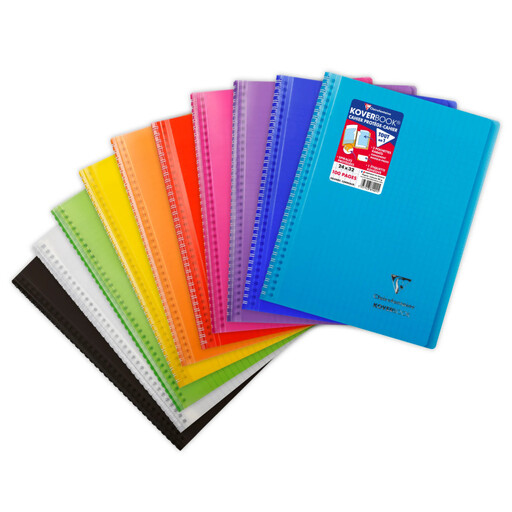
Key Features: This all-in-one notebook is the perfect school companion. Its large format is ideal for taking notes in class, and its sturdy polypropylene cover doubles as a notebook protector to last the whole year.
Its spiral binding allows for a 360° opening—goodbye to the inaccessible inner margin! The plastic cover acts as a built-in protector, preventing premature wear and tear.
Its two large pocket flaps are perfect for storing loose sheets or acting as a bookmark. The Clairefontaine 90 g/m? paper is a guarantee of unparalleled writing comfort.
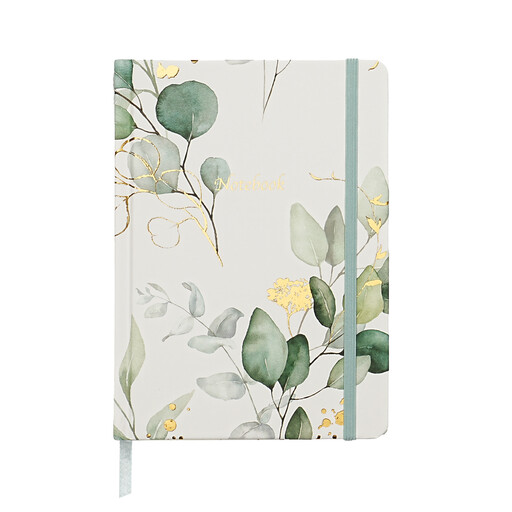
Key Features: With its textured hardcover and versatile A5 size, this notebook is an accessory that's as understated as it is effective for the office or meetings.
Its ivory 100 g/m? paper is thick enough to handle fountain pen ink without bleeding through, a must-have in a professional setting. Its sewn binding is a guarantee of durability.
Practical finishing touches, like the ribbon bookmark and elastic closure, make it a well-designed work tool for keeping your notes secure and within reach.
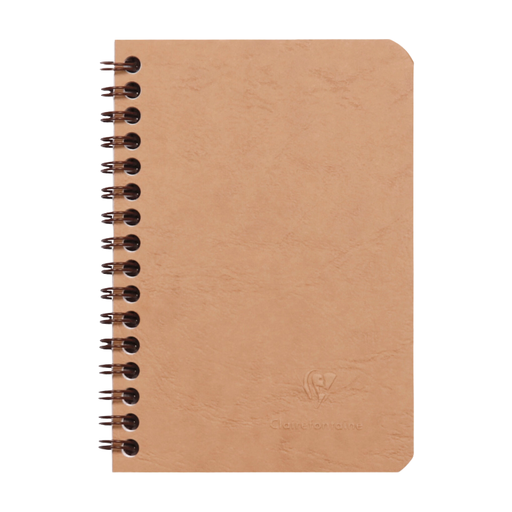
Key Features: Its pocket size (9 x 14 cm) and aged leather-look hardcover make it the ideal travel companion for a **travel journal** or a personal diary. It's built for adventure.
Its case binding ensures a perfectly flat opening, a feat for a pocket notebook where the centre is often sacrificed. The 90 g/m? paper is a reliable choice.
The combination of famous Clairefontaine paper, a sturdy construction, and an ultra-portable size makes it a safe bet for those who write anywhere, anytime.
Discover our full selection of notebooks that meet our quality criteria and current standards.
For comfortable use with a fountain pen, a paper weight of 90 g/m? is an excellent starting point. It offers the best compromise between opacity and flexibility. Papers like Clairefontaine's Vélin Velouté are renowned for their exceptional glide and excellent ink resistance. If you use highly saturated inks or broad nibs, switch to 100 g/m? (or more) for absolute peace of mind: no bleed-through guaranteed.
It all depends on your use case. The spiral notebook is unbeatable for taking notes on the corner of a table or even while standing, as it folds back on itself completely. Its downside: the spiral can get in the way for left-handers and tends to snag or deform in a bag. The stitched (sewn) notebook is generally more durable, offers an uninterrupted writing surface across the double page, and slides more easily into a stack of documents thanks to its flat spine.
Seyes ruling, with its famous 8x8 mm main grid and smaller horizontal lines, is the essential standard in the French school system, from primary school to high school. It is specifically designed to guide the learning of cursive handwriting. Outside of an academic setting (university, office, personal use), a lined notebook or one with a 5x5 mm grid is often considered more versatile and less restrictive.