
Livraison le jour même ou le lendemain

Qualité garantie

Débloquez vos offres de bienvenue: Livraison GRATUITE | Jusqu'à -80 % | 30 jours d'essai gratuits à JoyPlus
Téléchargez l'application
A Nordlux designer glass pendant light can transform a dining room, living room or kitchen. But choosing the right one involves more than simply going by the shape of the shade. A light that is too large, an incompatible bulb or a cable that is too short can quickly make everyday installation more difficult.
Before placing your order, three common mistakes are worth avoiding:
Here are the key criteria to consider when choosing a pendant light suited to your home and electrical installation.
The lampholder determines which type of bulb is compatible, as well as the maximum permitted wattage. An E27 pendant light generally accepts bulbs that are easy to find, available in a wide range of shapes and with different colour temperatures. The Miella, Café, Alton, Milford and Jelly models use this type of fitting.
The E14 pendant light is designed for bulbs with a small screw base, often preferred for compact lights or models with several light sources. The Orbiform, Grant and Franca ranges offer versions equipped with this fitting.
Used on the Contina, the G9 fitting takes a more compact bulb. For this model, the stated maximum wattage is 5 W. In all cases, check the product information and never exceed the recommended wattage.
A dimmable bulb can only be used if both the pendant light and the bulb are compatible with a dimmer. Nordlux product information specifies this for several models, but correct operation also depends on the control device installed.
For a light above a dining table, start by measuring the table’s width. A small-diameter pendant can be perfectly suitable for a round table or a smaller room. For a long table, several light sources or a three-light structure can distribute the illumination more effectively.
Above a kitchen island, adjust the height so that the worktop is well lit without obstructing your view. The three-light Miella pendant is 52 cm wide and has 130 cm cables. It is therefore better suited to a carefully planned arrangement than to a small dining area.
The Jelly model has a diameter of 39 cm and weighs 3.7 kg, so the ceiling fixing must be able to support this load. At the other end of the scale, the Café 15 is 15 cm in diameter and weighs 0.41 kg, making it easier to install in a hallway or above a small counter.
Opal or matt white glass diffuses soft, less direct and more comfortable light. It works just as well in a living room as in a bedroom or kitchen where you want a warm indoor glow. Hand-blown glass may contain small bubbles or slight variations in thickness. These details are a result of the handcrafted manufacturing process and are not necessarily defects.
Clear or smoked glass places greater emphasis on the bulb and the way the light plays across the surface. With its diamond pattern, the Orbiform has the feel of an Art Deco-style pendant light, while brushed or satin brass enhances its decorative appeal.
Models with an IP20 rating are intended for indoor use in dry areas. They are not designed for bathrooms or locations exposed to water splashes. For connection to the mains, it is best to use a qualified electrician, in accordance with the electrical regulations in force in France.
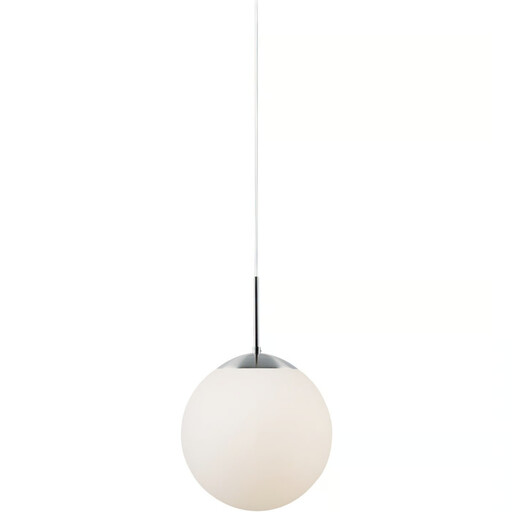
Why this choice suits this profile: its 15 cm diameter is ideal for small spaces, hallways and kitchen counters. Its E27 fitting lets you choose the bulb separately.
Its compact dimensions prevent a small room from feeling visually cluttered. The stated maximum wattage is 15 W.
Hand-blown opal glass, diffused light, 180 cm transparent cable and a weight of 0.41 kg.
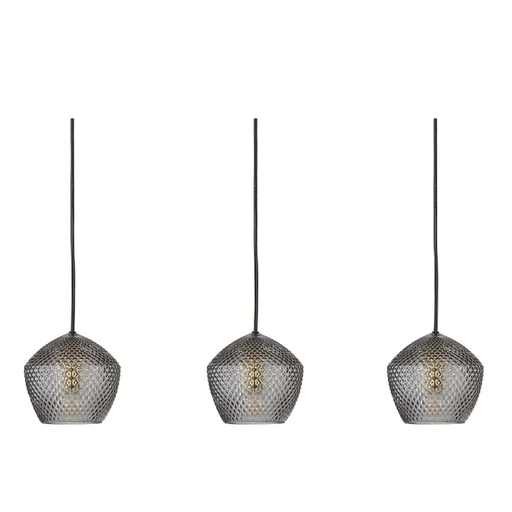
Why this choice suits this profile: its three-light structure is ideal for a long table and interiors that focus on Art Deco details.
The three E14 fittings distribute the light, while the height can be adjusted by concealing part of the cable in the ceiling rose.
Hand-blown glass with a diamond pattern, brass-coloured metal and a three-light configuration.
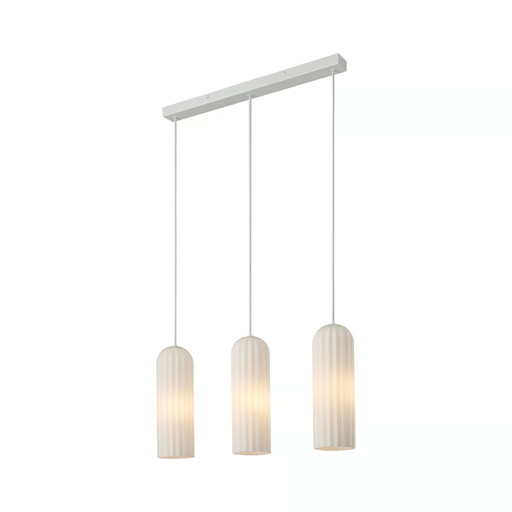
Why this choice suits this profile: its 52 cm width and three light sources are ideal for a family kitchen or a table used every day.
Its three-lampholder structure means you do not need to install several separate pendant lights above an island or table.
Three E27 fittings, ribbed glass, 130 cm white fabric cable and compatibility with a dimmable bulb.
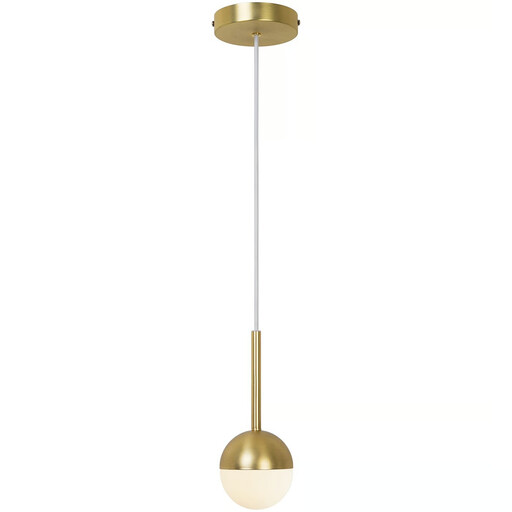
Why this choice suits this profile: its 10 cm diameter fits easily into a flat, entrance hall or any space where every centimetre counts.
The product information specifies the G9 fitting and 5 W limit, helping you avoid choosing an E27 or overly powerful bulb.
Hand-blown opal glass, brass finish, 200 cm fabric cable and diffused light.
We have put together a complete, real-time selection of products that meet these exacting criteria and European safety standards.
Switch off the power at the circuit breaker before carrying out any work. For hand-blown glass models, use a soft, dry cloth, or a slightly damp one if permitted by the product information, then dry the surface promptly. Avoid abrasive products on both the glass and brass, as they may damage the finishes.
Service life depends in particular on the bulb used, compliance with the maximum wattage and the quality of the electrical connection. At comparable brightness, LED bulbs generally use less energy than traditional bulbs. However, their price and stated service life vary depending on the model. Bulbs are not supplied with the pendant lights featured here, so remember to include them in your budget.
Yes, in a dry indoor area such as an island or worktop, provided you observe the IP20 rating and keep it away from water splashes. Also adjust its height to maintain good visibility and prevent knocks.
A warm white bulb creates a soft atmosphere in a dining room or living room. First check the cap — E27, E14 or G9 — as well as the maximum permitted wattage. For a dimmable pendant light, the bulb and dimmer must also be compatible.
For permanent ceiling fixing and connection to the mains, we recommend using a qualified electrician. Also check that the support can bear the weight of the light, particularly for large-diameter glass models.