
Same-day & Next-day Delivery

Quality Guaranteed

Unlock Your Welcome Offers: FREE Delivery | Up to 80% OFF | Free 30-day JoyPlus trial
Download the APP
As the Head of Product Recommendations at Joybuy, I can assure you: choosing a light fixture is about much more than just aesthetics. A Nordlux pendant light might catch your eye with its clean lines and Scandinavian inspiration, but an impulse buy can quickly lead to disappointment. Before you take the plunge, it's crucial to understand the three most common mistakes that turn a beautiful object into a costly regret: materials that don't live up to their promise, an installation that becomes a nightmare, and lighting that's ill-suited to your desired atmosphere.
This guide is designed to give you clear benchmarks to make an informed choice that is in perfect harmony with your interior and your expectations.
The appeal of a Nordlux pendant light is undeniable. But to ensure it remains a pleasure to look at and use for years to come, certain technical details deserve careful consideration.
The market is flooded with premium-looking light fixtures that prove disappointing in practice. A brass designer pendant light can conceal two different realities: a simple metal painted a brass colour, or a solid brass piece, often enhanced with a brushed or satin finish.
The size of the pendant light and the nature of its light are decisive for creating harmony in a room.
In France, most modern ceilings are equipped with a DCL box (Device for Luminaire Connection) that includes a hook. The problem: many designer pendants, including those from Nordlux, are not designed to hang from it.
To put theory into practice, here are three models that perfectly illustrate these criteria, each corresponding to a specific style.
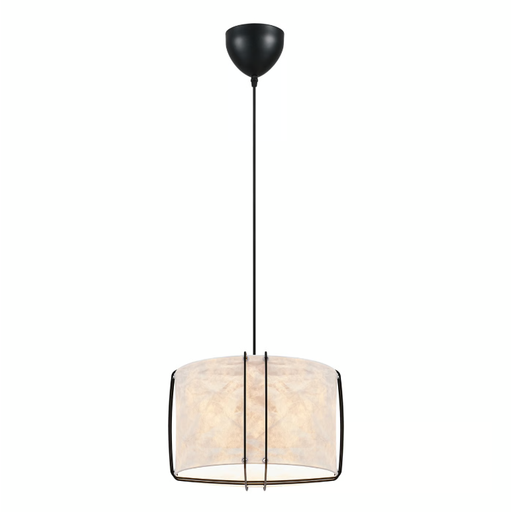
Why we chose it: This fixture embodies the fusion of Nordic minimalism and Japanese philosophy. Its slightly crumpled paper-like shade and fine wireframe structure create an organic and calming aesthetic, perfect for a living room or bedroom where a serene atmosphere is desired.
Here, the paper isn't a budget material but the heart of the design. It provides an intentionally soft and diffuse light, creating a warm and controlled ambiance.
Its unique design creates a soft and poetic atmosphere, while also serving as a true decorative piece.
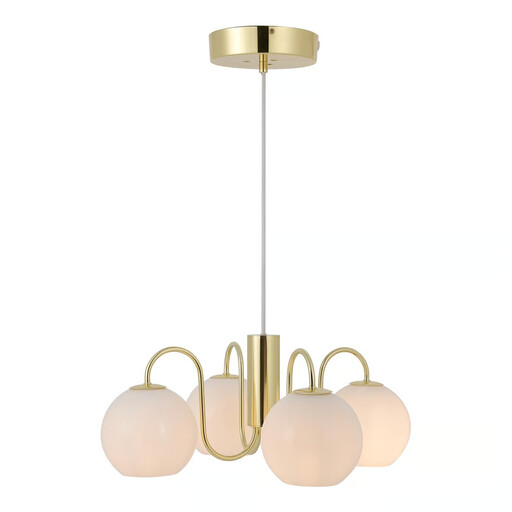
Why we chose it: This piece is a contemporary reinterpretation of the classic chandelier. With its four glass domes and satin brass structure, it stands out as the centerpiece of a living or dining room, bringing a touch of reimagined Art Deco elegance.
The terms "satin brass" and "mouth-blown glass" are clear indicators: you're dealing with genuine, high-quality materials, not a simple imitation.
Provides generous, diffuse lighting thanks to its 4 bulbs, making it ideal for large living spaces.
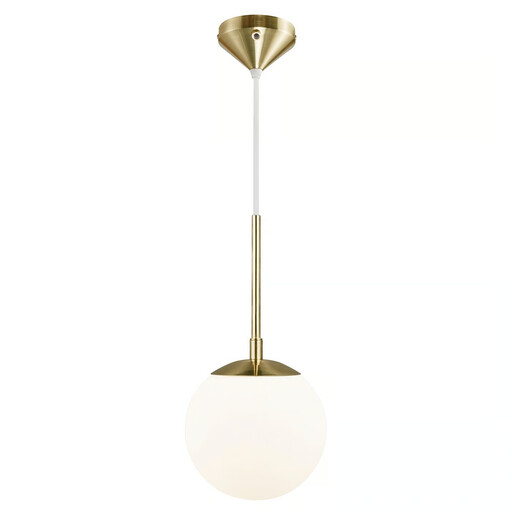
Why we chose it: The Grant series strikes the perfect balance between simplicity and elegance. This compact model is ideal on its own in a smaller space, or clustered over a kitchen island or bar for a striking, controlled graphic effect.
Its mouth-blown opal glass globe guarantees a soft, glare-free light, perfect for accent lighting. Its compact size prevents it from overwhelming the space.
A clean design that highlights the quality of the materials (glass and brass) without any superfluous decoration.
Explore our complete selection of light fixtures, all chosen for their design, quality, and compliance with safety standards.
As a general rule, hang it between 75 and 90 cm above the tabletop. This is the perfect height to properly illuminate the table without obstructing eye contact between guests. Feel free to adjust this height based on the bulb's brightness and the shade's shape for optimal, glare-free comfort.
Absolutely. Almost all Nordlux pendants with a standard socket (E14 or E27) are compatible with LED bulbs. It's highly recommended for their low energy consumption and long lifespan. To dim the light, simply ensure you choose a bulb marked "dimmable" and pair it with a compatible wall dimmer switch.
If you aren't a DIY enthusiast and electrical wiring makes you nervous, the answer is yes. Hiring a qualified electrician is an absolute guarantee of safety. This is especially true since, as we've seen, many models require direct mounting to the ceiling—an operation that requires a certain level of skill and the right tools.