
Same-day & Next-day Delivery

Quality Guaranteed

Unlock Your Welcome Offers: FREE Delivery | Up to 80% OFF | Free 30-day JoyPlus trial
Download the APP
An outdoor wall light can transform an entrance, patio or garage. But it’s important to avoid any nasty surprises. A model that looks appealing in a photo may turn out to be too dim, show signs of corrosion or require more complex electrical installation than expected.
Before choosing your outdoor wall light, there are three potential pitfalls to watch out for:
The IP rating indicates how resistant a product is to dust and water. When choosing outdoor wall lighting, it’s important to consider how exposed the location really is:
An IP rating doesn’t remove the need for proper installation. A poorly fitted IP44 or IP54 wall light, with an inadequately protected cable, may lose much of its weather resistance.
An outdoor wall light with an integrated LED is straightforward to install and generally uses little energy. However, check its brightness in lumens, colour temperature and whether the light source can be replaced.
Models with a bulb socket offer greater flexibility:
For a smart model, check which accessories you’ll need too. Some Philips Hue lights, for example, require a Hue Bridge, sold separately.
Measure the space available around your door or gate. A wall light that sticks out too far could obstruct the way, while a model that’s too compact may only illuminate a small area.
The material is also important if you live in a coastal area. Aluminium, brass and galvanised steel each have different properties. Nordlux models in the ‘Designed For Seaside’ range are made for coastal environments and, depending on the model, come with a manufacturer-stated surface warranty. This covers deterioration of the surface, not necessarily all the electrical components.
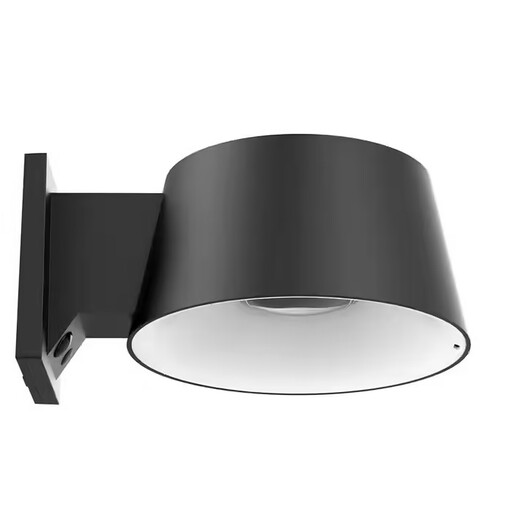
Why it’s a good choice for this type of user : This solar wall light is easy to install, with no electrical wiring required, and switches on automatically at dusk. It’s a good choice for an entrance, balcony or small path that gets plenty of daylight.
The product information confirms that it can be wall-mounted without a mains connection. However, avoid shaded areas and clean the solar panel regularly.
Solar-powered, switches on automatically at dusk and casts light downwards.
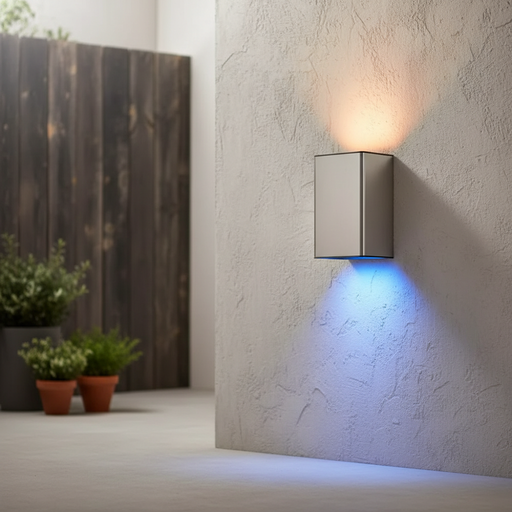
Why it’s a good choice for this type of user : This smart wall light is ideal for households that already use a Philips Hue system and want to control the lighting or set routines remotely.
Compatibility with the Hue app and smart home systems is clearly stated. The Philips Hue Bridge and electrical installation need to be arranged separately.
Stainless steel and glass, with white or coloured lighting that can be adjusted using the compatible app.
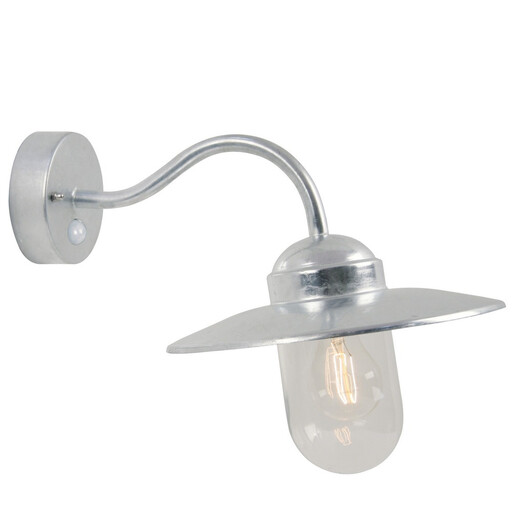
Why it’s a good choice for this type of user : Its motion and light sensor makes it a good choice for an entrance, driveway or garage that’s used regularly, even in a coastal location.
The sensor helps prevent unnecessary switching on, while the product information specifies an IP54 rating and suitability for coastal areas. Its stated detection range is 0 to 12 metres.
Galvanised steel, E27 socket, PIR sensor and a manufacturer-stated 15-year surface warranty.
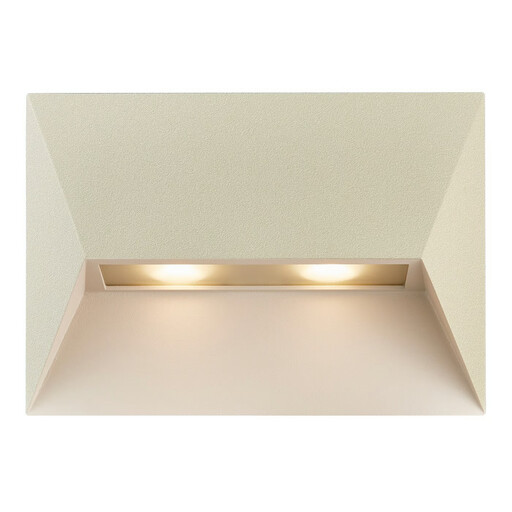
Why it’s a good choice for this type of user : Its architectural shape and space for a house number make it a good fit for a contemporary exterior wall or an easy-to-spot entrance.
The product information makes it clear that the bulbs are not included. The two GU10 sockets let you choose the right brightness and colour temperature for your needs.
Two GU10 sockets, IP54 rating, dimmable with compatible bulbs and suitable for parallel connection.
We’ve put together a comprehensive selection, updated in real time, of products that meet these exacting criteria and European safety regulations.
A wall light connected to the mains must be installed in accordance with French electrical regulations. Class I products must be earthed, while Class II models use double insulation. If you’re unsure, it’s best to call a qualified electrician.
To keep your wall light in good condition:
Lifespan depends on the light source, how often it’s switched on, the environment and maintenance. A replaceable LED bulb makes maintenance easier, while an integrated LED usually means you’ll need to replace the whole light when its module reaches the end of its life.
For an entrance, the brightness you need depends on the mounting height, the width of the area to be lit and the light distribution. Focus on the number of lumens, rather than watts alone. Decorative lighting can be relatively subtle, while a driveway or garage needs more practical illumination.
An IP44 model can withstand splashing water, but its location should be appropriate for this level of protection. For an exterior wall directly exposed to the elements, an IP54 or IP65 rating offers more protection, provided the installation maintains the intended level of water resistance.
It can, but its operating time depends on how much sunlight it receives during the day. In winter or in a shaded area, the light may not stay on for as long. Position the panel in an open area and clean it regularly.