
Livraison le jour même ou le lendemain

Qualité garantie

Débloquez vos offres de bienvenue: Livraison GRATUITE | Jusqu'à -80 % | 30 jours d'essai gratuits à JoyPlus
Téléchargez l'application
A Nordlux outdoor wall light can transform an entrance, terrace or garage. But a product page doesn’t always tell the full story: behind an attractive design, there could be an unsuitable bulb, an inadequate protection rating, or a material that won’t age well in a home near the coast.
Before buying an outdoor wall light, it’s worth checking three points that are often overlooked.
An IP44 outdoor wall light resists water splashes from different directions. It may be suitable for an entrance or a sheltered façade, but that doesn’t mean it will withstand direct exposure to heavy rain, a water jet or immersion.
With an IP54 outdoor wall light, dust protection is enhanced and resistance to water splashes is greater. However, this level is still intended for standard wall installation, not for permanent exposure to pressurised water.
GU10 and E27 sockets are not designed for the same uses. A GU10 wall light typically takes compact bulbs, sometimes adjustable and compatible with a dimmer. The E27 format offers more freedom to choose the shape, colour temperature and style of bulb.
Bulbs are not supplied with the models shown here. So before ordering, check the maximum wattage, the bulb format and whether it is compatible with a dimmer.
Painted aluminium, metal, glass, brass and galvanised steel don’t all age the same way. In a coastal area, salt accelerates corrosion of ordinary surfaces. An outdoor wall light advertised as weather-resistant isn’t necessarily suitable for installation by the sea.
Models marked “Designed For Seaside” should be prioritised for an outdoor wall light intended for a coastal area. As for the advertised guarantees, always check the manufacturer’s terms: Nordlux, for example, states a 15-year guarantee against surface deterioration for several references in this range.
For a covered entrance, a sheltered terrace or a wall with limited exposure, IP44 may be sufficient depending on the setup. On a façade more exposed to the elements, IP54 offers broader protection against dust and water splashes.
Waterproofing doesn’t depend solely on the number on the box. The quality of the installation matters just as much: the seals must remain correctly positioned and the cable entries properly protected. A poorly fitted outdoor wall light can lose some of its stated protection.
An outdoor light with up-and-down lighting projects two beams onto the façade. The effect highlights architectural volumes and creates a light marker around a door or garage. Downward-facing models are generally better suited to a path, a few steps or a walkway.
For even façade lighting, several wall lights can sometimes be connected in parallel. However, check this possibility in the technical data sheet and plan a regular spacing between the fittings.
Never exceed the stated maximum wattage. For example, some Nordlux models accept two GU10 bulbs of up to 25 to 35 W, while Luchy works with one E27 bulb of up to 10 W.
Class I luminaires must be connected to earth. Class II models, such as Luchy, have double insulation and do not require an earth conductor. In all cases, connection to the mains must be carried out by a qualified electrician, in accordance with current regulations.
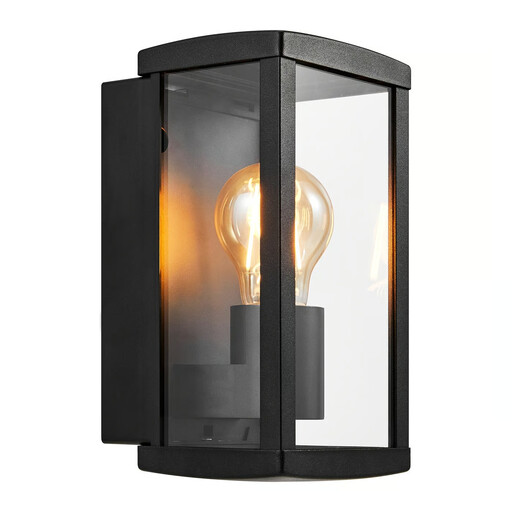
Why this choice suits this profile: Its lantern look and E27 socket make it easy to create the right atmosphere for an entrance or terrace with the decorative bulb of your choice.
The data sheet clearly states the IP44, maximum wattage of 10 W and compatibility with a dimmable E27 bulb. However, you must still respect the light’s exposure limits.
Class II, glass, black metal, adjustable lighting with a compatible bulb and parallel connection.
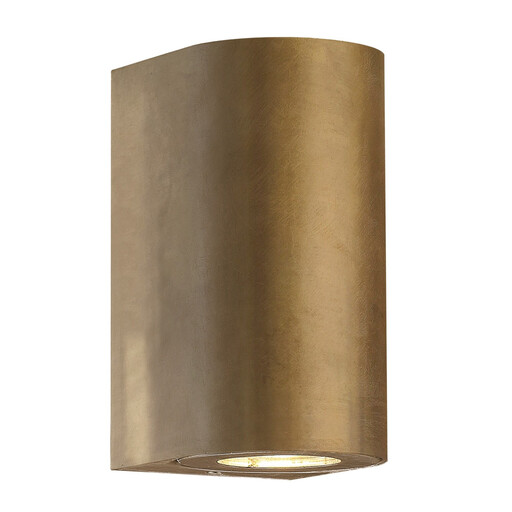
Why this choice suits this profile: Its solid brass and clean lines blend into a well-finished façade, while allowing the patina to develop naturally over time.
The “Designed For Seaside” range is explicitly intended for coastal environments. The 15-year surface guarantee is manufacturer information that should be checked in their terms.
Two GU10 sockets, up-and-down lighting, solid brass, clear glass and design stated for the seaside.
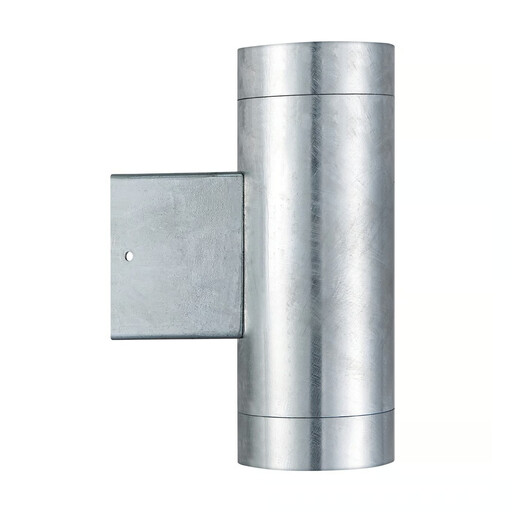
Why this choice suits this profile: Its two beams and galvanised steel structure are built for entrances, carports and façades exposed to harsher conditions.
The “Designed For Seaside” mark sets this model apart from a standard IP54 wall light. Regular rinsing with clean water helps remove salt deposits.
IP54, two GU10 bulbs of up to 28 W each, hot-dip galvanised steel and a stated 15-year surface guarantee from the manufacturer.
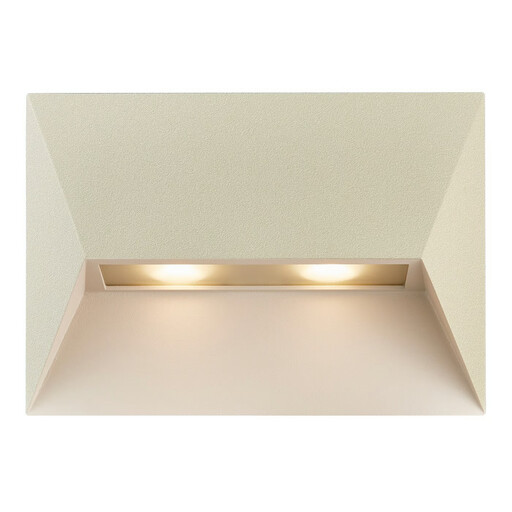
Why this choice suits this profile: Its wide front panel incorporates a lit space where you can slide a house number. Its geometric silhouette sits naturally on a contemporary building.
The data sheet clearly distinguishes the two GU10 sockets, the IP54 and compatibility with dimmable bulbs. As this is a Class I model, earthing must be provided.
Two GU10 bulbs of up to 25 W per socket, textured aluminium, architectural lighting and parallel connection.
We’ve selected a full range, updated in real time, of products that meet these demanding criteria as well as European safety standards.
IP44 protects against solid objects larger than 1 mm and water splashes. IP54 adds protection against dust as well as water splashes from multiple directions. The right choice depends on the actual exposure of the wall, whether there’s an overhang, and local weather conditions.
GU10 is suitable for compact spots and more directional beams. E27 offers a wider choice of decorative bulbs and colour temperatures. To keep energy consumption low, choose an LED bulb compatible with the socket and always respect the light’s maximum wattage.
Not necessarily. Look for a reference explicitly marked “Designed For Seaside”, such as Canto Maxi or Tin Maxi in this selection. An IP44 or IP54 wall light without a specific seaside mention may require extra precautions against salt and humidity.