
Livraison le jour même ou le lendemain

Qualité garantie

Débloquez vos offres de bienvenue: Livraison GRATUITE | Jusqu'à -80 % | 30 jours d'essai gratuits à JoyPlus
Téléchargez l'application
A non-stick frying pan can make everyday meals much easier, but not all models are created equal or suited to the same uses. A small frying pan is ideal for eggs or pancakes, while a wok or deep sauté pan is better suited to family meals. Before comparing prices, take the time to check the coating, compatibility with your hob and the care instructions.
The phrase ‘all hobs’ can sometimes be unclear. To work on an induction hob, a frying pan must have a suitable magnetic base. So check that the product description clearly states compatibility with induction, rather than only with gas, electric or ceramic hobs.
A frying pan compatible with induction can generally be used on other types of hob too. The reverse, however, is not guaranteed. If you are looking for a versatile model, choose one with a magnetic stainless-steel base or a design explicitly intended for induction.
A non-stick coating makes it easier to release food, but its lifespan depends on several factors: cooking temperature, utensils used, cleaning and storage. Prolonged heating when empty or using a metal spatula can speed up surface deterioration.
Claims such as PFOA-free or ‘no intentionally added PFOA’ should be interpreted carefully. They do not necessarily provide information about the coating’s full composition. It is better to consult the technical specifications and information supplied by the manufacturer than to mistake a marketing claim for a general guarantee.
A 20 cm frying pan is easy to handle and suitable for one or two portions. To cook for several people, a diameter of 24 to 28 cm provides a noticeably more comfortable cooking surface. A cast-aluminium frying pan generally distributes heat well, but it can be heavier than a standard aluminium model.
Also consider storage. A fixed handle, removable handle or included lid can make a considerable difference to how much space the pan takes up in your cupboards.
With a non-stick frying pan, choose utensils made from wood, silicone or nylon. Avoid knives and metal accessories, which could scratch the surface directly. Hand-washing with a soft sponge is often preferable, even when the product description states that the pan is dishwasher-safe.
Also check the maximum permitted temperature. Some models can be used in the oven, but the limit varies according to the coating and handle type. A Bakelite handle, for example, may withstand a different temperature from the body of the pan.
A 20 cm frying pan is suitable for individual portions, omelettes and breakfasts. The 24 cm size offers a good compromise for two to three people. With its 28 cm diameter, a large frying pan is better suited to family meals, stir-fried vegetables and recipes requiring a generous cooking surface.
A non-stick wok has higher sides, making it practical for stir-frying food, preparing noodles or cooking dishes with sauce. For slow-cooked recipes, a frying pan with lid or deep sauté pan helps reduce splashes and retain moisture.
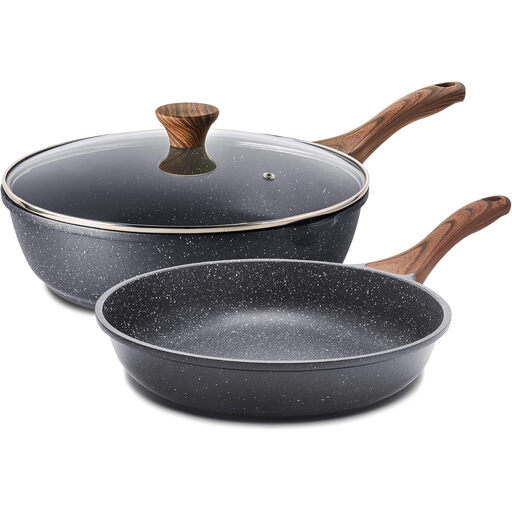
Why this choice suits this profile : The set includes two sizes, 20 and 25 cm, giving you a complementary starting set for eggs, vegetables, meat and pancakes.
The product description specifies compatibility with gas, electric and induction hobs, along with a coating stated to contain no intentionally added PFOA, PFOS, APEO, lead or cadmium.
Two diameters, a magnetic base compatible with induction and Bakelite handles. Hand-washing is still recommended to help preserve the coating.
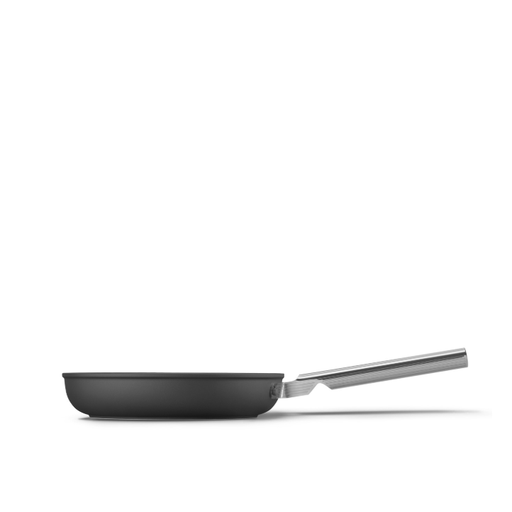
Why this choice suits this profile : Its 24 cm format is ideal for everyday meals. Its carefully considered design will sit naturally in a kitchen where appearance matters as much as functionality.
The product description details a PFAS-free ceramic coating and a base designed for induction, gas, electric and halogen hobs.
A stainless-steel handle, stated oven use up to 250 °C and several diameters available according to the product description.
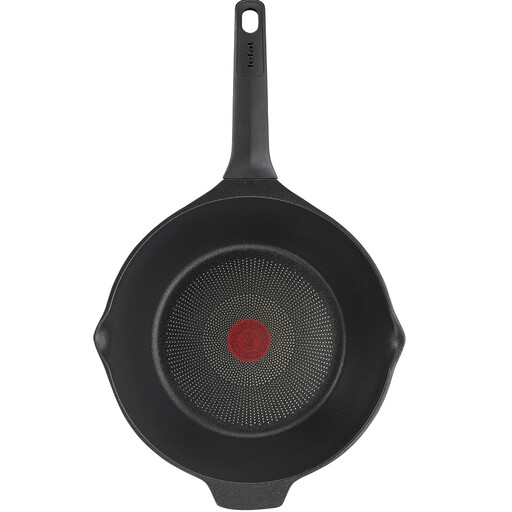
Why this choice suits this profile : Its 28 cm diameter and high sides are perfect for stir-frying, noodles, vegetables and family-sized portions.
The product description states compatibility with induction and other hobs, along with a Thermo-Signal indicator to show when the pan has reached the right temperature.
A cast-aluminium body, a multi-layer coating stated to be PFOA-free and a two-year manufacturer's warranty.
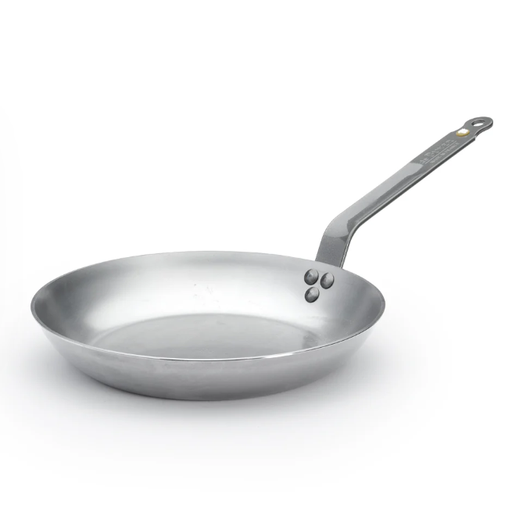
Why this choice suits this profile : This carbon-steel model is aimed at cooks who are happy to season their pan and include regular care in their routine.
It does not rely on an artificial non-stick coating: its surface improves with seasoning. In return, the manufacturer recommends hand-washing and drying it immediately.
A 28 cm diameter, stated compatibility with all heat sources, including induction, and a composition stated as 99% iron and 1% carbon.
We have put together a complete, real-time updated list of products that meet these demanding selection criteria and European safety regulations.
To preserve the performance of your non-stick frying pan:
A carbon-steel frying pan requires specific care: wash it without leaving it to soak for a long time, dry it immediately and apply a thin layer of oil before storing it. It generally should not be cared for in the same way as a traditional non-stick frying pan.
For two people, the 24 cm format provides a versatile cooking surface. For three to four diners, a 28 cm model will be more comfortable, provided its diameter matches the heating zone of your hob.
It depends entirely on the instructions for the specific model. Even when dishwasher use is permitted, hand-washing is often recommended to minimise coating wear. Also check whether there are any specific instructions for the handle and lid.
Replace it if the coating starts to peel, develops deep scratches, if the pan becomes warped or if food continues to stick despite proper care. Its lifespan varies according to how often it is used, cooking temperature and the utensils used.