
Livraison le jour même ou le lendemain

Qualité garantie

Débloquez vos offres de bienvenue: Livraison GRATUITE | Jusqu'à -80 % | 30 jours d'essai gratuits à JoyPlus
Téléchargez l'application
A non-scratch scouring sponge should tackle grease, food residue and limescale without marking delicate materials. However, claims such as “non-scratch” or “durable” are not always enough to determine whether a model is genuinely suitable for your kitchen or bathroom.
Here are the main pitfalls to avoid, the criteria to assess and a selection of models suited to different everyday uses.
A kitchen scouring sponge can be highly effective on a heavily soiled saucepan. However, its scouring side may not be suitable for a ceramic hob, a non-stick coating or delicate tableware. A model that quickly removes dirt can also dull a glossy finish if you apply too much pressure.
The “non-scratch” claim should therefore always be considered alongside the manufacturer’s recommendations. If in doubt, test it on a small, inconspicuous area, particularly on older, painted or especially sensitive surfaces.
A double-sided sponge generally combines an absorbent section with a side designed for scrubbing. This is practical, but it does not mean that both sides are suitable for every surface. The abrasive side should be reserved for compatible surfaces, while the soft side can be used for washing, wiping and finishing the clean.
For everyday washing-up, choose an absorbent sponge that rinses easily and holds enough water to distribute washing-up liquid effectively.
A sponge may be machine washable while still needing regular replacement, both for hygiene reasons and because of wear. Its actual lifespan depends on how often it is used, the type of dirt it encounters and whether the care instructions are followed.
After each use, rinse your sponge, wring it out without deforming it and leave it to dry somewhere well ventilated. A persistent odour, a surface that starts to fray or reduced absorbency are all signs that it is time to replace it.
For frying pans, saucepans and heavily soiled dishes, a medium- to highly abrasive scouring side can be useful. For hobs, stainless-steel sinks or delicate tableware, choose a non-scratch sponge whose compatibility with these surfaces is clearly stated.
The manufacturer’s recommendations should take precedence over a general claim. Some models marketed as non-scratch are still not recommended for non-stick coatings or highly polished surfaces.
Found in several models, plant-based cellulose absorbs water and helps create lather. Synthetic fibres, microfibre and technical foams can complement this function, making rinsing or wiping easier.
For a bathroom sponge, a microfibre side can simplify the cleaning of mirrors and glass screens. A medium-abrasive scouring side can help remove limescale deposits, provided you follow the usage instructions.
Check the maximum washing temperature. Some models can be washed in a machine at 40 °C, while others withstand temperatures of up to 70 °C. Do not assume that machine washing or dishwasher use is suitable for every sponge.
After each use:
Products claiming microbiological effectiveness should be assessed in light of the precise conditions specified by the manufacturer: surface type, agent used, contact time and test method. These details do not constitute a guarantee that the product will be effective in every domestic situation.
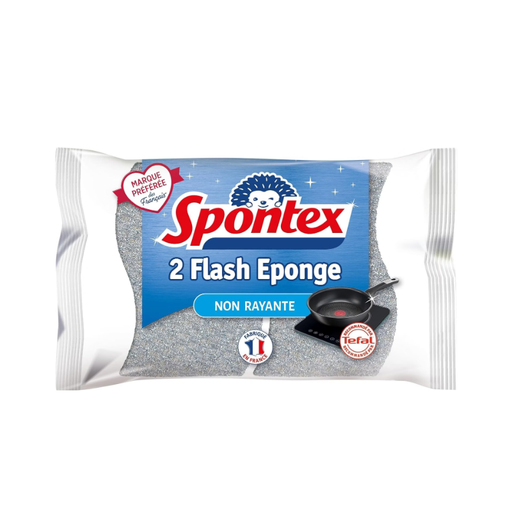
Why this choice suits this profile : this pack is suitable for everyday washing-up, with a scouring side described as non-scratch and a plant-based section made from cotton, wood pulp and flax.
Keeping the scouring side separate from the sponge side helps prevent unsuitable use. Testing it first on delicate surfaces is still recommended.
Pack of 2, easy rinsing and machine washable at 40 °C according to the product details.
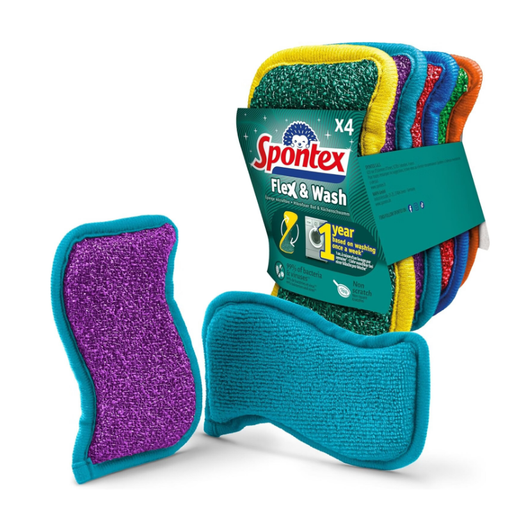
Why this choice suits this profile : this pack of four reusable sponges is aimed at households looking to replace their sponges less often and enjoy a versatile format in the kitchen, bathroom or car.
The stated number of washes is clearly specified: up to 52 cycles. However, the sponge should be replaced if its performance declines before reaching this limit.
Scouring side described as non-scratch, microfibre side and plastic-free packaging according to the manufacturer’s information.
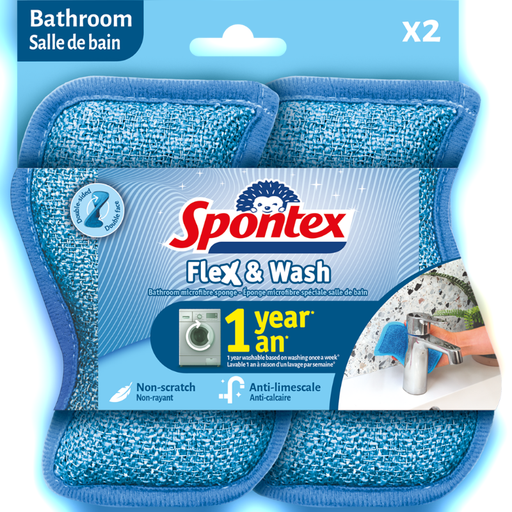
Why this choice suits this profile : its design is intended for shower screens, washbasins, mirrors and glass surfaces, with a microfibre side for wiping and a medium-abrasive scouring side.
The product details specify the washing temperature, advise against using fabric softener and recommend testing colourfastness on an inconspicuous area.
Machine washable up to 52 times according to the product details, with a microfibre side designed for streak-free finishing.
We have put together a complete, real-time updated list of products that fully meet these strict selection criteria and European safety regulations.
Please note: ROLLINGDOG sanding blocks with 60, 120 or 180 grit are designed for wood, metal, plaster or prepared surfaces. They are not a substitute for a washing-up sponge and must not be used on kitchen appliances or coatings.
Not necessarily. Even when one side is described as non-scratch, check the instructions and test it on a small, inconspicuous area. Also make sure you remove any particles trapped between the sponge and the coating: they can leave marks during cleaning.
It depends on the model and how intensively it is used. Some products claim to withstand up to 52 washes, while others recommend replacing them approximately every two months. These figures are only guidelines: replace the sponge as soon as it becomes misshapen, starts to fray, absorbs less effectively or retains an odour despite rinsing.
Rinse it after every use, remove food remnants, wring it out and allow it to dry completely. A sponge reserved for bathroom cleaning should not be used to wash dishes. Where authorised by the manufacturer, machine washing can complement this care routine, but it does not remove the need for regular replacement.