
Livraison le jour même ou le lendemain

Qualité garantie

Débloquez vos offres de bienvenue: Livraison GRATUITE | Jusqu'à -80 % | 30 jours d'essai gratuits à JoyPlus
Téléchargez l'application
Finding the ideal frying pan is often a challenge. Should you bet on the durability and cooking performance of stainless steel, even if it means food might stick? Or should you opt for the convenience of a non-stick pan, despite its sometimes disappointing lifespan? The non-stick stainless steel frying pan is the perfect solution to reconcile these two worlds.
In this guide, we break down the essential criteria to check before you buy and present a selection of models that have caught our eye. Our goal: to help you choose a reliable, high-performance utensil that will become a staple in your everyday cooking.
Before diving into our selection, let's review a few technical points you should know to make the right choice.
The quality of a stainless steel pan is first judged by its multi-ply construction. Most often, it consists of an outer layer of stainless steel (magnetic for induction compatibility), an aluminium core that ensures fast and uniform heat distribution, and an inner layer of stainless steel that holds the coating. This "sandwich" structure prevents hot spots, ensuring perfectly controlled and even cooking. It's also the secret to a durable pan that won't warp over time.
Your kitchen setup isn't set in stone. Opting for a pan compatible with all hobs, including induction, is a must to ensure it works with your current and future stovetops. The ability to put your pan in the oven also opens up new culinary possibilities: you can start cooking on the hob and finish it in the oven to brown a dish or keep it warm. Just remember to check the maximum temperature supported by the pan and its handle.
The key selling point of these pans is, of course, their non-stick coating. For healthier cooking, choose a PFOA-free pan (perfluorooctanoic acid), a precaution now governed by European regulations. Some models inspired by professional-grade pans go even further with reinforced coatings or honeycomb structures. The latter protect the non-stick surface from scratches, ensuring record-breaking longevity even with intensive use.
We have selected three models that stand out from the crowd, each meeting specific needs.
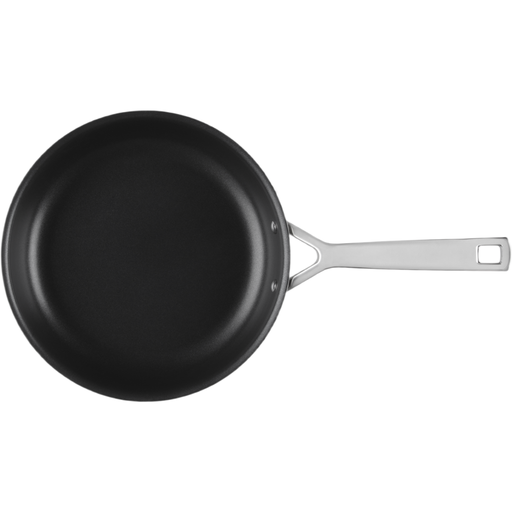
What Makes It Stand Out
The Le Creuset pan is where technical excellence meets iconic design. Its 3-layer construction (stainless steel/aluminium/stainless steel) ensures rapid heating and exceptional heat distribution. The high-performance non-stick coating is designed to withstand the use of metal utensils, a real plus for a pan that doesn't stick. The lifetime warranty offered by the brand is a testament to their absolute confidence in the product's durability.
Key Features
Who is it for? For cooking enthusiasts looking for that rare gem: an ultra-high-performance pan built for daily, intensive use. It's an investment in a reliable utensil designed to last for many years to come.
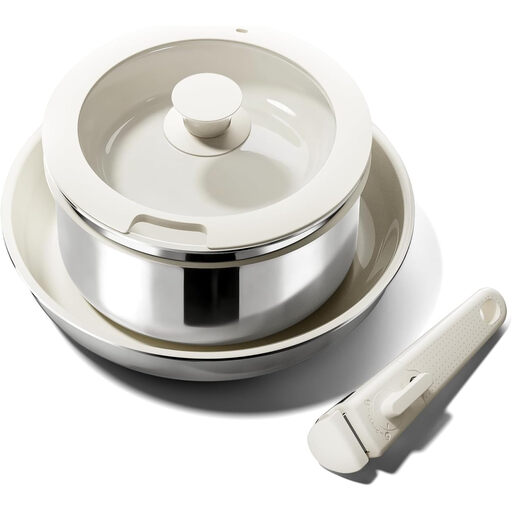
What Makes It Stand Out
The major advantage of this naturepan set is its ingenious and secure removable handle system. This feature allows for considerable space-saving storage (up to 70% space saved, according to the manufacturer), making it the ideal solution for small kitchens, RVs, or studio apartments. The triple-layer stainless steel construction is paired with a diamond-titanium ceramic coating, known for its robustness and non-stick properties.
Key Features
Who is it for? Ideal for those who want to optimise cupboard space without sacrificing quality. A complete and modular solution, perfect for modern kitchens where every square inch counts.
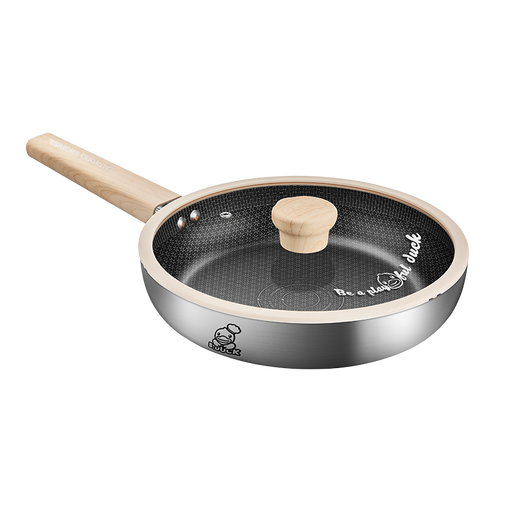
What Makes It Stand Out
This pan is distinguished by its 316 stainless steel, a superior quality material that is even more resistant to corrosion than the commonly used 304 stainless steel. Its cooking surface features a third-generation honeycomb structure. This engraved pattern protects the non-stick coating located in the hollows, allowing you to sear meats as you would on pure stainless steel, while ensuring nothing sticks. The playful B.DUCK design adds a touch of originality.
Key Features
Who is it for? For cooks who love to sear their meats at high heat but want the peace of mind of a non-stick surface. This is a durable and robust pan, designed for those seeking hybrid performance who aren't afraid to use metal utensils.
Our selection highlights models with distinct profiles to meet specific needs. If you want to explore a wider range of cookware that combines the robustness of stainless steel with induction compatibility, feel free to browse our full category.
Discover more stainless steel induction pans
1. How do I care for a non-stick stainless steel pan to make it last? The golden rule: always let the pan cool down before cleaning it to avoid thermal shock. Washing by hand with a soft sponge and a neutral detergent is the best way to preserve the coating. Even if some models are dishwasher-safe, manual washing will extend the life of the non-stick surface. And of course, avoid abrasive sponges.
2. Can you really use metal utensils on a non-stick pan? It all depends on the model. Pans like the Le Creuset or the COOKER KING are designed with coatings or structures (honeycomb) robust enough to tolerate metal utensils. For most other non-stick pans, however, it is safer to use wood, silicone, or nylon utensils to maximise their lifespan. When in doubt, always refer to the manufacturer's recommendations.
3. Is a stainless steel pan heavy? Yes, stainless steel pans, especially multi-ply models, are often heavier than simple aluminium pans. This weight is actually a sign of quality: it ensures a thick base that does not warp and distributes heat evenly. The key is to ensure the handle is ergonomic and securely attached for a comfortable and safe grip.