
Livraison le jour même ou le lendemain

Qualité garantie

Débloquez vos offres de bienvenue: Livraison GRATUITE | Jusqu'à -80 % | 30 jours d'essai gratuits à JoyPlus
Téléchargez l'application
A non-stick saucepan can really simplify making a sauce, porridge or a child's meal. But some models disappoint quickly: coating that deteriorates, an awkward handle, poorly suited capacity or incompatibility with induction hobs. To avoid nasty surprises, it's best to look beyond claims like "easy to clean" or "suitable for all hob types".
A saucepan described as "suitable for all hob types" isn't necessarily usable directly on an induction hob. This technology generally requires a magnetic base. Some glass or ceramic models need to be placed on a compatible induction disc. Without this accessory, the hob may simply not detect the pan.
So check the product specifications carefully and look for an explicit mention such as "induction" or "compatible with an induction disc". This check is particularly important for an induction saucepan you plan to use every day.
Claims like "scratch-resistant", "reinforced" or "free from controversial substances" describe a feature stated by the manufacturer. They don't guarantee the same lifespan in every kitchen. A coating can be damaged by:
To preserve a ceramic saucepan, just like any coated utensil, opt for a wooden or silicone spatula. Also, always let the pan cool down before washing it.
A small saucepan with a lid is ideal for sauces, milk, single portions and baby food. It will be far less suitable for making a family-sized soup or cooking pasta. Conversely, a large stockpot can quickly become cumbersome in a small kitchen and heat up more slowly when you're just making a sauce.
A non-stick saucepan with an aluminium core generally heats up quickly and distributes heat well thanks to its thick base. Its coating makes cleaning easy, but it does require some care in use.
A stainless steel saucepan, particularly 304 or 316 stainless steel depending on the product specifications, stands up well to daily use and doesn't rely on a non-stick coating. However, it can show limescale marks or discolouration caused by excessive heat more readily. Gentle cleaning and cooking on a medium heat help to minimise these issues.
A ceramic saucepan may suit those looking for a surface claimed to be free from PFAS and PTFE. However, it's important to distinguish between a fully ceramic pan and a ceramic coating applied to another material. In either case, check the exact composition and the manufacturer's usage instructions.
Borosilicate glass lets you monitor cooking directly and, according to the product description, doesn't absorb odours. On the downside, it needs to be handled carefully to avoid thermal shock.
Before buying, check compatibility separately for:
An oven-compatible saucepan must always be used within the stated temperature limit. A removable handle, made of silicone or bakelite, may, for example, withstand a different temperature to the pan body.
For one to two portions, a diameter of 16 to 18 cm and a capacity of around 1.5 to 2.5 litres generally work well for sauces, milk, cereals and small soups. For a family, a capacity of 3 to 3.5 litres offers more room for stewed dishes.
An insulated handle, a pouring lip and a glass lid are particularly practical for a saucepan intended for milk and sauces. The lip reduces spills when serving, while the transparent lid lets you keep an eye on the boil without having to lift it.
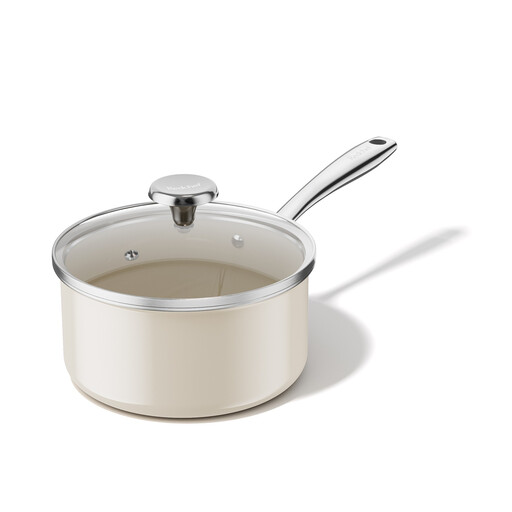
Why this choice suits this profile: With its 18 cm diameter and stated capacity of 2.5 quarts, this model is ideal for small portions, soups, pasta and sauces, even in a compact kitchen.
The product page states compatibility with all hob types, a glass lid with steam vent and a surface free from PFAS and PFOA. Temperature limits and care instructions still need to be followed.
A thick aluminium core, a claimed non-stick ceramic coating and dishwasher-safe cleaning according to the product page.
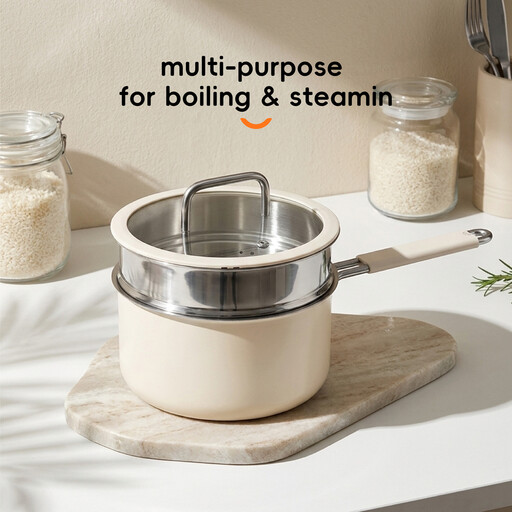
Why this choice suits this profile: This model combines a 316 stainless steel interior, a glass lid and a steamer basket for varied cooking: milk, sauces, porridge or vegetables.
The composition and accessories are detailed on the product page, making it easy to check the material, uses and care. Hand washing is recommended to preserve the finish.
316 stainless steel interior, an included steamer basket and a silicone-wrapped handle according to the available information.
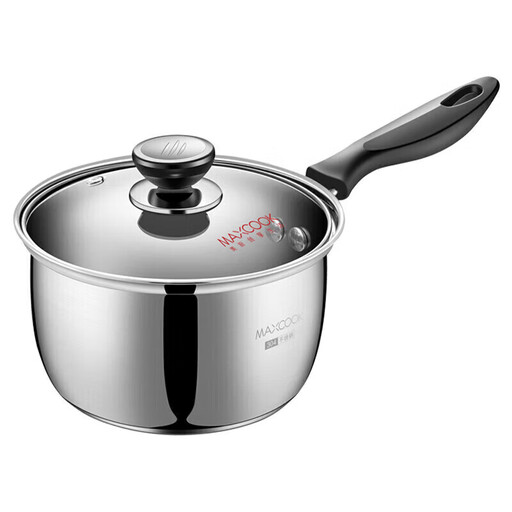
Why this choice suits this profile: Its compact size is ideal for milk, baby food, noodles and small quantities. The pouring lip makes transferring liquids easier.
The composite base is stated to be compatible with induction, gas, electric and ceramic hobs. The product page recommends low to medium heat to minimise discolouration.
304 stainless steel, a tempered glass lid and a claimed drip-free pouring lip.
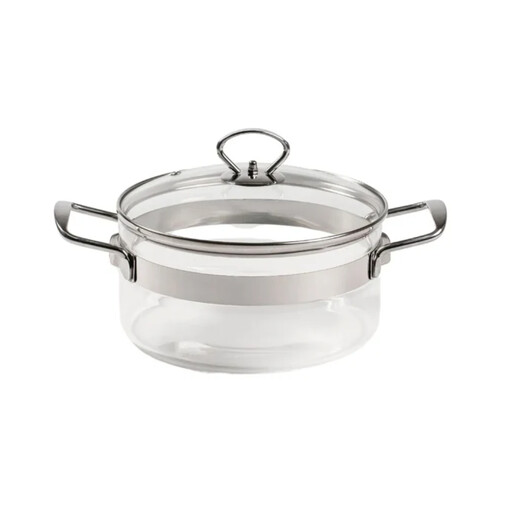
Why this choice suits this profile: The transparent glass lets you monitor cooking, while the 2.5-litre capacity is suitable for soups, sauces and stewed dishes in moderate quantities.
The product page states a coating-free material, free from PTFE and PFAS. For induction, it specifies that a compatible MC60090 disc must be used. The glass must be protected from sudden temperature changes.
Non-porous borosilicate glass, an integrated pouring lip and oven use stated up to 180 °C.
We've put together a comprehensive, real-time updated list of products that fully meet these demanding selection criteria and European safety regulations.
Choose a model whose product page explicitly mentions direct induction compatibility and check for a magnetic base. For glass or certain ceramic saucepans, an induction disc may be necessary. The diameter of the base should also sufficiently match the hob's cooking zone.
It all depends on the coating, frequency of use and care. Avoid heating the pan when empty, using metal utensils and abrasive products. If the surface peels, cracks or shows visible wear, it's best to replace the pan.
No. A PFAS-free saucepan can still have a coating that is sensitive to scratches or thermal shock. Check its full composition, respect the stated maximum temperature and use suitable utensils and gentle cleaning products.