
Livraison le jour même ou le lendemain

Qualité garantie

Débloquez vos offres de bienvenue: Livraison GRATUITE | Jusqu'à -80 % | 30 jours d'essai gratuits à JoyPlus
Téléchargez l'application
A good non-stick pan can transform everyday cooking from a chore into a genuine pleasure. Yet, buying a new pan is often a minefield. Promises of durability fall apart after a few months, and food sticks despite a brand-new coating. As a product expert at Joybuy, my mission is to help you decode the marketing jargon to make an informed choice. Let's review the most common pitfalls so you never throw your money away again.
The cookware market is a jungle of technical terms and often misleading marketing claims. Here are the three mistakes to stop making.
To choose a pan that won't stick and is built to last, focus on these two fundamental technical points.
The heart of your pan is its coating. There are three main families:
If you cook on an induction stovetop, the quality of the pan's base is a non-negotiable criterion. A good induction pan must have a thick, perfectly flat heat-diffusing base. This base often has a "sandwich" construction: a layer of aluminium (for conductivity) is encapsulated in stainless steel, with an outer ferromagnetic layer ensuring induction compatibility. A quality base guarantees rapid heating, uniform heat distribution, and prevents the pan from warping over time.
Rather than an endless list, we have selected products that match specific user profiles, based on the objective criteria we have just detailed.
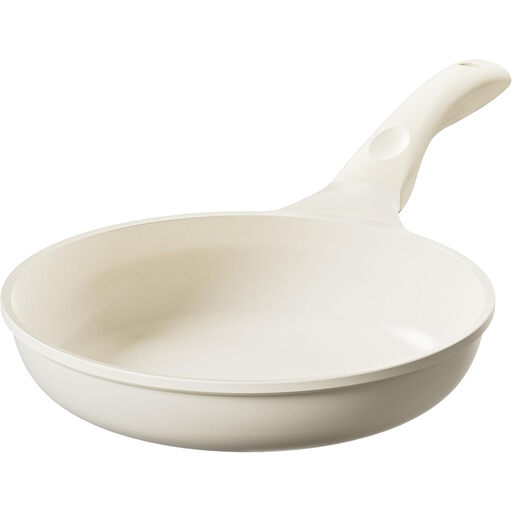
Why we recommend it: Ideal for simple, everyday meals, from fried eggs to a fish fillet. Its ceramic coating provides peace of mind on the health front, and its 24cm size is perfect for one or two people.
It avoids the "PFOA-free but not PFAS-free" trap by offering a ceramic coating guaranteed to be free of PTFE, PFOA, and PFAS. Its thick base ensures efficient heating on induction, a far cry from the disappointing performance of entry-level models.
Non-toxic ceramic coating and compatibility with all stovetops (including induction) for healthy and versatile everyday cooking.
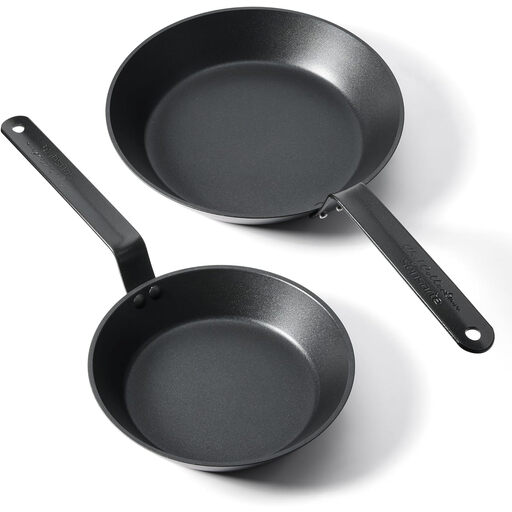
Why we recommend it: This non-stick pan set (20cm and 25cm) covers most of a family's needs. The fact that they are oven-safe (up to 232°C / 450°F) offers great versatility for browning a dish or finishing a recipe.
It tackles the problem of premature wear with a Swiss ILAG coating renowned for its durability. Its thick magnetic stainless steel base is designed for stable performance on an induction cooktop, preventing unpleasant surprises.
A versatile set (2 sizes), oven-safe for more culinary possibilities, and a reinforced coating guaranteed PFOA/PFOS-free.
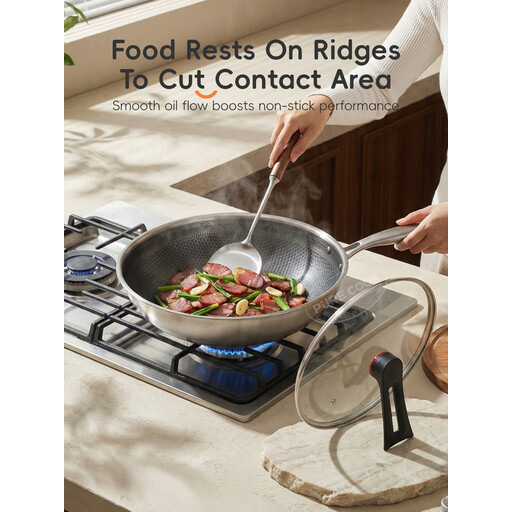
Why we recommend it: Perfect for wok cooking enthusiasts, high-heat stir-frying, and those seeking maximum durability. Its large size and specific structure allow for a different style of cooking than classic pans.
This non-stick wok bypasses the issue of fragile coatings with its raised stainless steel honeycomb structure. This pattern protects the recessed coating, creating a durable, mechanical non-stick effect that even allows for the use of metal utensils.
Exceptional durability thanks to its structure, a robust 3-ply stainless steel construction, and unmatched scratch resistance.
We have curated a complete range of products that meet our demanding selection criteria and current safety standards.
The lifespan varies from 1 to 5 years on average, depending on the quality of the coating and its care. To extend it:
Ceramic coatings are made from inorganic materials (sand and silicon) and do not contain PTFE, PFOA, or PFAS. In this regard, they represent a reassuring option for consumers who wish to avoid these substances. The safety of all coatings, regardless of type, primarily depends on using them according to the manufacturer's recommendations.
The easiest way is the magnet test. If a magnet sticks firmly to the bottom exterior of the pan, it is induction-compatible. You can also look for the coil or spring symbol on the packaging or under the pan itself. For optimal performance, ensure the diameter of the pan's base matches the size of your cooking zone.