
Livraison le jour même ou le lendemain

Qualité garantie

Débloquez vos offres de bienvenue: Livraison GRATUITE | Jusqu'à -80 % | 30 jours d'essai gratuits à JoyPlus
Téléchargez l'application
The right tool can make all the difference in the kitchen. And if you have an induction hob, finding the ideal non-stick induction wok—one that's both high-performing and safe—can quickly become a challenge. Between the different materials, coating types, and marketing claims, it's easy to get lost.
This guide is here to cut through the noise. As a product specialist at Joybuy, my mission is to give you all the key insights you need to choose a wok that truly meets your needs, all without the unnecessary marketing jargon.
Before we dive into our top picks, here are a few essential points to consider to make an informed choice.
The heart of a good wok lies in its construction. For use on an induction hob, the base of the pan must be ferromagnetic. The stainless steel wok is a popular option for its durability and compatibility.
When it comes to the coating, the trend is towards PFOA-free woks (perfluorooctanoic acid), a controversial substance. New technologies are emerging:
Check that the product is explicitly labelled as a wok pan for all hobs, including induction. A flat, thick base is essential to ensure optimal contact with the hob and even heat distribution.
Versatility is also a major asset: a good wok does more than just stir-fry vegetables. It can transform into a sauté wok for simmering, a deep fryer, or even be used for steaming if a wok with a lid is included.
The size of the wok should match the number of people in your household. A diameter of 26 to 28?cm is often sufficient for a couple, while a 32?cm wok will be more suitable for a family. Also, consider the weight of the pan and the quality of its handle, which must ensure a secure and comfortable grip, even when the wok is full.
Here are a few options that stand out for their technical features and design, meeting the criteria of many home cooks.
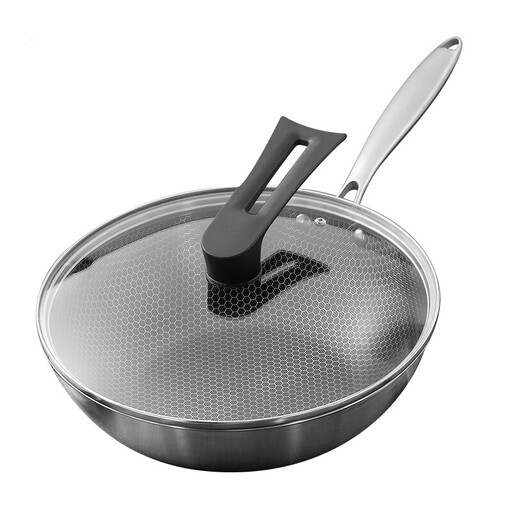
Why it stands out?: This model combines the durability of stainless steel with a physical non-stick system, free of chemical coatings. Its multi-layer structure (stainless steel, aluminium, magnetic stainless steel) ensures rapid and uniform heating, which is essential for wok cooking. The inner honeycomb wok coating protects the surface and, according to the manufacturer, allows for the use of metal utensils.
Advantages?:
Who is it for?? For families and frequent cooks looking for a robust, versatile, and easy-to-maintain wok, and who appreciate being able to use their metal spatulas without fear of scratching the base.
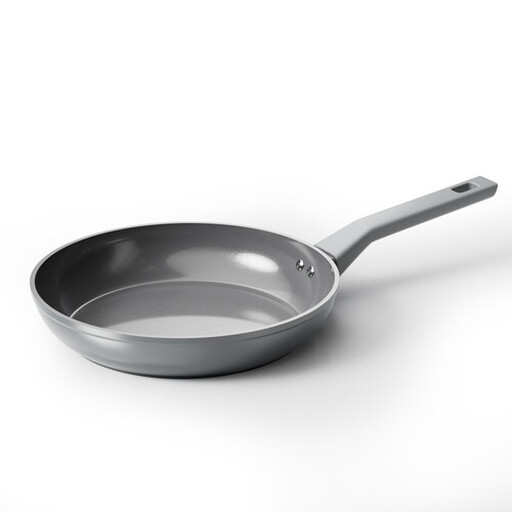
Why it stands out?: This wok places a strong emphasis on food safety. The manufacturer highlights its ceramic coating, reinforced with diamond and titanium particles, which is 100% free of PFAS, PFOA, and PTFE. It's a top choice for those who are particularly mindful of the chemical components in non-stick coatings.
Advantages?:
Who is it for?? For health-conscious individuals or couples who prioritise safe materials and are looking for a wok pan for daily use and delicate cooking.
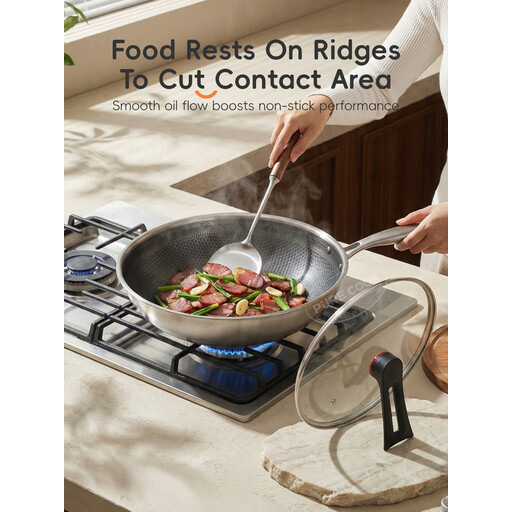
Why it stands out?: This 32?cm wok is an excellent example of a modern stainless steel wok. Its triple-layer construction of food-grade 304 stainless steel ensures optimal durability and heat distribution. Like the Ochama model, it uses a honeycomb texture to create a non-stick effect without a chemical coating.
Advantages?:
Who is it for?? For those who need a large cooking volume and are looking for a long-term investment. It's the perfect wok for mastering a wide variety of cooking techniques, from quick stir-frying to slow braising.
Our selection focuses on versatile models, but the world of cookware is vast. If you're intrigued by next-generation coatings and want to explore other avenues, take a look at our complete collection.
Discover our collection of non-stick ceramic cookware
To preserve its non-stick properties, avoid overheating it when empty. Opt for hand washing with a soft sponge, even if the product is dishwasher-safe. For traditional coatings, use wooden, silicone, or nylon utensils. For woks with a honeycomb structure, metal utensils are generally tolerated, but it's always wise to check the manufacturer's recommendations.
Yes, thanks to a clever design trick. Stainless steel woks with an etched honeycomb texture create what is known as a "physical non-stick" effect. The food rests on the peaks of the pattern, which reduces the contact surface area and prevents it from sticking, especially if the wok is properly preheated with a little oil. The principle is therefore different from that of traditional chemical coatings.
A traditional wok has very high, rounded sides, ideal for stir-frying food at high temperatures with constant movement. A wok sauté pan generally has a wider flat bottom and slightly less sloped sides. It is more stable on modern hobs (electric, induction) and proves to be more versatile, lending itself just as well to saucy dishes and stews as it does to stir-fries.