
Livraison le jour même ou le lendemain

Qualité garantie

Débloquez vos offres de bienvenue: Livraison GRATUITE | Jusqu'à -80 % | 30 jours d'essai gratuits à JoyPlus
Téléchargez l'application
Navigating the jungle of cookware can quickly become a daunting task. Between marketing promises and confusing technical specs, finding the right non-stick induction pan can feel like an uphill battle. The wrong pan is a double loss: ruined dishes and money down the drain. As Head of Product Selection at Joybuy, my mission is to bring you clarity. This guide breaks down the essentials for finding that perfect pan—the one that will seamlessly fit your kitchen and your cooking style.
The market is flooded with options, but not all are created equal. Here are the most common mistakes that lead straight to disappointment.
To avoid these pitfalls, you just need to focus on a few key technical features.
The choice of coating has a direct impact on your pan's performance and longevity.
For a non-stick induction pan, the quality of its base is paramount. Opt for a thick, fully magnetic base. A "sandwich" or "tri-ply" base, made of layers of stainless steel and aluminium, ensures fast and even heat distribution across the entire surface, thus preventing hot spots.
A pan is an investment. Its ability to adapt to different recipes is a major asset. An oven-safe pan opens up new culinary possibilities (like gratins or finishing a steak). For this, look for handles made of stainless steel or cast iron, which are designed to withstand high temperatures. Always check the maximum supported temperature indicated by the manufacturer.
To put theory into practice, here are a few models that meet specific needs, in line with the criteria we've just discussed.
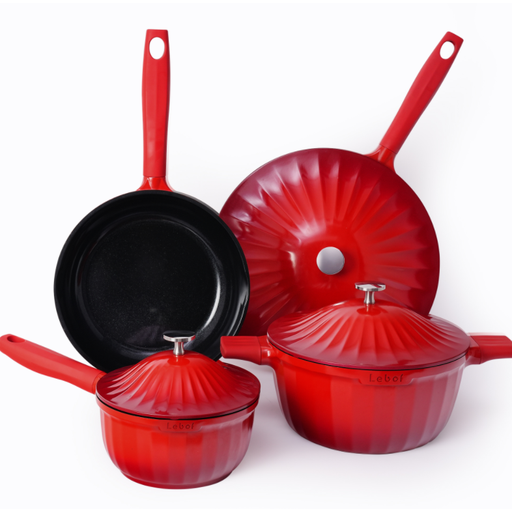
Why we love it: Perfect for outfitting a family kitchen in one go. This non-stick pan set covers every need, from a small pan for morning eggs to a Dutch oven for slow-cooked dishes, with a consistent ceramic coating across the entire induction cookware set.
By offering a complete set, it ensures consistency in quality and performance. The titanium-infused ceramic coating is designed for enhanced durability, addressing the challenge of longevity in PFAS-free alternatives.
Complete 7-piece set (frying pans, saucepans, stockpot); PFAS-free ceramic coating; compatible with all hobs, including induction.
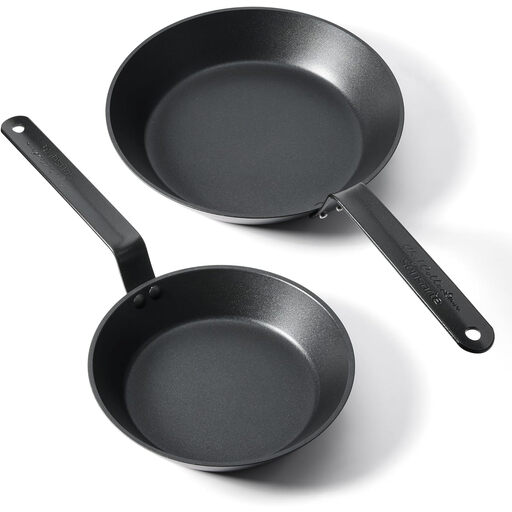
Why we love it: For those who love to start a recipe on the hob and finish it in the oven. This pan duo is an excellent partner for creative and varied cooking, thanks to its versatility-focused design.
It solves the dilemma of the "cool-touch" handle that isn't oven-safe. Its stainless steel handle allows it to go from the hob to the oven up to 232 °C, offering versatility without compromise.
Oven-safe up to 232 °C; Swiss non-stick coating free of PFOA/PFOS; thick base for even heat on induction.
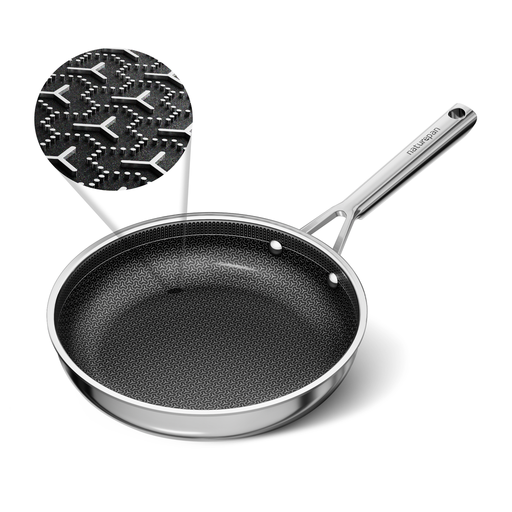
Why we love it: For those who want the best of both worlds: the perfect sear of stainless steel and the ease of a non-stick surface. Its unique surface technology makes it a cooking tool that is as high-performing as it is durable.
It tackles the problem of fragile coatings head-on. The raised stainless steel hexagonal pattern protects the ceramic coating from utensil scratches, thereby significantly extending its lifespan.
5-layer hybrid technology for increased durability; free of PFAS/PFOA/PTFE; oven-safe up to 260 °C.
We have selected other models for you that meet our demanding selection criteria and current safety standards.
The lifespan depends on the quality of the coating and its care. An entry-level model may lose its effectiveness in 1 to 2 years. A higher-quality pan, with a reinforced ceramic coating or hybrid technology, can last 3 to 5 years or even longer if used and cleaned according to the manufacturer's recommendations (no metal utensils, thermal shock, or abrasive cleaning).
To preserve your ceramic-coated pan, follow these tips:
A classic stainless steel pan is not non-stick in the same way a coated pan is. However, by mastering the preheating technique (heating the pan while empty, then adding fat just before placing the food in), you can achieve excellent results and prevent food from sticking. Hybrid models, like the naturepan presented earlier, offer an excellent compromise by combining a stainless steel surface with non-stick areas.