
Livraison le jour même ou le lendemain

Qualité garantie

Débloquez vos offres de bienvenue: Livraison GRATUITE | Jusqu'à -80 % | 30 jours d'essai gratuits à JoyPlus
Téléchargez l'application
Finding the perfect non-stick induction pan can often feel like a puzzle. Between promises of healthy cooking without a drop of oil and opaque marketing, it's easy to end up with a pan that warps, starts sticking after a few months, or, even worse, heats poorly on an induction hob.
I'm the Head of Product Recommendations at Joybuy, and my goal is to help you see things more clearly. Let's forget the technical jargon and focus on what truly makes a difference. Here are the pitfalls to avoid and the key points to check before you make a purchase.
The market is flooded with models, but they are far from being created equal. Keeping these three points in mind will save you a lot of disappointment.
To make the right choice, focus on these three technical points, which are true indicators of performance and durability.
The key to successful induction cooking lies in the quality of the pan's ferromagnetic base. This metal layer is what reacts to the hob's magnetic field to generate heat.
The coating determines the pan's non-stick effectiveness and how easy it is to clean.
Whatever you choose, the lifespan of your easy-to-clean frying pan depends on its care: no metal utensils, preferably hand-wash, and never heat it while empty.
The body of the pan, typically made of aluminium, must be robust enough to resist warping from heat. Cast aluminium is an excellent choice: it offers great thermal inertia (it retains heat well) and unbeatable durability, even under heavy use.
To put theory into practice, here are a few models that meet specific needs while avoiding the pitfalls we've just discussed.
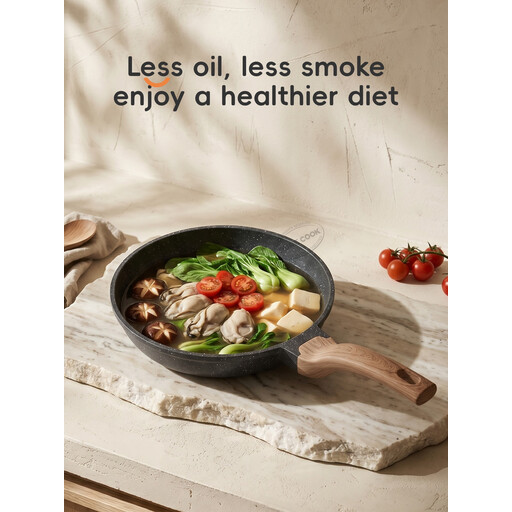
Why this model? With its versatile 24 cm diameter, this pan is perfect for everyday cooking: fried eggs, steaks, sautéed vegetables... Its light weight and ergonomic wooden handle make it very easy to handle on a daily basis.
Its flat base ensures good compatibility with all hobs, including induction, for stable heating. The stone-effect coating allows for cooking with little fat and cleans up in a flash, avoiding the pitfall of a pan that quickly starts to stick.
Its wooden handle stays cool to the touch, a real bonus for safety and comfort. The aluminium alloy body ensures it remains lightweight without sacrificing good heat distribution.
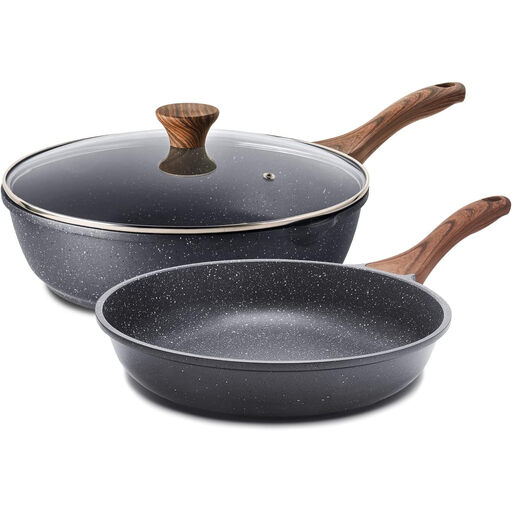
Why this set? This duo is perfect for families or those who cook in larger quantities. It includes a classic frying pan and a deep all-hob sauté pan with its lid, ideal for saucy dishes, risottos, or simmered vegetables.
Its robust cast aluminium construction prevents warping, a common risk with large sauté pans. The highly conductive magnetic stainless steel base ensures optimal performance on induction, without hotspots.
The versatility of this duo covers most cooking needs. The sauté pan's glass lid is a great feature for monitoring cooking without letting heat and moisture escape.
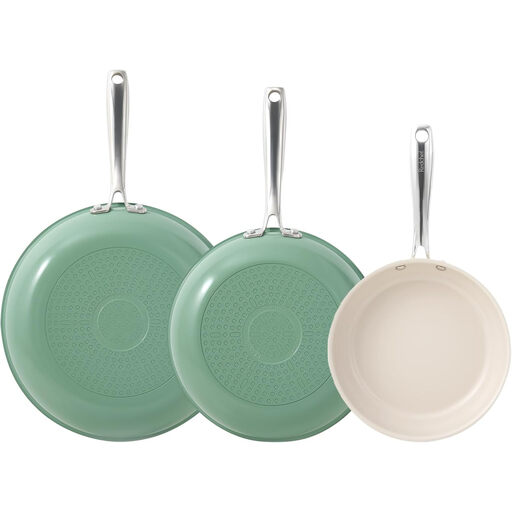
Why this set? This non-stick pan set is aimed at those who prefer a ceramic alternative. The three diameters (20, 24, and 28 cm) offer maximum flexibility, from a solo fried egg to a family meal. The ceramic coating is designed for healthy cooking with minimal fat.
The forged aluminium body and composite base ensure even heat distribution, which prevents uneven cooking. Its oven-safe compatibility (up to a certain temperature, check with the manufacturer) is a sign of robustness that helps prevent premature wear.
The triple-layer ceramic coating ensures excellent non-stick performance. The ability to go from the hob to the oven opens up a world of culinary possibilities (gratins, searing then roasting meats...).
We have curated a complete selection of products that meet our quality criteria and current safety standards.
The easiest way is the magnet test. Take a fridge magnet and place it on the bottom of the pan. If it sticks firmly, you're good to go! If the attraction is weak or non-existent, it won't work, or will perform very poorly.
The difference lies in the coating's composition. The stone-effect pan is most often based on PTFE, reinforced with mineral particles for better abrasion resistance. The ceramic pan, on the other hand, relies on a mineral-based coating (sol-gel process) without PTFE. Both are excellent options for healthy cooking. The final choice will depend on your personal preferences and sensitivity to material compositions.