Joybuy Insights

Non-Stick Induction Pan Buying Guide: How to Choose the Right One

Does a new non-stick induction pan promise perfect cooking, only to start sticking after just a few months of use? It's a familiar story. Navigating the jungle of marketing claims can be overwhelming. My role, as a product expert at Joybuy, is to help you find the perfect pan that meets your needs while avoiding the common pitfalls.

Before you choose, here are the three most common pitfalls to be aware of:

  1. The myth of the "indestructible" coating: Terms like "stone effect" or "diamond-reinforced" often suggest unbeatable durability. In reality, no non-stick coating lasts forever. The key is to understand the underlying technology and adapt your maintenance routine accordingly.
  2. "Partial" induction compatibility: A pan might be labelled "induction compatible" but heat up slowly, unevenly, or even produce an annoying buzzing sound. The cause: a base that is too thin or made of a material that isn't sufficiently ferromagnetic.
  3. The "PFOA-free" confusion: While the "PFOA-free pan" label has become standard, it doesn't guarantee the absence of other substances from the same family (PFAS). For true peace of mind, you need to look for broader certifications.

Key Criteria for Making the Right Choice

To avoid these disappointments, let's focus on the technical specifications that truly matter.

1. The Coating: Beyond Appearances

A pan's non-stick secret lies in its coating. Here are the main options:

  • PTFE-based coatings: Better known by the brand name Teflon, they offer excellent non-stick properties. Modern versions are made without PFOA. Their Achilles' heel: sensitivity to scratches and very high temperatures.
  • Ceramic coatings: A ceramic pan is a popular alternative, made without PTFE or PFAS. It handles heat well and is valued for its healthy image. Quality coatings, sometimes reinforced with titanium or diamond particles, offer enhanced durability.
  • Hybrid or textured coatings: Some models combine a stainless steel surface with non-stick pockets or patterns. This structure allows for excellent searing of meats while still minimising sticking.

2. The Base: The Secret to Effective Induction Compatibility

For an all-hob pan to be truly effective on an induction cooktop, its base is crucial. It must be:

  • Ferromagnetic: This is what allows the induction hob to generate heat. A simple magnet test will confirm this.
  • Thick and flat: A thick base ensures even heat distribution, prevents hot spots, and stops the pan from warping over time.
  • Sized for your cooking zone: For optimal energy efficiency, the base diameter should match that of your hob's cooking zone.

3. Versatility: From the Handle to Oven Safety

A good pan should adapt to your cooking style. Consider the following:

  • Oven compatibility: An oven-safe pan allows you to start cooking on the hob and finish in the oven. Check the maximum supported temperature, which often depends on the handle material (stainless steel, Bakelite, wood).
  • The handle: Is it ergonomic? Does it stay cool during cooking? A detachable handle is a major plus for storage and oven use, especially useful for a pan set.
  • The size: A 24cm pan is versatile for 2-3 people, while a 28cm model or a non-stick wok is better suited for families or stir-frying.

Top Pan Recommendations

Instead of an endless catalogue, we've selected three models that meet specific needs, based on their real-world performance rather than marketing hype.
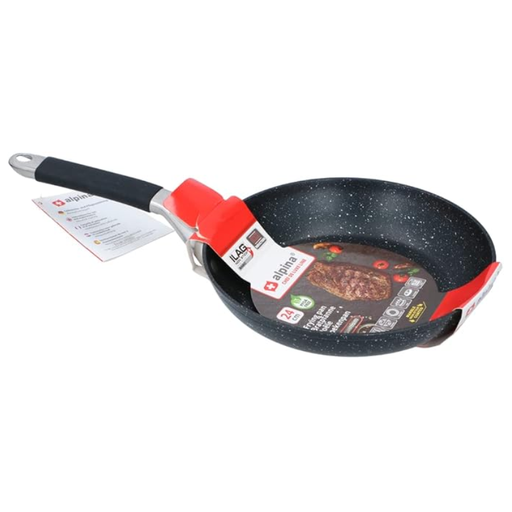
IDEAL FOR: THE EVERYDAY COOK
Alpina Frying Pan ? 24 cm

Alpina Frying Pan ? 24 cm

Why we recommend it: Ideal for those seeking a simple and effective solution for daily cooking (eggs, pancakes, sautéed vegetables). Its 24 cm diameter is perfect for meals for one to two people.

The Pitfall Avoided

It doesn't promise the impossible. This is a functional pan with a reputable ILAG Basic non-stick coating, offering excellent value for money without false claims about its durability.

Its Strong Point

Versatility: Compatible with all hobs, including induction, and oven-safe up to 180°C, which is a real bonus for many recipes.
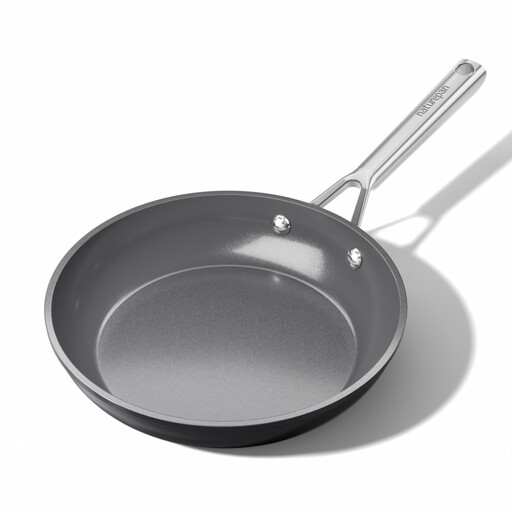
IDEAL FOR: THE HEALTH-CONSCIOUS COOK
Naturepan Diamond Titanium Ceramic Pan, 24cm

Naturepan Diamond Titanium Ceramic Pan, 24cm

Why we recommend it: For those who prioritise healthy cooking without compromise. Its ceramic coating is explicitly free of PTFE, PFOA, and PFAS, and its design is focused on durability and performance.

The Pitfall Avoided

It clarifies the "healthy" claim by guaranteeing it is completely PFAS-free, going beyond the simple "PFOA-free" label. The titanium and diamond reinforcement is a concrete technical feature, not just a marketing gimmick.

Its Strong Point

High-performance coating: The reinforced ceramic offers good resistance and allows for cooking with very little oil. Its oven-safe compatibility up to 260°C makes it highly versatile.
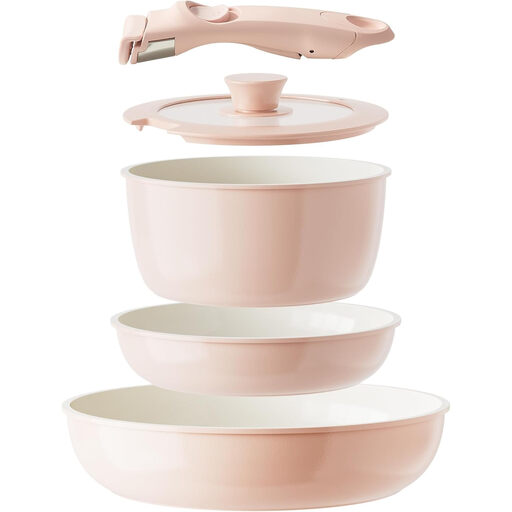
IDEAL FOR: THE FAMILY SEEKING OPTIMISATION
Redchef 5-Piece Cookware Set with Removable Handle

Redchef 5-Piece Cookware Set with Removable Handle

Why we recommend it: A complete solution for outfitting a new kitchen or upgrading your cookware. The detachable handle system and stackable design are perfect for optimising cupboard space.

The Pitfall Avoided

The space-saving feature isn't a gimmick but a practical, measurable benefit. The single-handle system for multiple items is a smart solution for moving from hob to oven, and then to the table.

Its Strong Point

Optimisation and versatility: This set of pans and a saucepan covers most cooking needs. The removable handle makes the entire set oven-safe and easy to store.

Looking for other options?

We have selected other products for you that meet our quality charter and current safety standards.

Frequently Asked Questions About Non-Stick Pans

What is the lifespan of a non-stick induction pan?

The lifespan varies greatly depending on the quality of the coating and how it's maintained. An entry-level model might last 1-2 years, while a well-maintained, high-quality pan can retain its properties for 3-5 years. When should you replace it? It's simple: as soon as it starts to stick consistently or its coating is visibly scratched or damaged.

How do you properly care for a non-stick pan?

To extend your pan's life, follow these golden rules:

  • Hand washing: Opt for a gentle wash with a non-abrasive sponge and warm, soapy water. The dishwasher is often too harsh and should be avoided to preserve the coating.
  • Proper utensils: Only use wood, silicone, or nylon utensils. Avoid metal utensils at all costs.
  • Temperature control: Avoid overheating the pan when empty. Cook over medium heat; most coatings don't need extreme temperatures to be effective.
  • No thermal shock: Let the pan cool down before running it under cold water to prevent the base from warping.

Is a ceramic pan a healthier choice?

Ceramic coatings are considered a healthy option because they are made without PTFE and, in most cases, without PFOA/PFAS. They do not risk releasing controversial compounds, even if accidentally overheated. This makes them an excellent choice for anyone concerned about the materials that come into contact with their food.