
Livraison le jour même ou le lendemain

Qualité garantie

Débloquez vos offres de bienvenue: Livraison GRATUITE | Jusqu'à -80 % | 30 jours d'essai gratuits à JoyPlus
Téléchargez l'application
A good non-stick induction pan is an everyday kitchen essential. Yet, buying one can quickly become a headache. Between marketing promises and the reality of a coating that wears out in just a few months, disappointment often follows. As a product expert at Joybuy, my mission is to help you make an informed choice, beyond the advertising jargon.
Before we present our top picks, let's break down the two most common pitfalls that lead to buyer's remorse:
To avoid these traps, rely on objective technical specifications. Here are the two points to inspect closely.
For an induction hob, the quality of the pan's base is paramount. It must be ferromagnetic to react to the hob's magnetic field. But not all compatible bases are created equal.
The choice of coating directly impacts cooking, cleaning, and the lifespan of your utensil.
Rather than a soulless catalogue, here are models that meet specific needs, selected for their performance and durability.
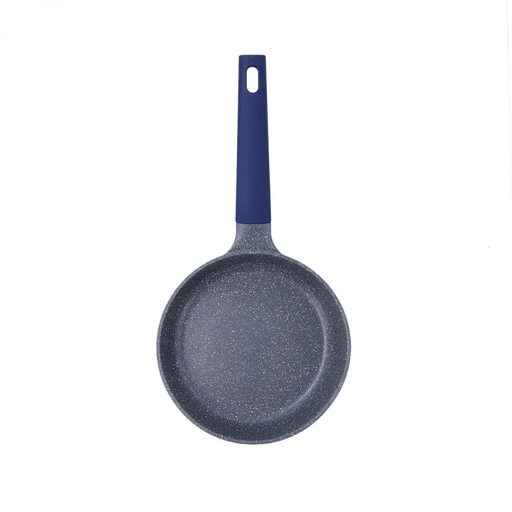
Why we recommend it: This is the ultimate reliable and versatile pan for daily meals. Its 24 cm diameter is perfect for searing a piece of meat, sautéing vegetables, or making an omelette for two.
It features a full-disk ferromagnetic base that ensures perfect compatibility and optimal performance on induction, with no hot spots.
Its thick forged aluminium body guarantees excellent heat retention and uniform distribution, ensuring even cooking and longevity.
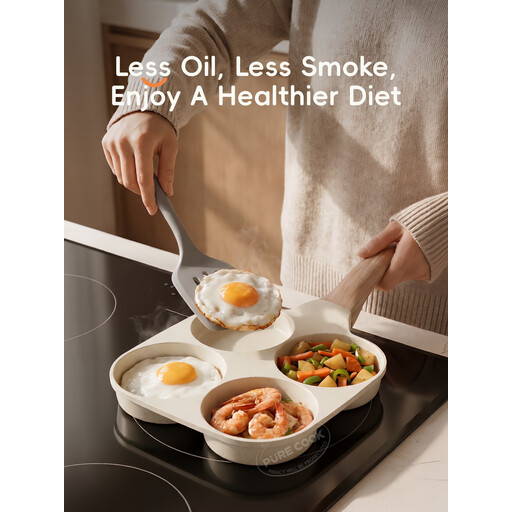
Why we recommend it: The perfect partner for quick family breakfasts. It simultaneously cooks four fried eggs, blinis, or pancakes, making it a precious time-saver in the morning.
Here, there are no vague marketing promises, just a solution to a very specific need. It's designed for one mission and accomplishes it perfectly.
Its aluminium alloy body ensures fast and even heating across all four compartments for perfectly synchronised cooking.
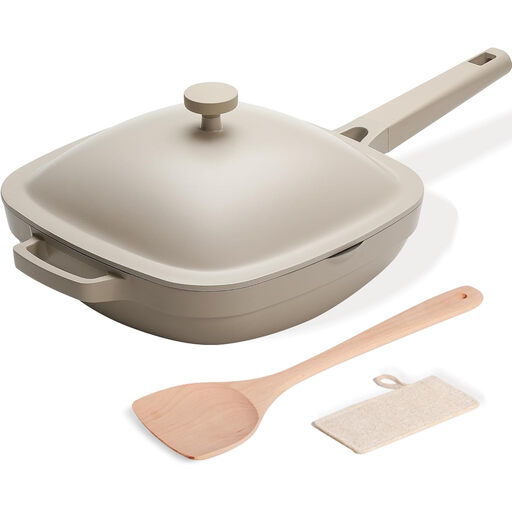
Why we recommend it: This induction sauté pan is for those who want to cook healthily, with minimal oil or fat. Its ceramic coating is an excellent alternative to classic non-stick surfaces.
The brand is transparent about its coating, specifying a titanium-ceramic (Ti-Ceramic) surface that is guaranteed PFAS-free.
Its deep sauté shape and lid make it ultra-versatile: it can sear and sauté as well as braise or simmer. All on any hob type.
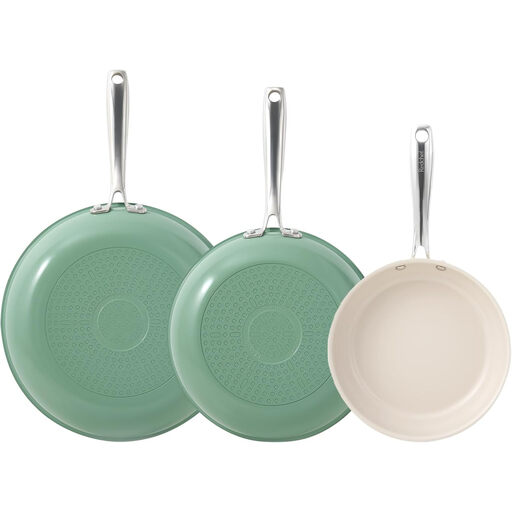
Why we recommend it: Perfect for upgrading your cookware or for a first kitchen, this pan set is a turnkey solution. With its three diameters (20, 24, and 28 cm), it covers all the essentials.
No more headaches from mismatched pans of varying quality. This set ensures consistent performance and maintenance across your entire non-stick cookware collection.
Its triple-layer ceramic coating and all-hob compatibility (including induction) make it a durable and versatile investment. Bonus: the handles are oven-safe.
Explore our full selection of products that meet our demanding selection criteria and current safety standards.
It all depends on the quality of the coating and how you care for it. On average, a well-made, well-maintained pan lasts between 3 and 5 years. The warning signs? Deep scratches or when food consistently starts to stick.
A few simple steps can extend your pan's lifespan:
The “PFOA-free” label guarantees that this compound, once used to make PTFE, has been banned from the manufacturing process. This is now the standard for all quality cookware sold in Europe. However, it is still not recommended to overheat a PTFE pan (above 260°C / 500°F), as the coating can begin to degrade at that temperature. For those who prefer another technology as a precautionary principle, the ceramic pan is the most common alternative.