
Livraison le jour même ou le lendemain

Qualité garantie

Débloquez vos offres de bienvenue: Livraison GRATUITE | Jusqu'à -80 % | 30 jours d'essai gratuits à JoyPlus
Téléchargez l'application
Finding the right pan can be a true game-changer in the kitchen. Say goodbye to stuck-on food, tedious cleaning, and concerns about material safety. For those with induction hobs, the choice is even more critical. This guide is here to help you navigate the options, understand the essential criteria for finding a high-performance and durable non-stick induction pan, and introduce you to models suited for every type of cook.
As the Head of Product Recommendations at Joybuy, my role is to provide you with clear, objective information, free from marketing jargon and exaggerated claims.
Before diving into the vast array of models, it's essential to understand the three pillars of a great pan: the coating, the base, and the body material.
The key feature of a non-stick pan is, of course, its ability to cook food without sticking, even with minimal oil or fat. As part of a healthy cooking approach, more and more chefs are demanding materials guaranteed to be free of controversial substances.
The PFOA-free (perfluorooctanoic acid) or PFAS-free ceramic coating is now the most popular alternative. It combines excellent non-stick properties with a reassuring composition, addressing current health concerns. Be aware, however: its durability will largely depend on the manufacturing quality and, most importantly, how you care for it.
It's fundamental: for a pan to work on an induction hob, its base must be ferromagnetic. Fortunately, manufacturers indicate this with a spiral-shaped symbol. Opting for an all-hob pan is a guarantee of versatility, especially if you switch between different types of cooktops or plan to move.
But compatibility isn't everything. The quality of the base is crucial, as it determines the speed and evenness of heating. A thick, multi-layered base (like stainless steel-aluminium-stainless steel) is the secret to perfect heat distribution. It prevents hot spots (goodbye to omelettes burnt in the middle and raw at the edges!) and stops the pan from warping over time.
The pan's body material affects several factors: its weight, heating speed, and overall robustness.
Finally, never underestimate the importance of easy cleaning. A good, easy-to-clean kitchen utensil saves time and brings peace of mind to your daily routine. Smooth surfaces and quality coatings can often be cleaned with a simple wipe of a sponge.
Let's get practical! Here is our selection of models that perfectly illustrate the criteria we've just discussed, each with its own unique personality.
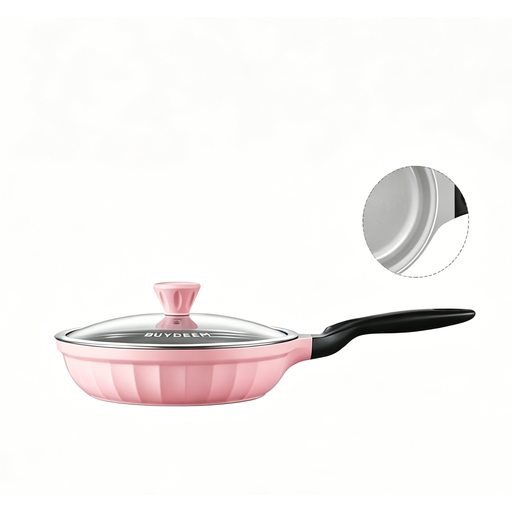
Why it stands out?: This model is the archetype of the modern, practical pan. Its cast aluminium body ensures rapid, even heating, while its Swiss-designed ceramic coating, guaranteed free of PFOA and PFAS, provides complete peace of mind.
Advantages?:
Who is it for? For everyday cooks, hobbyists, or families who want a reliable, healthy, and hassle-free 26 cm frying pan.
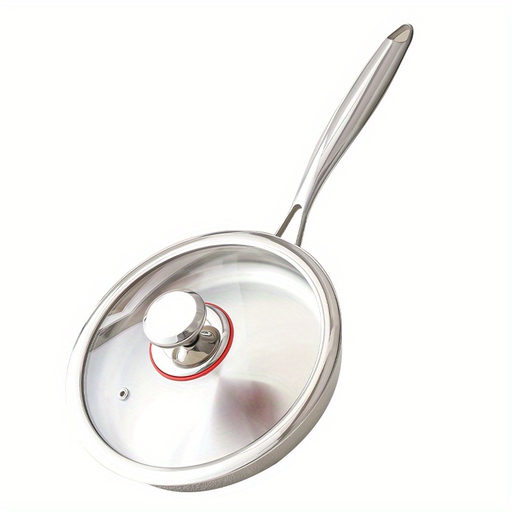
Why it stands out?: This pan focuses on durability and raw performance. Its tri-ply construction (stainless steel-aluminium-stainless steel) guarantees exceptional heat diffusion, ideal for searing meats to perfection. There's no synthetic coating here: its 304 stainless steel surface is bare, built to last and withstand the test of time.
Advantages?:
Who is it for? For discerning cooks who seek the longevity and performance of professional equipment, and who have mastered (or want to learn) how to cook on stainless steel.
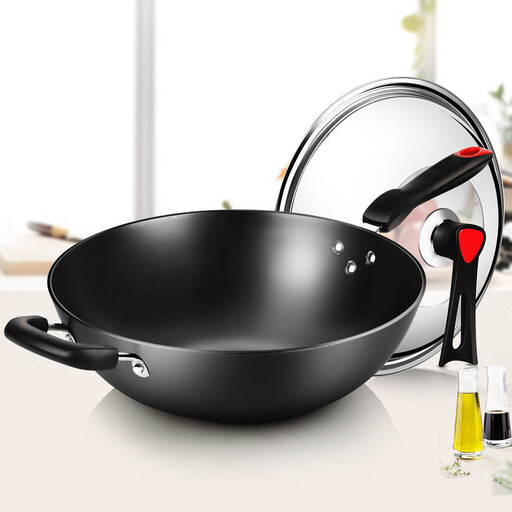
Why it stands out?: This wok isn't a classic frying pan, but an exciting option for fans of Asian cuisine. Its carbon steel body is built for very high-temperature cooking. With proper seasoning and regular maintenance, it develops a natural patina that becomes increasingly non-stick with each use. It's a utensil that lives and improves with you.
Advantages?:
Who is it for? For cooking enthusiasts who love traditional methods and are in search of authentic flavours. It requires a bit of personal investment (seasoning, drying after each wash), but the reward in terms of taste and performance is incomparable.
Choosing a pan is also a matter of personal taste, design, and materials. If aesthetics and transparency are important criteria for you, other options might catch your eye.
For those who love clean designs and want to be able to watch their food cook from every angle, our selection of glass pans might just surprise you. Take a look at our collection to find the missing piece for your cookware set.
A few golden rules to care for your pan and maximise its lifespan: avoid thermal shock (never run a hot pan under cold water!), don't heat it while empty, use wooden or silicone utensils, and opt for hand washing with a non-abrasive sponge.
PFOA is one of the substances (from the PFAS family) long used in the manufacturing of non-stick coatings. It is now considered a persistent pollutant and a source of concern for health and the environment. Opting for a pan guaranteed to be free of PFOA, PFOS, or more broadly, PFAS, is therefore a wise precaution for anyone looking to limit their exposure to these chemical compounds and commit to healthy cooking.
This is the number one rule: forget about using metal utensils on a non-stick coating, whether it's ceramic or another type. You risk scratching it irreversibly and compromising its properties. The only exception is for uncoated pans, like those made of stainless steel (such as our PURE COOK model) or iron, which are designed to withstand this type of use.