
Livraison le jour même ou le lendemain

Qualité garantie

Débloquez vos offres de bienvenue: Livraison GRATUITE | Jusqu'à -80 % | 30 jours d'essai gratuits à JoyPlus
Téléchargez l'application
A non-stick frying pan can make everyday meals much easier, but not all models are equal or suited to the same uses. Eggs, pancakes, stir-fried vegetables, meat or family-sized portions: every dish has its own requirements. Before reaching the checkout, it is therefore worth looking beyond the marketing claims and considering how the pan is made, whether it is compatible with your hob and how it needs to be cared for.
The term PFOA-free frying pan refers to one specific substance. It does not mean that the surface is uncoated, nor that it will withstand every cooking habit. A model can be described as PFOA-free while still requiring the use of wooden, silicone or nylon utensils.
Product descriptions may also specify that PFOA, PFOS, lead or cadmium have not been intentionally added. These statements describe the product’s declared composition, but they are not medical advice. To protect the surface, avoid heating the pan when it is empty, abrasive sponges and metal utensils where the manufacturer advises against them.
A pan compatible with gas is not necessarily an induction non-stick frying pan. On an induction hob, the base must contain a ferromagnetic material, usually a suitable stainless-steel base. The term all-hob frying pan should specify which heat sources it is compatible with: induction, gas, electric, ceramic and sometimes halogen.
Always check this information on the model’s product page, especially if you are planning to move or your household uses more than one type of hob.
A 28 cm frying pan is particularly well suited to family meals, stir-fried vegetables and fairly large cuts of meat. On the other hand, it takes up more cupboard space and can become heavy when full. For eggs, individual pancakes, side dishes and smaller portions, a 20 to 24 cm model is generally sufficient.
The stated diameter usually refers to the upper rim rather than the actual heated cooking surface. When comparing two models, also look at the base diameter and the height of the sides.
A ceramic frying pan has a smooth surface and is generally quick to clean. Models described as free from PTFE, PFOA or PFAS may appeal to consumers who wish to avoid certain types of coating. However, their lifespan still depends on the temperature used, the utensils and the way they are washed.
A traditional non-stick coating makes it easier to cook with little fat and release food effortlessly. When recommended in the instructions, use it over a low or medium heat.
A stainless-steel frying pan does not necessarily have a non-stick surface. It is more tolerant of certain utensils and is well suited to searing food, but you need to control the temperature carefully and use enough fat to reduce sticking. Multi-layer models with an aluminium core help distribute heat more evenly.
A thick or composite base helps minimise temperature differences. This is essential for preventing one side of the pan from cooking faster than the other. On an induction hob, a well-designed base also improves contact with the cooking surface.
In particular, look for a magnetic base, a multi-layer structure and compatibility with different heat sources. Be wary of vague claims such as ‘heats quickly’ when no material or manufacturing details are provided.
An ergonomic handle makes it easier to turn food, but its temperature can rise depending on the material and cooking time. A removable handle saves cupboard space, while a fixed handle is ready to use straight away without any additional accessory.
To keep your durable kitchen utensil in good condition, allow the pan to cool before washing it, then dry it thoroughly. Also avoid thermal shock. Even when a model is described as dishwasher-safe, hand-washing with a soft sponge will generally help preserve the coating.
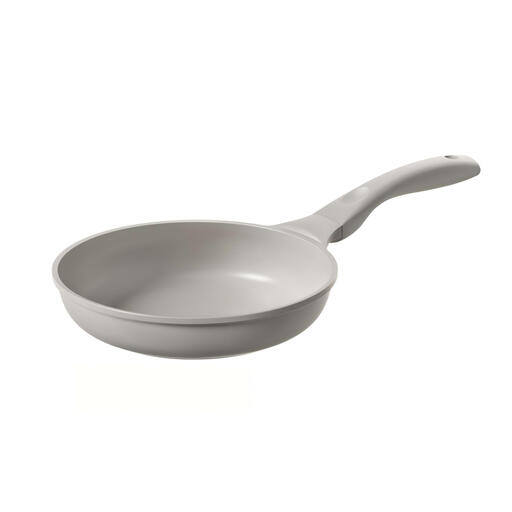
Why this choice suits this profile : Its size is suitable for individual meals and small families. Its ceramic surface is described as compatible with induction, gas and electric hobs.
The product page states that it is compatible with all hob types and has a coating free from PTFE, PFOA and PFAS. However, metal utensils should still be avoided.
24 cm size, Bakelite handle and stated dishwasher compatibility.
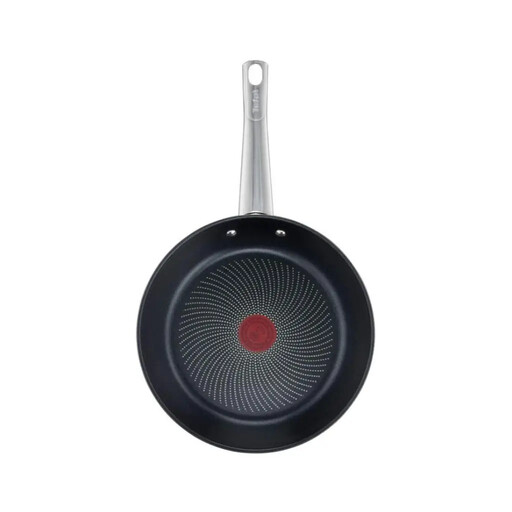
Why this choice suits this profile : With its stainless-steel body and titanium-reinforced non-stick interior, this model is designed for cooks looking for a large diameter and versatile construction.
The product page specifies compatibility with induction, gas, electric hobs and ceramic hobs, as well as a maximum oven temperature of 250 °C.
28 cm diameter, Thermo-Signal indicator and riveted stainless-steel handle.
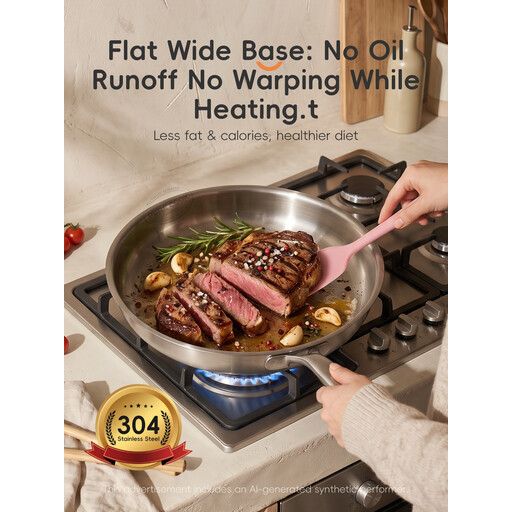
Why this choice suits this profile : Its three-layer structure, with an aluminium core, is aimed at users who prefer stainless steel, searing and regular use.
It does not rely on a non-stick claim: the product page clearly details the 304 stainless steel, aluminium core and compatibility with all hob types.
Multi-layer construction, pouring rim and surface described as dishwasher-safe.
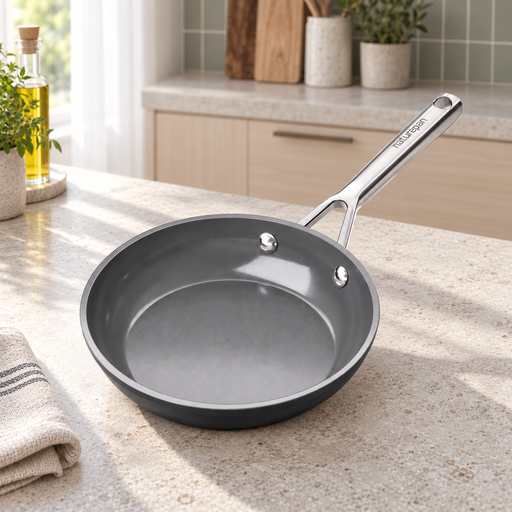
Why this choice suits this profile : Its compact size is ideal for individual omelettes, eggs and side dishes in a small kitchen.
The product page states that the base is suitable for induction and other hobs, with a stated maximum oven temperature of 260 °C.
Reinforced ceramic coating, stainless-steel handle and 20 cm diameter.
We have put together a complete selection, updated in real time, of products that meet these demanding criteria and European safety requirements.
For everyday use, a diameter of 24 to 26 cm is suitable for small families and typical portions. A 28 cm frying pan provides more space for cooking several ingredients at once, but it can be heavier and less manageable on a small hob.
It depends on the model. Some product pages state that they are dishwasher-safe, but hand-washing with a soft sponge is often preferable to limit wear to the coating. Always check the instructions and allow the pan to cool before cleaning it.
There is no universal lifespan. Durability depends on how often the pan is used, the temperature, the utensils used, knocks and the way it is washed. Replace the pan if the coating starts to peel, shows visible damage or no longer matches the manufacturer’s specifications.