
Livraison le jour même ou le lendemain

Qualité garantie

Débloquez vos offres de bienvenue: Livraison GRATUITE | Jusqu'à -80 % | 30 jours d'essai gratuits à JoyPlus
Téléchargez l'application
A non-stick frying pan compatible with induction needs to tick several boxes: heat efficiently on an induction hob, remain usable on gas or ceramic hobs, be easy to clean, and withstand repeated use. With all the marketing promises and genuinely useful features out there, the choice isn't always straightforward.
The phrase "suitable for all hobs" doesn't guarantee everything. To work on induction, the base must be compatible with the magnetic field and stable enough to maintain good contact with the hob. So make sure the product description clearly mentions induction, not just gas, electric or ceramic hobs.
The stated diameter usually refers to the top of the pan. The actual usable diameter of the base can be noticeably smaller. A 28 cm frying pan won't necessarily heat up on a 28 cm induction zone.
Not all coatings are created equal. A PTFE pan, a ceramic model and a honeycomb stainless steel surface all offer different cooking experiences and maintenance requirements.
If you're looking for a PFAS-free frying pan, check the manufacturer's precise statement and the list of materials used. The mere mention of "PFOA-free" isn't enough to conclude that the product is free from the entire PFAS family. If the information is vague, it's best not to assume more than what is actually stated.
A non-stick coating can quickly lose its properties if overheated when empty, scrubbed with an abrasive sponge, or used with unsuitable utensils. An iron pan, on the other hand, requires seasoning and careful drying to minimise the risk of rust.
The handle also deserves close attention. A metal handle can go in the oven, but it gets hot on the hob. An insulated handle is more comfortable for everyday use, though it doesn't mean you can be less careful during cooking.
A 304 stainless steel frying pan can suit those who prioritise durability and a surface without a traditional non-stick coating. Multi-layer models often combine several sheets of steel with an aluminium core to distribute heat more evenly. However, this doesn't turn stainless steel into a non-stick surface: preheating and the amount of fat you use play a crucial role.
Coated aluminium pans generally heat up quickly and remain easy to handle. Ceramic models highlight a surface free from PTFE, PFOA or PFAS when this feature is explicitly documented. Still, the coating is a wear layer: avoid knocks, metal utensils and excessively high temperatures.
A large pan offers more space, but it can also be heavy and overhang the heating zone. On an induction hob, check that the diameter of the magnetic base matches your hob zone.
A frying pan that's easy to clean isn't necessarily dishwasher-safe. The product description should specify the care instructions. Hand washing with a soft sponge generally helps preserve a coating, while stainless steel and some multi-layer models can withstand more intensive use.
To choose a durable frying pan, look at its construction, thickness, how the handle is attached, its stated oven resistance and the temperatures it can handle. Specific information is far better than a vague label like "professional" or "indestructible".
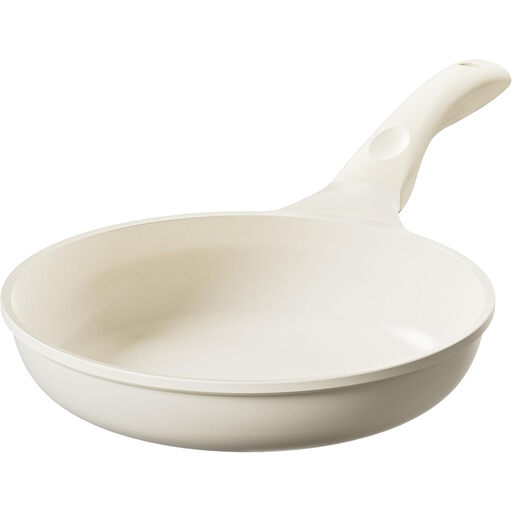
Why this choice suits this profile: Its 24 cm size is ideal for everyday portions. Its stated compatibility with induction, gas and electric hobs makes it easy to replace an old pan.
The description specifies the type of ceramic coating and the compatible heat sources. It also recommends avoiding metal utensils, which helps prevent maintenance mistakes.
Ceramic coating, bakelite handle and stated dishwasher compatibility.
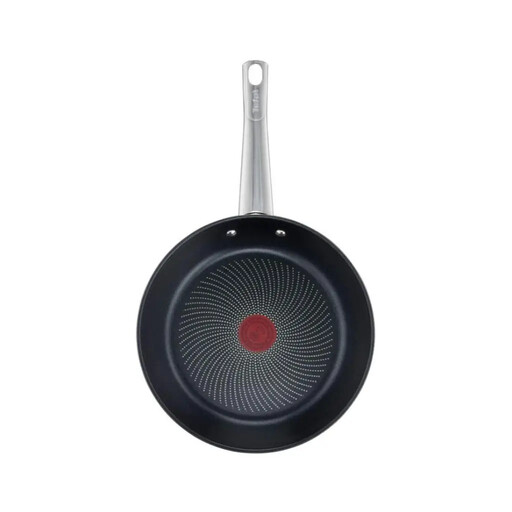
Why this choice suits this profile: Its 28 cm diameter is perfect for everyday family cooking. The description states a maximum temperature and oven use within the limits specified by the manufacturer.
Compatibility with induction, gas, electric and ceramic hobs is clearly detailed. The description also recommends avoiding abrasive products and metal utensils.
28 cm diameter, Thermo-Signal indicator, titanium-reinforced coating and stated oven resistance up to 250 °C.
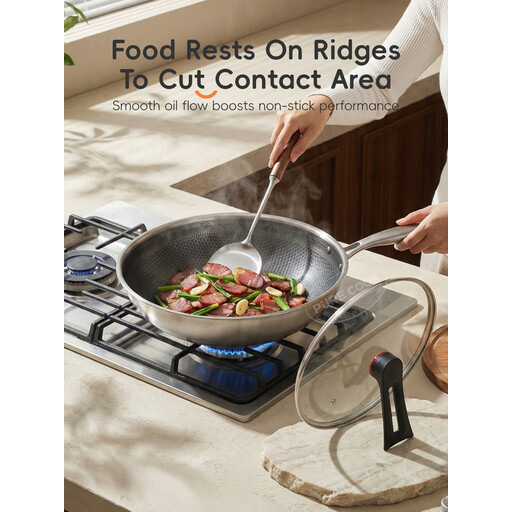
Why this choice suits this profile: With its 32 cm size and lid, this wok is designed for generous preparations: stir-fried vegetables, stewed dishes, braised recipes or meals for several people.
The description details the multi-layer 304 stainless steel construction and compatibility with gas, induction and ceramic hobs. Hand washing and avoiding thermal shock are still essential.
Tri-ply construction, glass lid, pouring rim and honeycomb pattern presented as a physical barrier limiting direct contact with the surface.
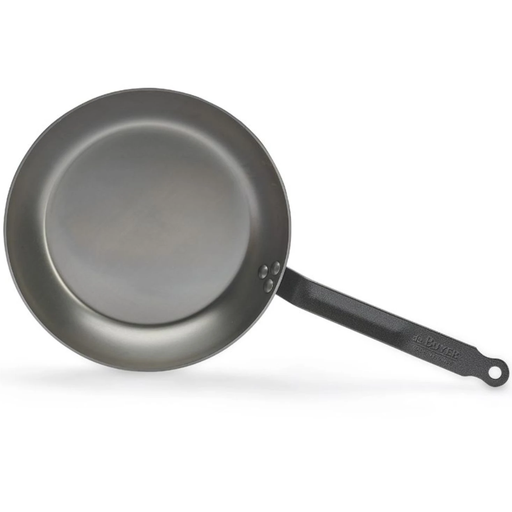
Why this choice suits this profile: With its 3 mm thickness, this carbon steel pan is for those willing to carry out regular maintenance in exchange for excellent heat retention and a well-seared finish.
The description clearly states that seasoning is required before first use, along with immediate drying and applying a thin layer of oil. This is not a low-maintenance pan.
Stated manufacture in France, 3 mm thickness, 28 cm diameter and induction compatibility.
To extend the life of a non-stick frying pan compatible with all hobs:
A non-stick wok with a lid can replace several utensils for stir-frying, simmering or cooking with the lid on. However, it takes up more space, and its weight when full needs to be manageable for your cooking style.
Often, yes, but always check the list of heat sources stated in the technical description. An induction-compatible frying pan isn't automatically suitable for "all hobs" if the manufacturer doesn't specify this.
It all depends on the coating, how often you use it, the cooking temperature and how you clean it. Cooking at moderate temperatures, avoiding overheating when empty, and using non-abrasive utensils all help to reduce wear. Carbon steel and stainless steel pans can last a very long time, but they require a different cooking technique and maintenance routine compared to a non-stick model.
For everyday meals, the 28 cm size offers a good compromise for cooking several portions. For larger quantities or stir-fries, a 30 to 32 cm wok provides more volume. Before ordering, remember to check the base diameter and the size of your induction hob zone.