
Livraison le jour même ou le lendemain

Qualité garantie

Débloquez vos offres de bienvenue: Livraison GRATUITE | Jusqu'à -80 % | 30 jours d'essai gratuits à JoyPlus
Téléchargez l'application
A non-stick frying pan compatible with induction hobs needs to tick several boxes: it must work with your hob, heat evenly, stay easy to handle, and keep a surface that’s simple to clean. Yet marketing promises don’t always tell the full story. A coating described as “reinforced” doesn’t necessarily spell out the care precautions you need to take, while the stated diameter may not match the actual cooking surface.
Before you buy an induction frying pan, a non-stick wok or a compatible saucepan, rely on the concrete specifications rather than just the advertising claims.
A pan may work on gas and electric hobs without functioning on induction. This technology requires a magnetic base, usually made from magnetic stainless steel or fitted with an encapsulated base. The “all hobs” claim should be verified in the product description, with explicit compatibility for induction.
Even a reinforced coating deserves to be treated with care. Prolonged heating when empty, excessively high temperatures, abrasive sponges and metal utensils can all speed up wear. As for the “dishwasher safe” claim, it doesn’t necessarily mean that cleaning method will preserve the surface over time.
A 28 cm non-stick frying pan is generally suitable for two or three portions, but it may overhang a small induction zone. Conversely, a 20 or 24 cm model is easier to handle for one person, but limits the quantities you can cook. Measure the usable diameter of your hob zone and also think about the weight of the pan when it’s full.
For a set of cookware compatible with all hobs, look for a clear indication that mentions induction, gas, electric, ceramic and, where applicable, halogen. A multi-layer base can combine a magnetic layer with an aluminium core to help distribute heat. However, this alone doesn’t guarantee perfectly even cooking – the build quality and thickness of the base also play a part.
Claims like “PFOA-free” or “PFAS-free” should be interpreted carefully and compared with the manufacturer’s statements. On their own, they don’t guarantee overall performance or health benefits. For healthy cooking, prioritise controlled temperatures, an intact surface and an amount of fat suited to the recipe.
A lid turns a frying pan into a versatile tool for simmering, reducing a sauce or retaining moisture. For a family, a 28 to 32 cm wok or a large stockpot with a lid can complement a more compact frying pan. Also check the oven resistance, the maximum temperature stated and, for a model with a removable handle, whether it can actually be taken off.
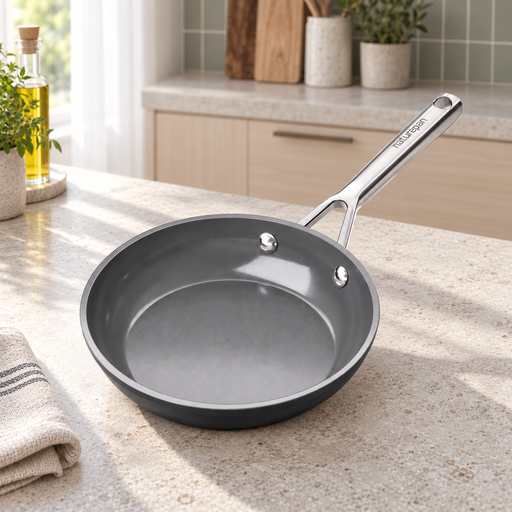
Why this choice suits this profile: Its 20 cm size is ideal for single meals, students and small kitchens. Its compatibility with induction, gas, electric and ceramic hobs makes it easy to use every day.
The product page clearly states the compatible heat sources and specifies a maximum oven temperature of 260°C. Using a low or medium heat with non-metal utensils is still recommended.
Compact 20 cm size, reinforced ceramic coating with diamond and titanium particles, dishwasher cleaning stated.
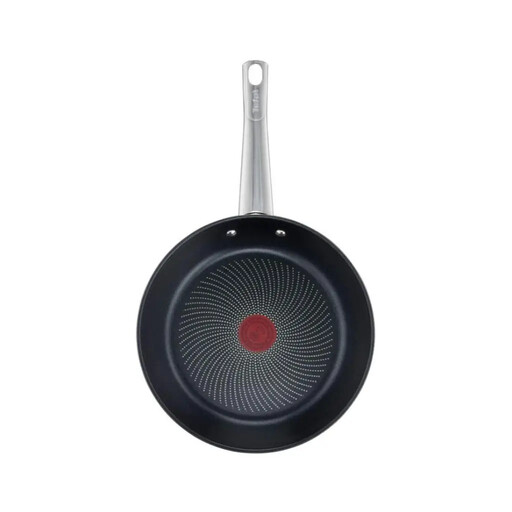
Why this choice suits this profile: Its 28 cm diameter is ideal for everyday family meals. Its stainless steel construction and riveted handle inspire confidence in its longevity.
Compatibility with gas, electric, ceramic and induction hobs is clearly stated. The Thermo-Signal indicator helps you see when the pan is heating up, though you still need to keep an eye on the cooking.
28 cm diameter, titanium-reinforced non-stick coating, oven use stated up to 250°C and a two-year manufacturer’s guarantee.
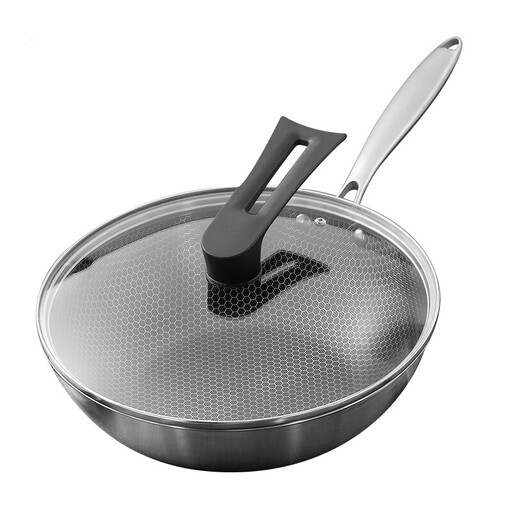
Why this choice suits this profile: Its stated 4.7 L capacity and glass lid are ideal for stir-fries, stewed dishes, steaming and meals for several people.
The product page details the multi-layer structure, magnetic base and compatible hobs. Although some metal utensils are stated as usable, a silicone or wooden spatula is still preferable to protect the surface.
30 cm wok format, tempered glass lid, compatibility with induction, gas, electric and ceramic hobs, hand washing recommended.
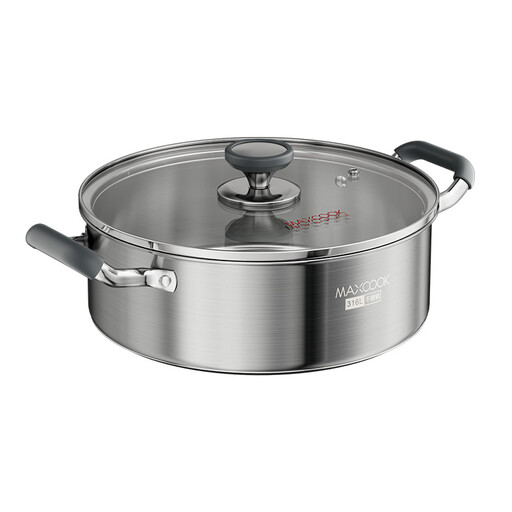
Why this choice suits this profile: With a stated capacity of 6.5 L, this stockpot is ideal for soups, stewed dishes and meals for several people. It’s aimed at those looking for an alternative to non-stick cookware.
This stainless steel utensil has no non-stick coating. You therefore need to control the temperature carefully and accept hand cleaning, but the surface doesn’t rely on a fragile layer to preserve.
Stated 316L stainless steel, encapsulated base compatible with several hob types, glass lid and silicone handles.
We’ve put together a comprehensive list, updated in real time, of products that meet these demanding selection criteria and European safety regulations.
Look for the induction symbol or a description that clearly states compatibility with induction hobs. A magnet may stick to the base, but this home test doesn’t replace the information provided by the manufacturer.
A 20 cm pan is generally suitable for one portion or a small dish. A 24 cm model offers more versatility for one or two people. The 28 cm non-stick frying pan is ideal for everyday family meals, while a 30 or 32 cm wok gives you more volume for vegetables, noodles and stir-fries.
Its lifespan depends on how often you use it, the temperature, the cleaning method and the utensils you use. No coating should be considered indestructible. Moderate heat, gentle washing and avoiding metal utensils can help preserve its properties for longer.