
Livraison le jour même ou le lendemain

Qualité garantie

Débloquez vos offres de bienvenue: Livraison GRATUITE | Jusqu'à -80 % | 30 jours d'essai gratuits à JoyPlus
Téléchargez l'application
A non-stick frying pan for all hobs needs to move seamlessly from induction to gas, electric or ceramic hobs without complicating meal preparation. Eggs, pancakes, stir-fried vegetables, fish or meat don’t all require the same features. A lightweight, easy-to-handle pan won’t necessarily suit a family, while a deep model with a lid can quickly become cumbersome for someone living alone.
Before placing an order, it’s worth distinguishing genuinely verifiable features from rather vague marketing claims.
A standard aluminium pan heats up quickly, but aluminium alone isn’t usually magnetic. To work on induction, the product listing must explicitly state this compatibility, typically thanks to a suitable base. A vague term like “multi-purpose” isn’t enough.
Check the list of supported heat sources: induction, gas, electric and ceramic hobs. If you use several types of cooking, this information will stop you buying a pan that’s unusable on your main hob.
A stone-effect coating or a marbled finish mainly describes the look and the non-stick surface. On its own, it doesn’t let you judge scratch resistance, maximum temperature tolerance or the product’s lifespan.
To preserve a pan with a stone-effect coating, choose wooden or silicone utensils. Avoid steel wool, abrasive powders and prolonged dry heating. Even with a non-stick coating, you still need to check the care instructions.
A pan with a wooden handle can offer a comfortable grip and reduce the feeling of heat in your hand, but it usually needs hand washing. Similarly, a pan described as easy to clean isn’t necessarily dishwasher-safe.
So look closely at the instructions: hand washing, using a soft sponge, immediate drying and any oven prohibition. These details have a direct impact on everyday convenience.
An aluminium pan often appeals because of its light weight and quick heat-up time. It works well for everyday cooking, provided its base is suited to the hob type you use. For induction, confirm compatibility in the technical specifications rather than relying on the base’s appearance.
Fast heating is handy for eggs, pancakes and vegetables. For longer cooking, a pan that’s thick enough and stable limits temperature fluctuations. The weight should also match how you cook: a lightweight pan is easy to handle with one hand, especially for flipping food or pouring a sauce.
A large diameter isn’t automatically practical: the pan can be heavier, take up more space on the hob and heat less evenly if the burner is too small.
An induction non-stick pan must combine a suitable cooking surface with an induction-compatible base. The coating makes food release easier and can allow you to cook with less fat, without this being a health claim.
A ceramic pan may suit those looking for a different surface from traditional non-stick coatings. Nevertheless, check the manufacturer’s recommendations on utensils, temperature and cleaning. Whatever the coating, let the pan cool before washing it and avoid thermal shock.
The recommendations below are based on the dimensions, materials, accessories and uses mentioned in the product listings. Always check the information available at the time of ordering, especially compatibility with your hobs and the care instructions.
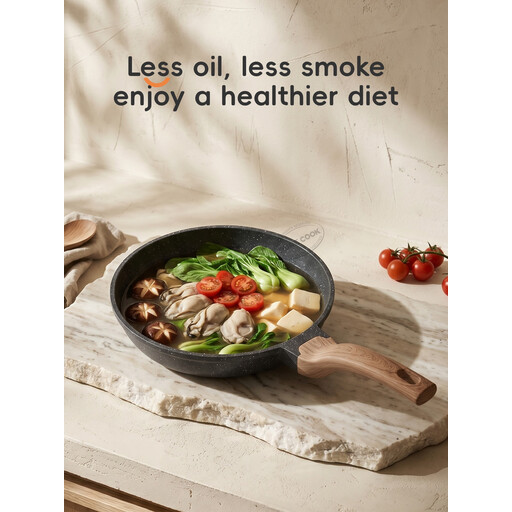
Why this choice suits this profile: With its 24 cm diameter and aluminium body, it’s suitable for everyday basic cooking without unnecessarily cluttering your kitchen.
The listing states compatibility with induction, gas and ceramic hobs. It also specifies that hand washing is required – so there’s no chance of assuming it’s dishwasher-safe.
24 cm size, lightweight aluminium alloy construction, stone-effect coating and insulating wooden handle, according to the product listing.
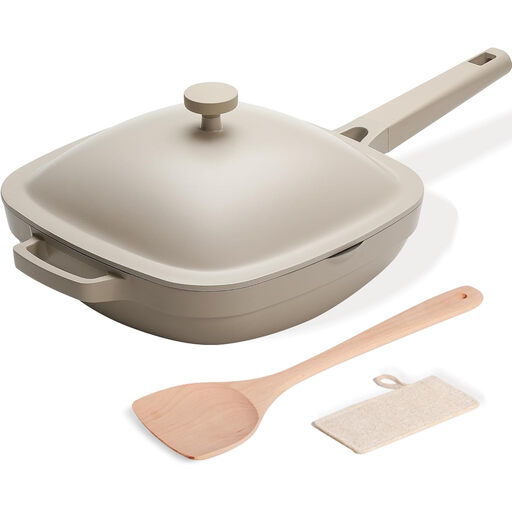
Why this choice suits this profile: Its deep design and accessories are aimed at those who want to prepare a variety of dishes in a single vessel.
The listing specifies two limitations to keep in mind: the product is not dishwasher-safe and must not be used in the oven. That lets you check it really suits your routine.
Cast aluminium body, Ti-Ceramic coating described as PFAS-free in the listing, raised lid and 3.8 quart capacity.
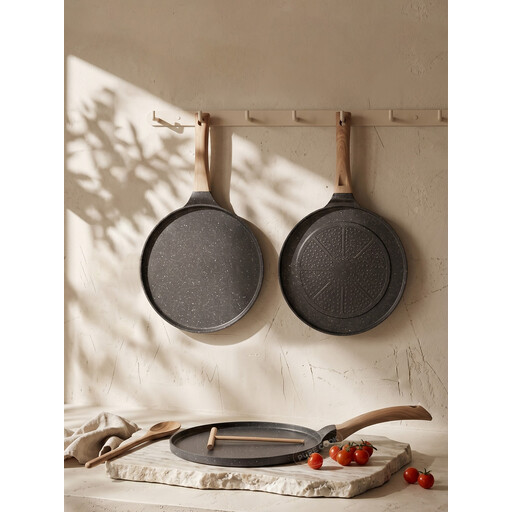
Why this choice suits this profile: Its 26 cm diameter offers a surface better suited to family meals, stir-fries and cooking several portions at once.
The listing details the three main uses: induction, gas and ceramic electric hobs. It also recommends a soft sponge and advises against metal utensils.
26 cm size, aluminium alloy, stone-effect non-stick coating, rolled rim and reportedly lightweight handling.
We’ve put together a comprehensive, real-time updated selection of products that meet these demanding criteria and European safety regulations.
Yes, provided its listing clearly states induction compatibility. For an aluminium pan, look for mention of a base adapted for induction hobs. The burner diameter should also be close enough to the pan’s size to minimise uneven heating areas.
It depends entirely on how often you use it, the temperature and the utensils you use. To preserve the surface, avoid dry heating, metal objects and abrasive products. If the coating peels, cracks or shows significant scratches, it’s best to replace the pan.
A lid is handy for steamed vegetables, sauces and simmered dishes. However, it adds weight and requires extra storage space. For eggs, pancakes or quick cooking, an open 24 or 26 cm pan will often be more manageable.