Finding the perfect non-stick frying pan—one that never sticks, cleans in a flash, and promotes healthy cooking—can often feel like an uphill battle. Between the different materials, marketing promises, and questions of durability, it's easy to get lost.
This guide is here to bring clarity and give you concrete criteria for making your choice. As the head of product recommendations at Joybuy, my mission is simple?: to help you find the ideal tool for your everyday cooking, no-nonsense.
How to Choose the Right Non-Stick Frying Pan?
Before diving into our top picks, let's review the key points for making the right choice.
1. The Type of Non-Stick Coating
The secret to a pan that doesn't stick is its coating. The good news is that technology has made huge strides, offering high-performance alternatives.
- Ceramic Coatings?: Very popular right now, ceramic coatings are praised for their composition, which is generally free of PFAS, PFOA, or PTFE. They are scratch-resistant and require very little oil, making them an excellent option for anyone looking for a healthy pan.
- Reinforced Coatings (Stone or Diamond Effect)?: These coatings combine a non-stick base with mineral particles (marble, granite, or diamond dust). The idea?? To boost durability and abrasion resistance without sacrificing the non-stick effect.
- The Importance of a PFAS-Free Pan?: Amid health and environmental concerns, opting for a PFAS-free pan has become a go-to for many consumers seeking peace of mind.
2. Compatibility and Versatility
Your pan should fit your equipment and your cooking habits.
- Compatibility with All Stovetops, Including Induction?: If you cook on an induction stovetop, a compatible pan isn't an option—it's a must. Make sure it has a ferromagnetic base, identifiable by its coil-shaped symbol. This guarantees rapid heating and perfectly even heat distribution.
- Oven-Safe?: An oven-safe pan opens up a world of possibilities. You can sear on the stovetop and finish cooking gently in the oven without switching dishes. Pay close attention to the handle, though?: its heat resistance is crucial. Stainless steel or cast iron handles are no problem, but be wary of some wood or plastic handles.
3. The Pan's Body Material
The body of the pan plays a key role in its weight, heating speed, and longevity.
- Aluminium?: Lightweight and an excellent conductor, aluminium ensures fast and even heating. It's the material of choice for everyday use.
- Stainless Steel?: Robust, warp-resistant, and low-maintenance, stainless steel is the star of multi-ply (or "tri-ply") designs. It combines its strength with the conductivity of aluminium for optimal results.
Our Top Non-Stick Pan Picks
Time for our selection! Here are three models that stand out from the crowd, designed for different needs and budgets.
1. PURECOOK Marble-Coated Frying Pan Series
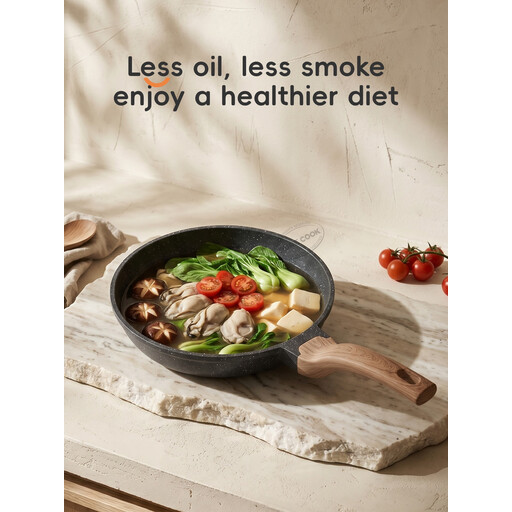
Why we love it?: It combines the lightness of aluminium with an effective stone-effect coating. The result is an ultra-manoeuvrable pan, perfect for daily use.
Advantages?:
- Fast and Even Heating?: Its aluminium alloy body guarantees efficient heat-up.
- Lightweight?: A real featherweight that's effortless to handle, even with one hand.
- High-Performance Non-Stick Coating?: Its stone-look surface allows you to cook with minimal oil and makes cleanup a breeze.
- Comfortable Handle?: Its wooden handle offers a pleasant grip and doesn't get hot (on the stovetop).
Who is it for? Ideal for those who want a practical, lightweight, and efficient pan for everyday tasks like sautéing vegetables, cooking eggs, or making pancakes. Its excellent value makes it a smart choice for a first pan or for heavy use.
2. naturepan DiamondTitan 24 cm Ceramic Frying Pan
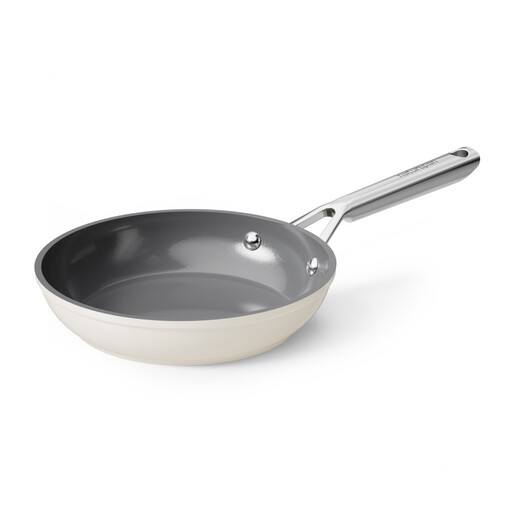
Why we love it?: This ceramic pan is for those who prioritise healthy cooking without sacrificing performance. Its reinforced coating and versatility make it a must-have.
Advantages?:
- PFAS-Free Ceramic Coating?: Guaranteed free of PFAS, PFOA, and PTFE, it promises healthier cooking. Its coating is also reinforced with diamond and titanium particles for maximum durability.
- Total Versatility?:Compatible with all stovetops, including induction, it's also oven-safe up to 230?°C (450?°F).
- Sleek Design?: Its stainless steel handle stays cool on the stovetop, and its milky white finish adds a touch of modern elegance.
- Easy Maintenance?: It's dishwasher-safe, although hand washing is always recommended to extend the life of the coating.
Who is it for? Perfect for health-conscious cooks looking for a PFAS-free pan that is as high-performing as it is durable. Its 24?cm diameter is ideal for couples or small families (2-3 people).
3. naturepan 28 cm Hybrid Ceramic Frying Pan
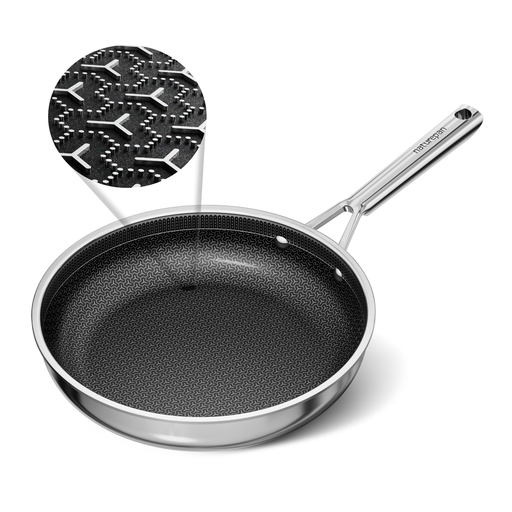
Why we love it?: This hybrid model is a powerhouse of technology. It merges the durability and searing power of stainless steel with the ease of a ceramic non-stick coating.
Advantages?:
- 5-Layer Hybrid Technology?: Its unique surface alternates between a raised stainless steel mesh and "valleys" of ceramic non-stick coating. This allows you to sear meat to perfection, while delicate foods won't stick.
- Robustness and Durability?: Its tri-ply stainless steel structure and diamond-titanium reinforced coating make it virtually indestructible and scratch-resistant.
- High Performance?:Oven-safe up to 260?°C (500?°F), it can handle the most demanding cooking tasks.
- Large Capacity?: With its 28?cm diameter, it's designed for large family meals (4-6 people).
Who is it for? For cooking enthusiasts who want the best of both worlds?: the perfect sear of stainless steel and the convenience of non-stick. A prime investment for those who cook in large quantities and demand a versatile tool that's built to last.
Looking for Other Options?
Our selection is just a glimpse. Choosing a pan is a very personal decision, so feel free to explore our entire range to find a different size or design.
Discover our complete collection of ceramic induction pans
Frequently Asked Questions About Non-Stick Pans
What's the difference between a ceramic pan and a classic non-stick pan?
A ceramic pan has a coating derived from sand (silica), applied via a "Sol-Gel" process. Its main advantage is being formulated without PTFE or PFAS. Classic coatings, often PTFE-based, are also very effective, but their use can raise concerns in case of overheating or scratching. Ultimately, the choice depends on your personal convictions and preferences.
How do I care for my non-stick pan to make it last?
To preserve the non-stick coating, a few simple steps are all it takes?:
- Never heat it while empty.
- Use wood, silicone, or nylon utensils to avoid scratching the surface.
- Let it cool down before running it under water to prevent thermal shock.
- Hand washing with a soft sponge is ideal, even if it's dishwasher-safe.
Is a PFAS-free pan really healthier?
The term "healthy pan" often refers to PFAS-free models. Opting for a PFAS-free pan means choosing a coating made without this family of chemical compounds. For many, it's a precautionary principle that allows them to cook with greater peace of mind by limiting their exposure to potentially controversial substances.


