
Livraison le jour même ou le lendemain

Qualité garantie

Débloquez vos offres de bienvenue: Livraison GRATUITE | Jusqu'à -80 % | 30 jours d'essai gratuits à JoyPlus
Téléchargez l'application
Non-stick cookware can make everyday meals much easier. But marketing promises alone are not enough to make an informed choice. A coating that starts sticking after just a few uses, a pan that is too lightweight or a poorly fitting lid can quickly turn a practical purchase into an unnecessary expense.
Before choosing a non-stick frying pan, wok or pan set, check three essential points: compatibility with your hob, the type of coating and the care instructions. These criteria matter even more if your kitchen combines several cooking methods, such as gas, induction and ceramic hobs.
The term all-hob frying pan may simply mean that the cookware works on gas, electric and ceramic hobs, without necessarily being compatible with induction. For induction, the base must contain a magnetic material. Always check the product page and look for a clear statement such as induction-compatible frying pan or compatibility with induction hobs.
Some glass cookware also requires a specific accessory. The Belissam borosilicate glass Dutch oven, for example, can be used on an induction hob with the suitable MC60090 disc. Without this accessory, its glass base will not work directly on the hob.
A non-stick ceramic, granite-effect or honeycomb coating can help prevent food from sticking and allow you to cook with less fat. Its lifespan nevertheless depends on several factors: cooking temperature, the utensils used and the cleaning method. A non-stick frying pan should not be left heating empty for long periods, while scratches can quickly reduce its performance.
Claims such as PFOA-free should also be interpreted carefully. The SENSARTE range, for example, is presented as being made without the intentional addition of PFOA, PFOS, APEO, lead or cadmium. This wording should not be extended to all coatings or presented as a medical guarantee.
A large 28 or 30 cm frying pan offers plenty of room for cooking for several people. However, it can be difficult to store in a small cupboard or wash in a narrow sink. Conversely, a model that is too small will often mean cooking food in batches.
A tempered glass lid lets you monitor cooking without lifting it, but it must be handled carefully. For everyday use, also consider the grip, whether it has an insulated handle and how easy it is to store.
Non-stick surfaces are designed to limit food sticking and make it easier to cook with little fat. They do not remove the need to follow the manufacturer's recommendations. When advised in the instructions, choose silicone, wooden or nylon utensils.
A multi-layer design can help distribute heat more evenly. The Ochama wok combines an outer layer of magnetic stainless steel, a conductive aluminium core and an inner layer of 304 stainless steel with a honeycomb structure. This design is stated to be compatible with gas, induction and ceramic hobs.
To make the most of versatile cookware, check compatibility separately with:
If you are redesigning your kitchen, also browse our selection of mixed gas and induction hobs to compare solutions suitable for several cooking methods.
An easy-to-clean frying pan can save valuable time when doing the washing-up, but care remains crucial. Allow the cookware to cool before washing it, use a soft sponge and avoid wire wool and abrasive products. Even when a model is advertised as dishwasher-safe, hand-washing can help preserve its coating for longer.
With a glass Dutch oven, be especially wary of thermal shock: do not place a hot dish on a cold surface and wait until it has cooled completely before cleaning it.
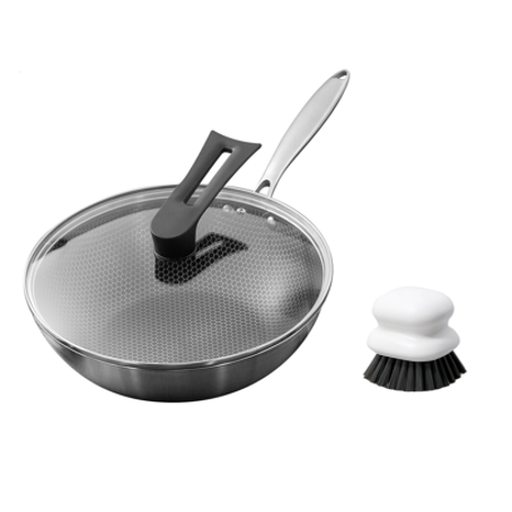
Why this choice suits this profile: This set includes a 30 cm wok, a lid and a cleaning brush. It is a practical way to equip your kitchen for the first time or add a complete solution to a family kitchen.
The product details state that it is compatible with gas, induction and ceramic hobs, as well as featuring a design that helps limit splashes. The included brush makes it easier to target areas that need cleaning.
30 cm size, stated capacity of 4.7 L, tempered glass lid and silicone-coated handle.
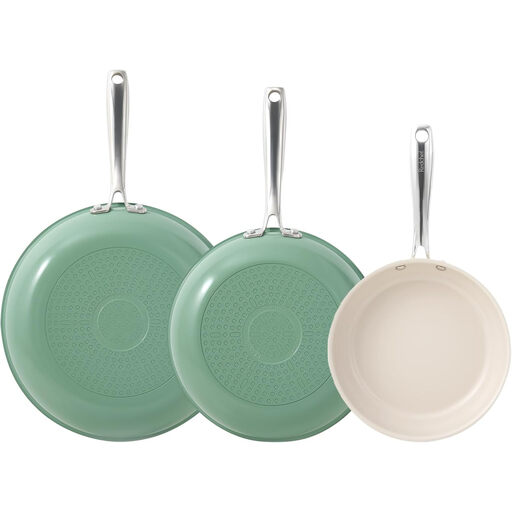
Why this choice suits this profile: The three diameters of 20, 24 and 28 cm let you choose the right pan for every quantity, from an individual side dish to a family meal.
The stated compatibility covers induction, gas and electric hobs. However, the manufacturer recommends hand-washing and using non-metal utensils to help prevent scratches.
Multi-layer ceramic coating, forged aluminium body, stainless steel handles and oven compatibility within the stated limits.
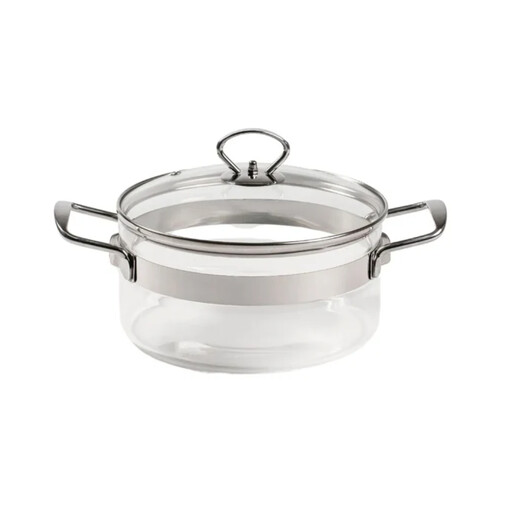
Why this choice suits this profile: This borosilicate glass Dutch oven is ideal for slow-cooked dishes and for cooks who want to monitor the food without lifting the lid.
The product details specify that use on induction requires the MC60090 disc. They also state a maximum oven temperature of 180 °C and recommend avoiding thermal shock.
Transparent, non-porous glass, stated to be free from PTFE and PFAS coatings, integrated pouring spout and included lid.
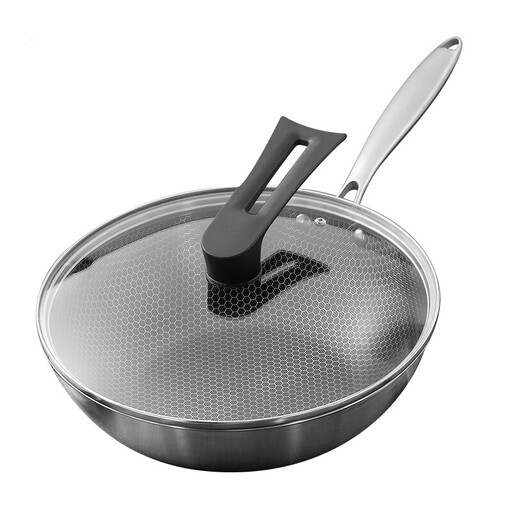
Why this choice suits this profile: With its 30 cm diameter and stated 4.7 L capacity, it is suitable for stir-fries, braised dishes, frying and recipes intended for several diners.
Its multi-layer base is stated to be compatible with several hob types. However, the manufacturer recommends moderate heat and cleaning with a soft sponge.
Tempered glass lid, silicone-coated handle and construction combining 304 stainless steel, aluminium and magnetic steel.
We have put together a comprehensive, real-time updated list of products that meet these demanding selection criteria and European safety rules.
Yes, provided that the base is magnetic. A frying pan made entirely from aluminium will not necessarily work. For a glass Dutch oven, an explicitly compatible adapter disc may be required. Always check the technical specifications before buying.
It depends on how often it is used, the cooking temperature and how it is cared for. Avoid heating it empty, using metal utensils when the manufacturer advises against them and using abrasive sponges. Reduced non-stick performance, deep scratches or a coating that starts to peel indicate that it is time to consider replacing the pan.
A pan set can be worthwhile if you genuinely use several diameters. For a sparsely equipped kitchen, a set of 20, 24 and 28 cm pans already covers many uses. However, if you mainly cook for one person or already own a wok and a sauté pan, buying a single suitable item can reduce both clutter and expense.