
Livraison le jour même ou le lendemain

Qualité garantie

Débloquez vos offres de bienvenue: Livraison GRATUITE | Jusqu'à -80 % | 30 jours d'essai gratuits à JoyPlus
Téléchargez l'application
A new non-stick cookware set can be a game-changer in the kitchen, but buying one often turns into a headache. Drowning in marketing promises, it's easy to end up with a set of pots and pans that wears out incredibly fast. Our mission? To help you decode the labels to make an informed, durable choice that truly fits your cooking habits.
Before you start shopping, watch out for these three common pitfalls:
To avoid these unpleasant surprises, focus on a few objective technical features. These are the true indicators of the quality and longevity of your future cookware set.
The choice of coating is crucial for ensuring healthy cooking and effortless cleaning.
The effectiveness of your induction non-stick pan is 100% dependent on its base.
Modern cookware should be practical for daily use and not monopolise your cupboards.
To help simplify your choice, here are three options that tick all the right boxes, each designed for a different type of user.
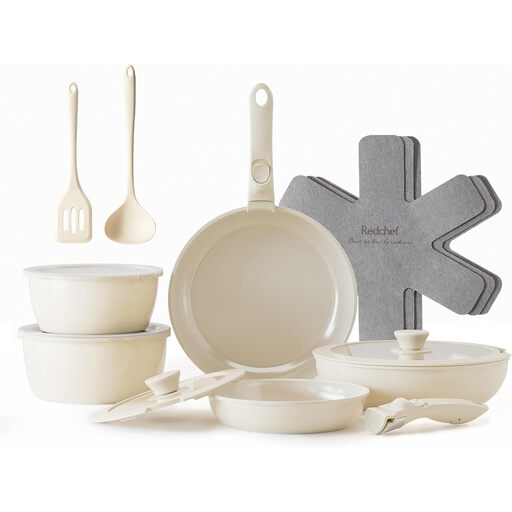
Why we chose it: Perfect for those living in apartments, studios, or who love to cook in their van. This ultra-complete set lets you do it all (cook, serve, store) with a minimal footprint in your cupboards.
The removable handle system and stackable design are a direct answer to the lack of space, a problem often underestimated when buying a complete set.
Maximum versatility: Goes from the stovetop to the oven (up to 450°C/840°F), and then to the refrigerator. The ceramic coating is guaranteed free of PFAS, PTFE, PFOA, lead, and cadmium.
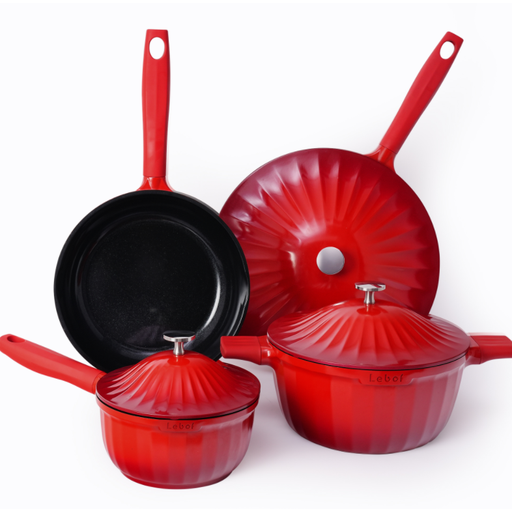
Why we chose it: For those who want to combine a healthy composition with a modern, sleek design. Its pearl white colour and minimalist lines fit perfectly into a contemporary kitchen.
This set goes beyond a simple "PFOA-free" claim by guaranteeing a composition that is free of PFAS, PFOA, and PTFE. A welcome sign of transparency regarding materials.
Efficient heat conduction: Its die-cast aluminium body with a Ti-Ceramic coating ensures fast, even heating, ideal for searing meats or simmering sauces.
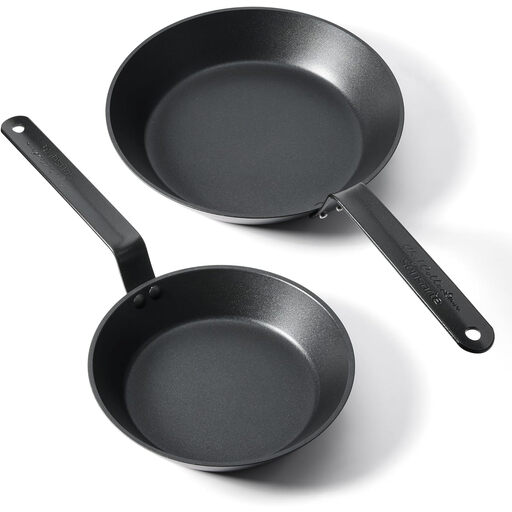
Why we chose it: For those who don't need a full cookware set but are looking for two reliable and robust pans for daily tasks (eggs, pancakes, meats...). A simple, straightforward, and effective choice.
It bypasses the misleading induction compatibility trap with a thick magnetic stainless steel base, which ensures reliable and lasting performance.
Durability and versatility: The Swiss-engineered ILAG coating is renowned for its durability. The pans are oven-safe up to 232°C (450°F), a real bonus for finishing off dishes.
We have curated a complete selection of products that meet our quality charter and the latest safety standards.
The longevity of a ceramic coating primarily depends on its care. On average, with careful use and cleaning (no metal utensils, no overheating while empty, hand washing preferred), a good quality pan can maintain its non-stick properties for 2 to 5 years. Titanium or diamond-reinforced models can last even longer.
Yes, that's one of the main advantages of this system. However, it is imperative to check the manufacturer's specifications. Most of the time, the handle must be removed before placing the pot or pan in the oven. Also, make sure to respect the maximum temperature allowed for the cookware itself, which can range from 220°C (425°F) to over 400°C (750°F) depending on the model.
To maximise the life of your non-stick cookware, follow these golden rules: