
Livraison le jour même ou le lendemain

Qualité garantie

Débloquez vos offres de bienvenue: Livraison GRATUITE | Jusqu'à -80 % | 30 jours d'essai gratuits à JoyPlus
Téléchargez l'application
A pan that starts sticking after a few weeks, a saucepan that doesn’t work on induction, or a lid that’s impossible to store can quickly turn a smart purchase into a wasted expense. For everyday meals — sauces, pasta, soups, stews or slow-cooked dishes — choosing non-stick cookware shouldn’t just come down to the promise of easy cleaning.
Here are the key factors to consider before ordering, along with a selection of models suited to different types of households in the UK.
An aluminium pan coated with ceramic doesn’t behave the same way as a saucepan made from solid ceramic. The former usually heats up faster and can often work on induction thanks to its adapted base. The latter retains heat better, but may not be magnetic and therefore unusable directly on an induction hob.
The COOKER KING 3.5L ceramic pot, for example, is advertised as compatible with gas hobs, but not with induction for direct use. According to its product page, an additional magnetic conductor disc is required. So it’s worth checking before you buy.
The “all hobs” label can cover gas, electric, ceramic and induction. However, some models still need an adapter disc. The Belissam borosilicate glass saucepan works on gas and electric hobs, while induction requires a compatible MC60090 disc.
On the other hand, the 28cm Naturepan non-stick frying pan is advertised as compatible with induction, gas, electric plates and ceramic hobs. Using it on a halogen or infrared hob may still need confirmation from the manufacturer.
Even a coating described as particularly durable can be damaged by:
To preserve the non-stick surface, cook on a low to medium heat and use wooden, silicone or plastic spatulas. Also, let the saucepan or pan cool naturally before washing it.
Anyone looking for PFAS-free cookware needs to distinguish marketing claims from the features actually listed on the product page. Several models in this selection state they are free from PFAS, PTFE or PFOA, including the Redchef, USELUCK and Naturepan ranges.
This information relates to the declared composition of the coating and is not a medical claim. For reliable information, always check the page of the model you choose: two products in the same category can use different materials.
The volume should match the number of people you cook for and the recipes you make most often:
A 28cm deep frying pan with a lid can occasionally replace a casserole dish for stir-fries, braises and certain saucy dishes. A practical and versatile solution when every centimetre counts in your cupboards.
A glass lid lets you keep an eye on cooking without lifting it. A removable handle makes stacking easier and allows the pan to go from hob to oven, but make sure it’s properly locked before moving the pan.
Also check the maximum oven temperature. It varies between models: Naturepan states up to 260°C for one version, while the Belissam glass saucepan is rated for a maximum of 180°C. The lid may also need to be removed before oven use.
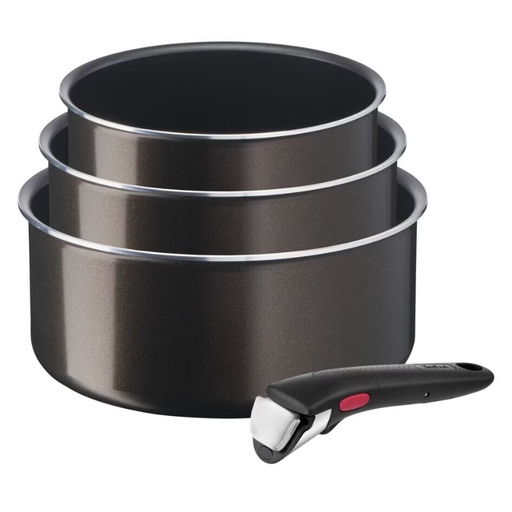
Why this suits this profile: With three saucepans of 1.5, 2.1 and 3L, this set covers most everyday needs. Their stackable design is ideal for a small kitchen. However, please note: this model works on gas, electric and ceramic hobs, but not on induction.
The diameters and volumes are clearly stated, and the “not suitable for induction” label prevents any unpleasant surprises.
Three sizes, a removable handle, stackable storage and a non-stick coating stated to be free from PFOA, lead and cadmium.
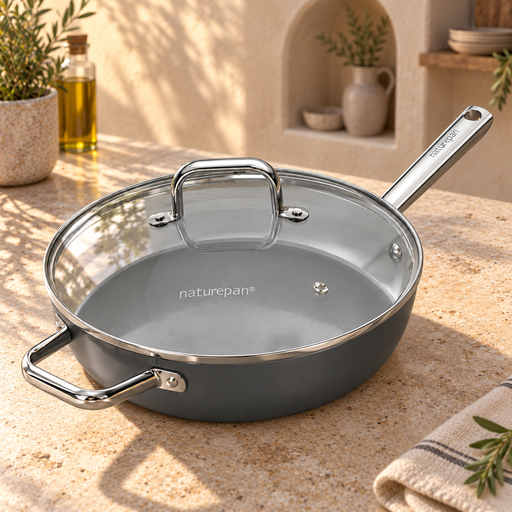
Why this suits this profile: Its deep shape is perfect for saucy dishes, stir-fried vegetables, braised meats and one-pot recipes. It’s compatible with most hobs and can go in the oven up to 260°C, according to the product page.
Induction compatibility is explicitly stated, and the included lid means you don’t need to buy a separate accessory for simmering.
A ceramic coating reinforced with diamond and titanium particles, a glass lid and dishwasher-safe cleaning as stated.
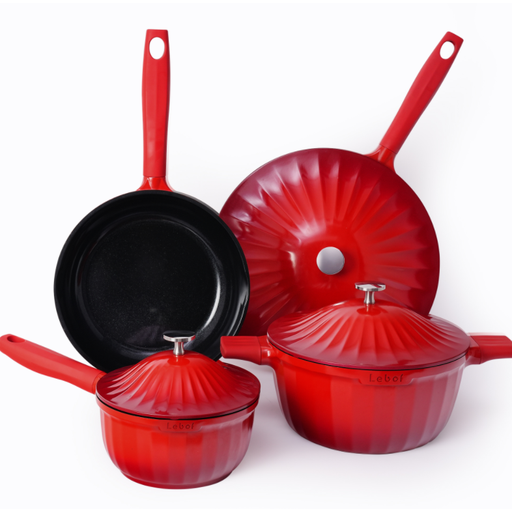
Why this suits this profile: The set includes two frying pans, two saucepans with lids and a 5-quart casserole dish (approximately 4.7L). It’s ideal for families who switch between quick cooking and slow-simmered meals.
The product page specifies compatibility with induction and other hobs, as well as the declared absence of PFAS, PFOA and PTFE.
A 7-piece set, handles designed to stay cool and domed lids. This model is not stated as oven-safe.
We’ve put together a comprehensive, real-time updated selection of products that meet these demanding criteria and European safety standards.
Not always. To work on an induction hob, a saucepan must have a magnetic base or be used with a compatible adapter disc. Check the technical specifications rather than relying solely on the “non-stick” label. When a saucepan is compatible with both gas and induction, both uses should be explicitly stated.
It depends on how often you use it, the cooking temperature and how you care for it. Stick to low to medium heat, avoid heating the pan when empty and never cut food directly in the pan. If the coating shows deep scratches, blisters or visible peeling, it’s time to replace the pan.
The “PFAS-free” label tells you about the declared composition of the product, but it doesn’t replace good cooking practices. Using a reasonable amount of fat, controlling the temperature and proper maintenance are still essential. Before choosing, always check the product page, the materials used, the permitted temperatures and compatibility with your hob.