
Livraison le jour même ou le lendemain

Qualité garantie

Débloquez vos offres de bienvenue: Livraison GRATUITE | Jusqu'à -80 % | 30 jours d'essai gratuits à JoyPlus
Téléchargez l'application
A good non-stick ceramic pan can be a game-changer in the kitchen. It promises healthy cooking with minimal fat and makes cleanup a breeze. However, the market is flooded with empty promises, and it's easy to end up with a pan that loses all its non-stick power after just a few months.
As the Head of Product Recommendations at Joybuy, my role is to help you navigate the jungle of options to make the right choice. Here are the most common pitfalls to avoid and the essential criteria to check before you buy.
To avoid these pitfalls, focus on a few key technical points.
A basic ceramic coating is naturally non-stick. But the highest-performing models go a step further by incorporating reinforcements. Look for terms like "coating reinforced with diamond or titanium particles." These additions dramatically increase resistance to scratches and abrasion, ensuring a perfect glide for years to come. This makes your purchase a worthwhile long-term investment.
For a pan compatible with all hobs, including induction, the base is the crucial element. A thick, encapsulated base, often made of stainless steel, has a dual advantage:
Check for two details that make a world of difference in daily use:
No more endless lists! We've selected the ideal model for every type of user, based on our performance and durability criteria.
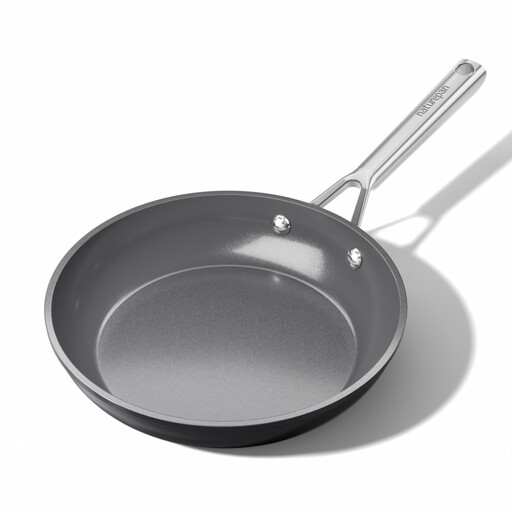
Why it's for you: With its 24 cm diameter, it's perfect for meals for 2-3 people. Its versatility (induction, oven) makes it the perfect partner for searing meat, preparing an omelette, or finishing a dish in the oven.
Its ceramic coating, reinforced with diamond and titanium particles, gives it rock-solid durability. Its encapsulated base ensures exemplary responsiveness and heat distribution on induction hobs.
Oven-safe up to 260°C—a rare level of versatility. The coating is guaranteed to be free of PFAS, PFOA, and PTFE, so you can cook with peace of mind.
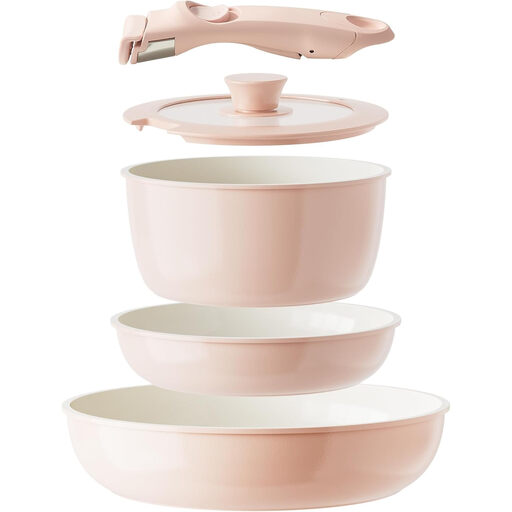
Why it's for you: Ideal for small kitchens and those who love optimized storage. The detachable handle system allows the pans and saucepan to be stacked, freeing up to 75% more space in your cupboards.
This set is a two-in-one solution for limited space and the versatility headache. The single handle fits all pieces, which can go from the hob to the oven, into the fridge, and directly to the table.
Spectacular space-saving thanks to the removable handle. A complete and healthy ceramic cookware set (guaranteed PFAS-free).
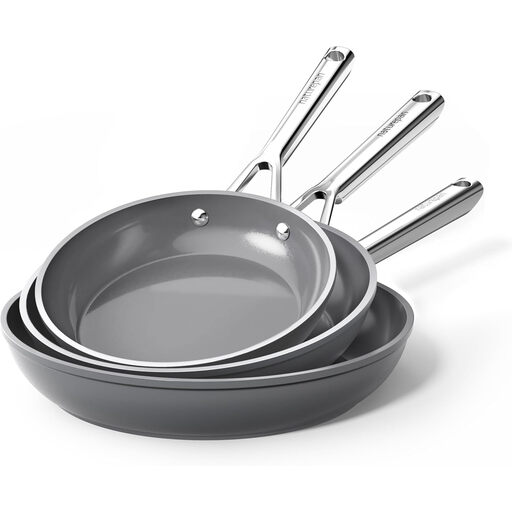
Why it's for you: This set handles every situation: the small 20 cm pan for eggs, the medium 24 cm for side dishes, and the large 28 cm for family meals. It ensures you're perfectly equipped with consistent quality across the board.
By choosing this set, you guarantee consistent performance across all sizes. Each pan features the same reinforced coating and induction-compatible base. No more unpleasant surprises.
Unbeatable value for the price. The three sizes provide absolute versatility for everyday cooking.
We have selected other models for you that meet our demanding standards for performance and safety.
It all depends on the quality of its coating and how you care for it. A model with a reinforced coating, used over medium heat with silicone or wooden utensils, can serve you faithfully for several years. Avoid thermal shock (moving it from hot to cold abruptly) and prioritise hand washing to maximise its lifespan.
Today, ceramic pans are the most popular Teflon alternative. Their main advantage: they are guaranteed to be free of PTFE, PFOA, and other PFAS (per- and polyfluoroalkyl substances), which are controversial chemical compounds that are increasingly regulated by law. For a pan that's safe for your health, ceramic is the logical choice, provided you check for the "PFAS-free" label on the packaging.
If your pan starts to stick, it's a sign of a buildup of carbonized food residue, which is often invisible to the naked eye. To give it a new lease on life, simmer a mixture of water and baking soda in it for about ten minutes. Let it cool, then gently scrub with a non-abrasive sponge. This simple trick can often restore much of its non-stick capability.