
Livraison le jour même ou le lendemain

Qualité garantie

Débloquez vos offres de bienvenue: Livraison GRATUITE | Jusqu'à -80 % | 30 jours d'essai gratuits à JoyPlus
Téléchargez l'application
A non-slip yoga mat should not be chosen solely for its colour or price. A slippery surface, unsuitable thickness or overly restrictive dimensions can quickly make sessions uncomfortable, whether at home or in a studio.
Before buying, three pitfalls come up regularly:
Here are the criteria to consider when choosing a mat that matches your practice.
To choose a yoga mat that does not slip, examine both sides. A textured upper surface can improve grip for your hands and feet, while a structured base helps limit movement across the floor.
However, stability also depends on the surface on which you use it. Always place the mat on a flat, clean and dry floor. Textured PVC can become more slippery when exposed to sweat or moisture. For hot yoga, cork may be worth considering: its surface is often described as offering more grip as heat and humidity increase. This does not eliminate the risk of slipping, so you should still take care.
A 6 mm exercise mat is a common compromise between cushioning and stability. It is generally suitable for floor-based postures, Pilates, stretching and many fitness exercises.
A 3 mm thickness provides better contact with the floor and is easy to carry, but offers less protection on a hard surface. By contrast, a 10 mm mat feels softer, although its stability can vary depending on the material’s density.
So do not focus solely on the stated thickness: also check the material, the mat’s weight and the care instructions. TPE is often chosen for its flexibility, light weight and advertised low odour. PVC is usually easy to clean, but its environmental characteristics should not be inferred beyond the information actually provided.
A length of 183 cm suits many users. A large yoga mat measuring 190 cm long, or 80 to 100 cm wide, provides more room for broad movements, floor exercises and fitness.
For journeys between home, the gym and the studio, remember to check:
A foldable exercise mat can easily fit into a bag or suitcase, but the folds may affect how it feels under your body during the first few uses. A rolled model with a strap takes up more space, but retains a continuous surface.
A TPE yoga mat is suitable for people looking for a lightweight model for practising at home, in the gym or outdoors. Product descriptions often mention a double-sided design, with a different pattern on the top and bottom.
PVC remains a common option for a Pilates mat, a fitness mat or a support for floor-based strength training. It can generally be cleaned with a damp cloth and mild soap, but abrasive products should be avoided.
Cork combined with TPE offers a different approach. It may suit users who prefer a natural-looking surface and take part in activities that generate more sweat. However, be aware that simply describing a product as ‘eco-friendly’ or ‘renewable’ is not enough to establish that it has third-party environmental certification. Check the precise information provided by the manufacturer.
Finally, a yoga mat is not designed to replace a protective surface beneath heavy equipment or to absorb significant impacts. Check the warnings and stop using it if it develops tears, peeling or noticeable deformation.
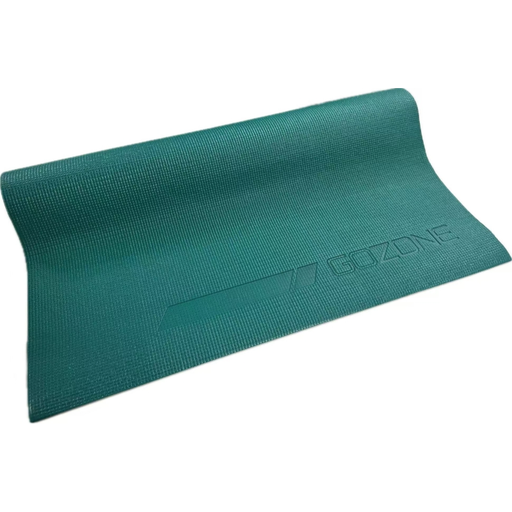
Why this choice suits this profile : its 173 x 61 cm format and 3 mm thickness are suitable for your first yoga, Pilates and floor-exercise sessions, whether at home or in the gym.
The product description mentions an embossed, cushioned surface rather than simply making a general non-slip material claim.
PVC, textured surface and cloth cleaning. Its compact size makes it easy to store.

Why this choice suits this profile : its combination of cork and TPE is aimed at users looking for an alternative to PVC for yoga, training and sessions that generate more sweat.
The product description specifies that cork does not eliminate the risk of slipping and recommends avoiding soaking and harsh detergents.
Cork upper layer, TPE base, 183 x 61 cm format and stated thickness of 6 mm.
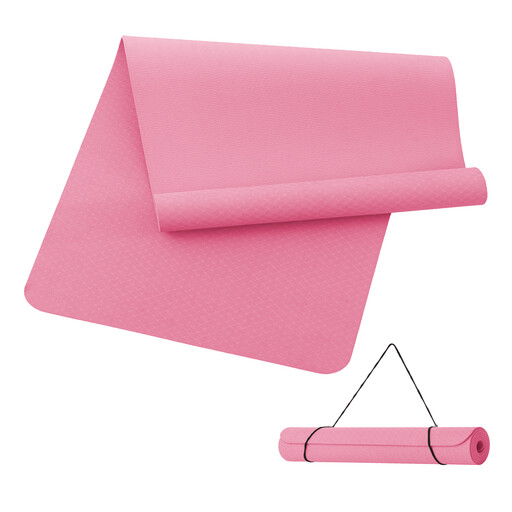
Why this choice suits this profile : its 100 cm width provides a generous practice area for Pilates, floor exercises, abdominal exercises and fitness movements.
The dimensions are clearly stated. This allows you to check the available space before buying and avoid choosing a mat that is too narrow.
TPE, non-slip texture on both sides, strap included and 190 x 100 cm format.
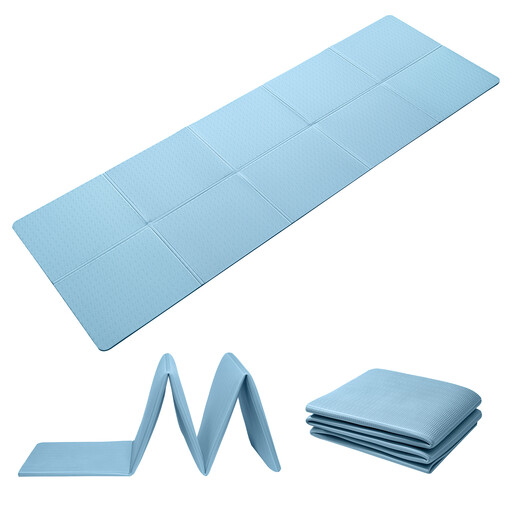
Why this choice suits this profile : its stated folded size of 37 x 30 x 6 cm is suitable for journeys to the gym, travelling and outdoor sessions.
Its foldable design avoids the common compromise between a full-size surface and portability, without relying on a bulky roll.
TPE, 6 mm thickness, double-sided non-slip texture and easy storage in a bag or suitcase.
We have compiled a complete, real-time updated list of products that fully meet these strict selection criteria and European safety regulations.
A mat’s lifespan depends on how often you use it, the type of exercises you do and its storage conditions. To keep your non-slip yoga mat in good condition:
Replace the mat when it becomes uneven, tears, noticeably loses its grip or reveals the bottom layer. Its original colour or smell alone is not enough to determine its condition.
For versatile use, 6 mm offers a good balance between comfort and stability. A 3 mm model may suit people who prefer closer contact with the floor, while a thicker mat provides more cushioning during floor exercises.
Place it on a dry, flat and dust-free floor, with the side designed to provide grip facing upwards. Clean away sweat residue regularly. No pattern guarantees the same grip on every type of flooring: test it before performing dynamic movements.
The price varies according to the material, thickness, dimensions, foldable design and included accessories. Compare the weight, whether a strap is included, ease of care and the quality of the information provided, rather than looking only at the displayed price.