Slipping in the middle of a downward-facing dog, or feeling your mat curl up during a plank... There's nothing more frustrating to break your focus. A good non-slip yoga mat is the essential companion for a safe and serene practice, both at home and in the studio. But with the overwhelming number of models available, it can be hard to find your way.
This guide is here to help you see things more clearly, with simple criteria and concrete recommendations to find the perfect yoga mat for you, without the unnecessary marketing jargon.
Key Criteria for a Stable and Comfortable Yoga Mat
Before you dive in, it's essential to understand the features that make a great exercise mat. Here are three points to examine closely to make the right choice.
1. The Material: TPE or PVC?
The material directly impacts the mat's grip, durability, and weight.
- PVC (Polyvinyl Chloride): Valued for its high durability and resistance to wear, PVC offers excellent grip on hard floors. It's a budget-friendly and robust choice, often favoured for heavy use.
- TPE (Thermoplastic Elastomer): Lighter than PVC, the TPE yoga mat is appealing for its flexibility and soft touch. It often features dual-sided textures for optimal grip on both the floor and under your hands.
2. Thickness: Finding the Right Balance
The thickness of a yoga mat is a trade-off between comfort and stability.
- Under 5 mm: Thin, lightweight mats that are easy to transport but offer less cushioning for the joints.
- A 6 mm yoga mat: This is the most versatile thickness. It provides enough cushioning for floor-based poses (like in Pilates) while maintaining the stability needed for balancing postures.
- Over 7 mm: Very comfortable, these mats are perfect for gentle practices or if you have sensitive joints, but they can reduce the feeling of connection to the ground.
3. The Grip: The Crucial Factor
Grip is crucial. It's determined by the surface texture. Raised patterns, waves, or engraved designs aren't just for looks: they create friction points that prevent hands and feet from slipping, even with light sweat. A good fitness floor mat must ensure dual stability: staying fixed to the floor and providing a perfect grip for your body.
Recommended Non-Slip Yoga Mats
Here are three models that caught our eye, catering to various needs for practice at home or in the studio.
Capelli Sport 6mm Yoga Mat

- Why it stands out: This mat combines the sturdiness of PVC with a raised surface designed for maximum stability. Its all-over print design adds a touch of style to your gear.
- Pros:
- Durable material: Made from PVC, it promises excellent resistance to wear and tear, even with regular use.
- Textured surface: Its raised surface ensures a reliable grip for yoga, Pilates, and all floor exercises.
- Easy maintenance: It cleans in a snap with a damp cloth, making it an excellent home gym mat.
- Who is it for?: For practitioners looking for a sturdy, easy-to-maintain gym mat who don't want to compromise on style.
MISS LULU Good Nite Non-Slip TPE Yoga Mat

- Why it stands out: This TPE model stands out with its engraved alignment lines, a valuable visual guide for proper body positioning. Its dual-sided design ensures a perfect grip on different surfaces.
- Pros:
- Alignment guides: The patterns help beginners and intermediate users alike find and maintain correct posture.
- Lightweight and portable: Made from TPE, it's very light (730 g) and comes with a yoga mat with a carrying strap.
- Optimal thickness: Its 6 mm thickness offers the perfect balance between cushioning and stability.
- Who is it for?: Ideal for yogis and Pilates enthusiasts who want a helping hand with their poses and need a mat that's easy to take anywhere.
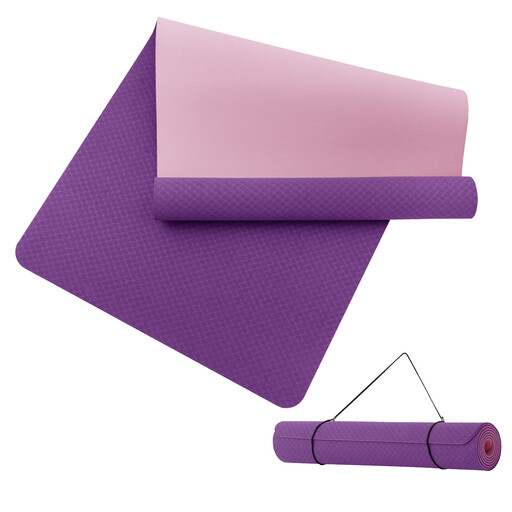
- Why it stands out: With its generous dimensions of 190 x 80 cm, this mat offers far more practice space than average. Its dual-sided texture (leaves on one side, waves on the other) is designed to maximise stability.
- Pros:
- XXL dimensions: It provides great freedom of movement, ideal for taller individuals or for exercises that require more space.
- Dual-sided grip: The different textures ensure the mat doesn't budge an inch on the floor while providing excellent grip for your body.
- Versatility: Perfect for yoga and Pilates, it's also suitable for fitness exercises like crunches or skipping rope.
- Who is it for?: For those who feel cramped on a standard mat or are looking for a versatile fitness floor mat for maximum space and comfort.
Looking for More Options?
Our selection is just a starting point. Since every practice and every body has specific needs, feel free to explore other models.
To discover a wider range, including other mats and accessories, take a look at our complete category of Pilates and fitness equipment.
Frequently Asked Questions About Yoga Mats
What is the recommended thickness for a yoga mat?
A thickness of 6 mm is often the ideal sweet spot. It offers enough cushioning to protect your knees and elbows in floor poses without compromising the stability needed for balancing postures. Thinner mats (3-4 mm) are better suited for experienced yogis or for travel, while thicker models (8-10 mm) are perfect for very gentle practices like restorative yoga.
How do I maintain and clean an exercise mat?
For regular cleaning, a damp cloth and a drop of mild soap are all you need. Gently wipe the surface, then rinse with another clean, damp cloth. Let the mat air-dry completely, away from direct sunlight, before rolling it up. For some materials like TPE, only hand washing is recommended. In any case, check the manufacturer's recommendations.
How can I make sure my yoga mat doesn't slip?
Several factors come into play. First, the mat itself: opt for a textured surface. Second, the floor: it should be clean and dry. Finally, be aware that a new mat is sometimes covered with a thin film that makes it slippery at first. A few sessions are usually enough for this film to wear off and reveal the mat's full grip.


