
Livraison le jour même ou le lendemain

Qualité garantie

Débloquez vos offres de bienvenue: Livraison GRATUITE | Jusqu'à -80 % | 30 jours d'essai gratuits à JoyPlus
Téléchargez l'application
Whether you're a fan of dynamic yoga, Pilates, or floor-based fitness, the problem is always the same?: a mat that slips or lacks comfort can quickly turn a relaxing session into a total ordeal. The market is flooded with promises, but not all mats are created equal. Guided by slick marketing, it's easy to end up with a model that disappoints in practice.
To help you make an informed decision, we've broken down the common pitfalls to avoid and the essential criteria to check. Our goal?? To equip you to choose the non-slip yoga mat that will truly suit your practice and your expectations.
Before diving into the technical specs, let's review the two classic mistakes that lead directly to buyer's remorse.
To make the right choice, three objective criteria must be scrutinized. These are what determine your mat's performance, comfort, and lifespan.
The choice of material is crucial?: it directly impacts grip, durability, and how the mat feels to the touch.
The thickness of your exercise floor mat should be chosen primarily based on your practice.
The standard size is around 183?x?61?cm. If you are tall or if your practice involves wide-ranging movements, don't hesitate to opt for an extra-large yoga mat (for example, 190?x?80?cm or even 190?x?100?cm). You'll gain unparalleled freedom of movement and say goodbye to hands and feet spilling off the mat mid-pose.
To move from theory to practice, here is our selection of models that cater to specific user profiles, always keeping performance and practicality in mind.
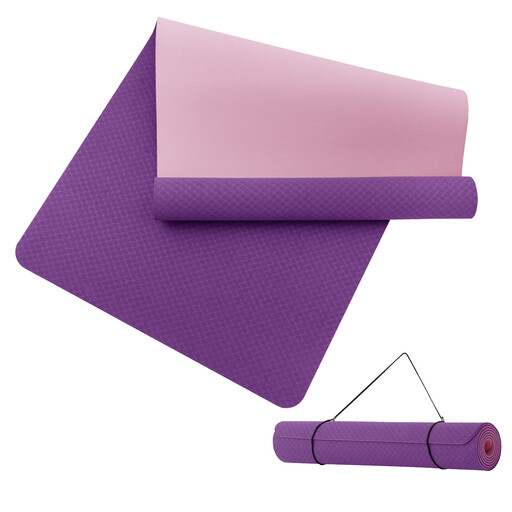
Why we love it : Perfect for switching between yoga, Pilates, and strength training. Its generous dimensions are a real bonus for comfort, without being bulky. The 6 mm thickness is the ideal compromise for a jack-of-all-trades practice.
Its dual-sided texture (leaf pattern on one side, waves on the other) is designed to ensure a reliable grip on different floors. No more "universal" grip myth that fails to deliver.
Lightweight and flexible TPE material. Comfortable dimensions (190 x 80 cm). Comes with a practical carrying strap.

Why we love it : The perfect ally for those seeking maximum cushioning to protect their knees, elbows, and spine during floor exercises, Pilates, or gentle yoga.
This mat doesn't overpromise. Its 10 mm thickness is intentional : the priority is comfort and protection. It's a targeted choice that avoids the trap of a mat that's too thick for a dynamic practice.
10 mm thickness in high-density TPE for premium cushioning. Textured surface ensures a good grip despite the thickness.
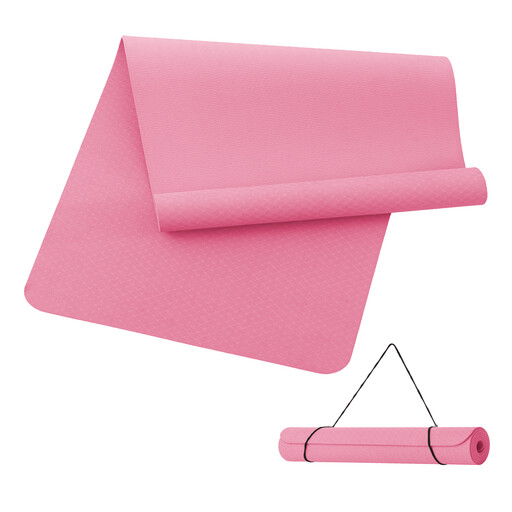
Why we love it : Essential for taller individuals or for those whose practice (fitness, deep stretches) requires maximum space. No more hands or feet going off the mat mid-pose!
It directly tackles the problem of standard mats being too narrow or too short—a frustration often discovered the hard way. Its XXL surface guarantees a fluid and uninterrupted practice.
XXL dimensions (190 x 100 cm) for absolute freedom of movement. TPE material with a dual-sided non-slip texture.
Explore our full selection of products that meet our selection criteria and safety standards.
It all depends on the material. For a TPE mat, a damp cloth with a little soapy water (like castile soap) will do the trick. Rinse with another damp cloth and let it air dry, but never in direct sunlight. For a PVC mat, the method is the same, but they are tougher and can tolerate a more vigorous cleaning. In any case, skip the washing machine?: it will damage your mat's structure and grip.
Absolutely. A good yoga mat makes an excellent all-purpose fitness mat. For Pilates, which puts a lot of strain on the back and elbows, a thickness of at least 6?mm is recommended for comfort. For HIIT-style workouts where you'll be wearing trainers, opt for a PVC mat, which is much more resistant to abrasion.
Its lifespan depends on the frequency of use, the material, and how well it's maintained. A high-quality PVC mat can last for several years, even with intensive use. A TPE model, if well cared for, will also have a good lifespan. The warning signs?? A loss of grip, small pieces flaking off, or visible sagging at the pressure points (hands and feet).